Occasional Invader
Pillbug
Armadillidium vulgare
Biology
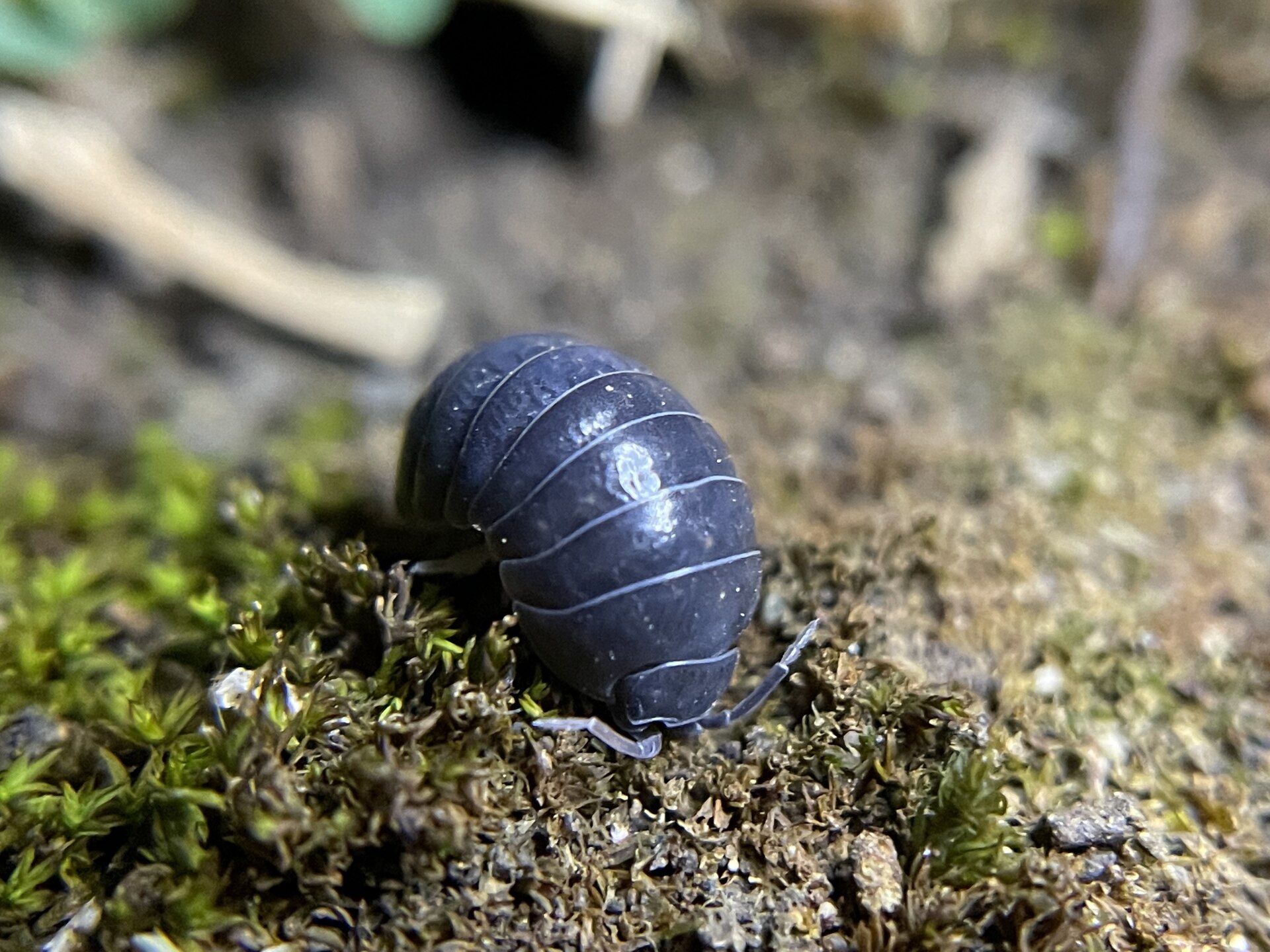
Armadillidium vulgare, commonly known as the pillbug, sowbug, or roly-poly, is a terrestrial isopod belonging to the suborder Oniscidea within the order Isopoda. Adults typically measure 10–18 mm in length, displaying a distinctive segmented, convex, slate-gray dorsal exoskeleton (telson and uropods are retracted, unlike Porcellionidae). Their lifecycle involves hemimetabolous development, with females brooding eggs in a specialized ventral pouch called a marsupium for 3–7 weeks, producing 20–200 mancae per clutch. These mancae molt through multiple instars over several months to a year, reaching sexual maturity within a year and living for up to three years, requiring high humidity (70-90% RH) for survival.
Behaviour
Pillbugs are primarily nocturnal detritivores, emerging after dusk to forage on decaying organic matter, fungi, and sometimes tender plant tissues like seedlings or overripe fruits. Communication is largely tactile and chemosensory, particularly concerning mating and aggregation in moist microhabitats. They exhibit pronounced conglobation—rolling into a tight, nearly spherical ball—as a primary defense mechanism against predators and desiccation. While generally harmless, large indoor incursions during extreme weather, particularly heavy rains or prolonged drought, can lead to their presence in living spaces, though they pose no public health risk and do not sting or bite, typically dying from desiccation within days indoors.
Habits
Pillbugs prefer dark, damp harborage sites outdoors, such as under rocks, logs, leaf litter, mulch, patio stones, potted plants, and landscape timbers. Their foraging patterns are typically short-distance, radiating out from these moist refugia for food resources. Seasonal movements include seeking refuge from excessive heat or cold, leading to aggregations near foundations, under siding, or within crawl spaces. Conducive conditions for large populations include excessive moisture around building perimeters, poor drainage, heavy organic debris, and dense groundcover, while signs of infestation include large aggregations of individuals gathered in shaded, damp areas, or indoors along baseboards or in bathrooms, particularly after rain.
Control methods
- 1Eliminate harborage: stones, boards and mulch against the house
- 2Maintain a 30 cm dry zone of gravel along foundations
- 3Repair leaks and improve crawlspace ventilation
- 4Seal exterior cracks below grade and around utilities
- 5Use diatomaceous earth or perimeter granules in problem zones
- 6Bait gardens with iron-phosphate granules to protect seedlings
Tailored to Pillbug
IPM Procedure Checklist
Inspection
- Inspect exterior perimeter for entry pathways
- Note moisture, mulch and ground-cover near foundation
- Identify aggregation sites on warm walls
Identification
- Confirm Pillbug (Armadillidium vulgare) — not a look-alike
- Note life stage and risk level: Low
- Capture clear photos and samples for the record
Action Thresholds
- Tolerate low-level activity outside sensitive zones
- Act if activity moves indoors or near food
- Review threshold seasonally with the client
Prevention
- Seal foundation cracks, weep holes and utility penetrations
- Pull mulch and vegetation back from the structure
- Improve drainage and reduce exterior moisture
Control Methods
- Eliminate harborage: stones, boards and mulch against the house
- Maintain a 30 cm dry zone of gravel along foundations
- Repair leaks and improve crawlspace ventilation
- Seal exterior cracks below grade and around utilities
Monitoring & Evaluation
- Service monitors on schedule and trend captures
- Re-inspect for Pillbug activity at follow-up
- Adjust tactics based on data; report findings to client