Fly
Phorid Fly
Megaselia scalaris
Biology
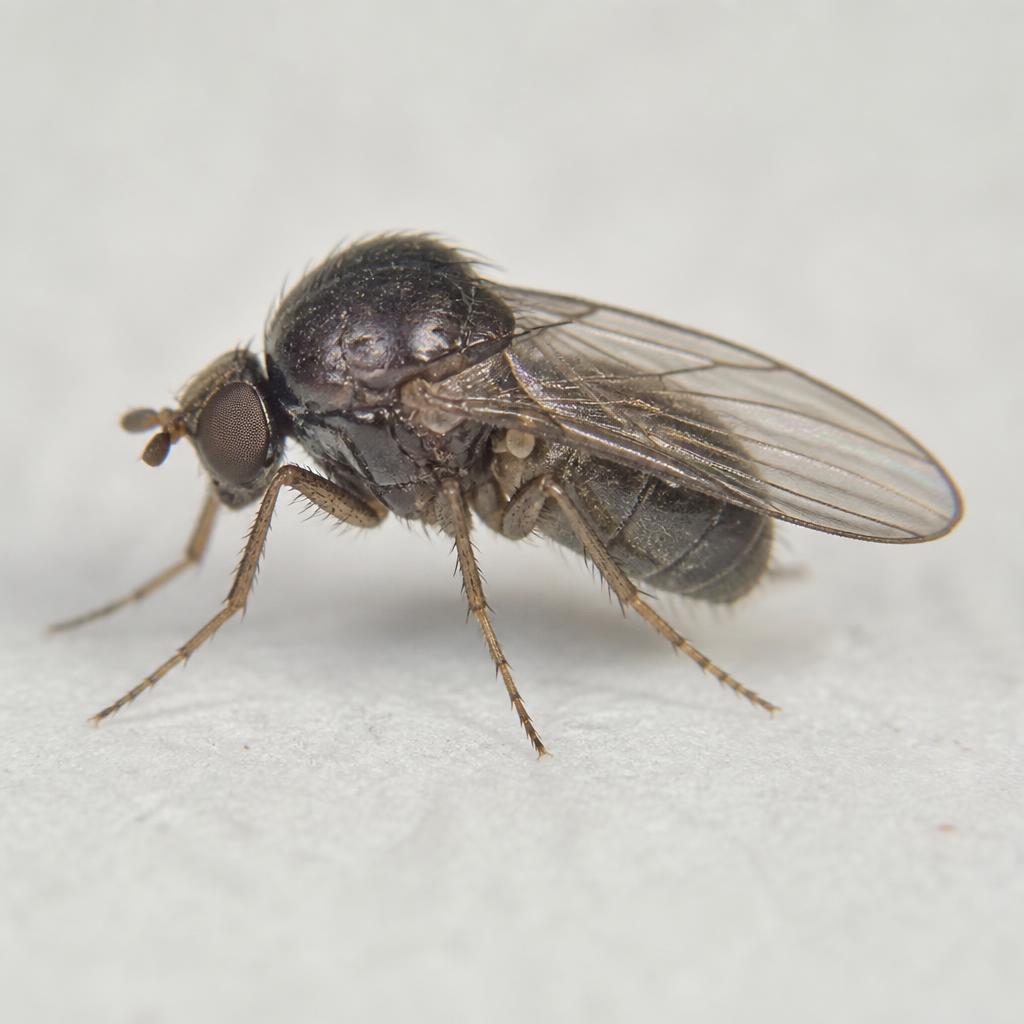
Phorid flies, primarily Megaselia scalaris, belong to the family Phoridae, a diverse group containing over 4,000 species. Adults are diminutive, typically 2–4 mm in length, characterized by their diagnostic humped thorax and a short, stout abdomen. The lifecycle from egg to adult is exceptionally rapid, often completing within 14–25 days under optimal conditions (25°C and high humidity), allowing for multiple overlapping generations annually. Females can lay hundreds of eggs (200–500) over their short lifespan of about 2 weeks, depositing them directly onto suitable larval substrates. Larvae are cream-colored, legless maggots that undergo three instars before pupating, and pupae are typically encased in a hardened puparium for 8–14 days.
Behaviour
Phorid flies exhibit a distinctive, erratic, and quick running gait rather than sustained flight, earning them the moniker “scuttle flies.” This behavior is a primary diagnostic for identification in the field, as they tend to scurry across surfaces in a stop-and-go fashion. While not typically social, high densities can occur due to abundant breeding sites. They are saprophagous, with larvae feeding on decaying organic matter, including carrion, rotting vegetables, and moist fungal growth; some species are parasitic. Adults are attracted to moisture and odorous fermentation, facilitating dispersal into structures. Their public health impact stems from their ability to vector pathogens mechanically and their potential to cause accidental myiasis in vulnerable individuals, particularly in hospital settings or facilities with compromised hygiene.
Habits
Phorid flies are opportunistic breeders, exploiting a wide array of cryptic, moist, decomposing organic matter, making harborage identification challenging. Common sites include biofilms within drain lines (especially those with low usage or cracks), under loose tiles, in saturated sub-slab soil due to plumbing leaks, and even in buried carcasses or pest infestations (e.g., dead rodents). Foraging adults are strong dispersers, capable of locating suitable oviposition sites from considerable distances, often entering buildings through gaps around doors, windows, or utility penetrations. Technicians should meticulously inspect all potential moisture-laden organic debris, paying close attention to plumbing fixtures, voids, and any areas exhibiting persistent dampness or unusual odours, as these are strong indicators of breeding activity. Infestations are often exacerbated by poor sanitation or structural deficiencies that create microclimates conducive to their rapid development.
Control methods
- 1Trace breeding to its source — broken drains, voids, mop sinks
- 2Camera-scope drains and repair cracked sanitary lines
- 3Apply biological drain cleaner (enzymes/bacteria) nightly
- 4Remove organic sludge from floor drains and grease traps
- 5Use sticky traps to map adult activity and confirm source
- 6Residual treatment around floor drains after sanitation
Tailored to Phorid Fly
IPM Procedure Checklist
Inspection
- Locate breeding sites: drains, decaying matter, moist organics
- Use tape-over-drain tests and UV/light traps to confirm
- Map dumpster, grease and floor-drain hot-spots
Identification
- Confirm Phorid Fly (Megaselia scalaris) — not a look-alike
- Note life stage and risk level: High
- Capture clear photos and samples for the record
Action Thresholds
- Zero-tolerance: act on first confirmed sighting
- Notify client and document the trigger event
- Prioritize health and regulatory risk in the plan
Prevention
- Clean drains with enzymatic foam to remove biofilm
- Manage trash, recycling and grease daily
- Screen windows, doors and air curtains at entries
Control Methods
- Trace breeding to its source — broken drains, voids, mop sinks
- Camera-scope drains and repair cracked sanitary lines
- Apply biological drain cleaner (enzymes/bacteria) nightly
- Remove organic sludge from floor drains and grease traps
Monitoring & Evaluation
- Service monitors on schedule and trend captures
- Re-inspect for Phorid Fly activity at follow-up
- Adjust tactics based on data; report findings to client