All pests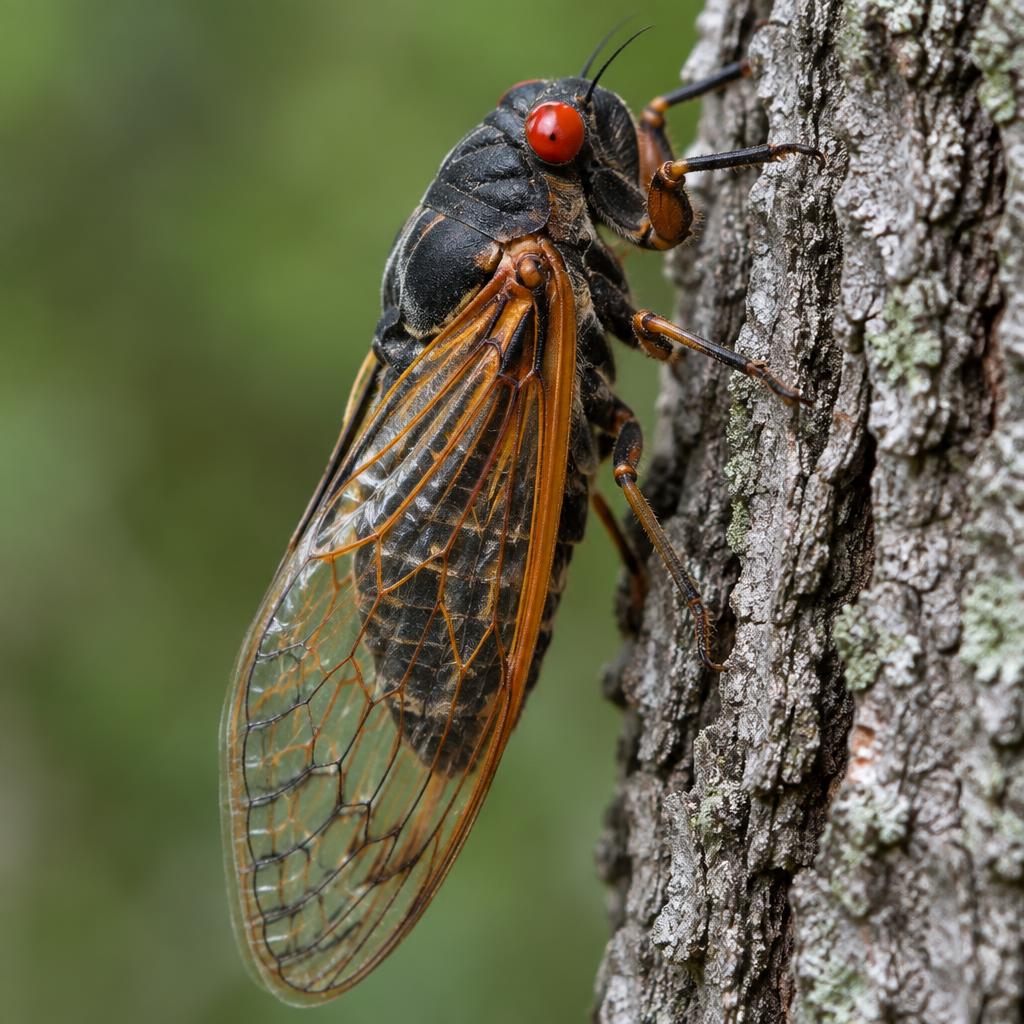 View full procedure
Insect
Periodical Cicada
Magicicada septendecim
Low Risk
Biology
Magicicada septendecim is a black-bodied cicada 25–35 mm long with bright red eyes and orange wing veins. Nymphs feed on root xylem underground for 13 or 17 years before emerging in enormous synchronized broods.
Behaviour
Emerging adults climb trees and structures, moult, and males form deafening chorusing aggregations. Females slit pencil-width twigs to insert eggs, causing flagging and dieback on young trees.
Habits
Mass emergences leave shed skins on siding, dead adults in gutters and pool skimmers, and a strong odor as carcasses decay. Cicadas do not bite, sting, or damage structures.
Control methods
- 1Net young or newly planted trees with 1 cm mesh during emergence
- 2Delay planting saplings in a known emergence year
- 3Rake and compost carcasses to reduce odor and flies
- 4Clear gutters and pool skimmers regularly during the flight
- 5Prune and dispose of egg-slit twigs after the emergence
- 6Avoid insecticides; emergence is brief and self-limiting
Tailored to Periodical Cicada
IPM Procedure Checklist
Step 1
Inspection
- Inspect harborage near food, water and warmth
- Check cracks, voids and appliance interiors
- Place sticky monitors at suspected hot-spots
Step 2
Identification
- Confirm Periodical Cicada (Magicicada septendecim) — not a look-alike
- Note life stage and risk level: Low
- Capture clear photos and samples for the record
Step 3
Action Thresholds
- Tolerate low-level activity outside sensitive zones
- Act if activity moves indoors or near food
- Review threshold seasonally with the client
Step 4
Prevention
- Seal cracks, plumbing penetrations and wall voids
- Eliminate moisture sources and standing water
- Improve sanitation: sealed food storage, grease removal
Step 5
Control Methods
- Net young or newly planted trees with 1 cm mesh during emergence
- Delay planting saplings in a known emergence year
- Rake and compost carcasses to reduce odor and flies
- Clear gutters and pool skimmers regularly during the flight
Step 6
Monitoring & Evaluation
- Service monitors on schedule and trend captures
- Re-inspect for Periodical Cicada activity at follow-up
- Adjust tactics based on data; report findings to client