Ant
Pavement Ant
Tetramorium immigrans
Biology
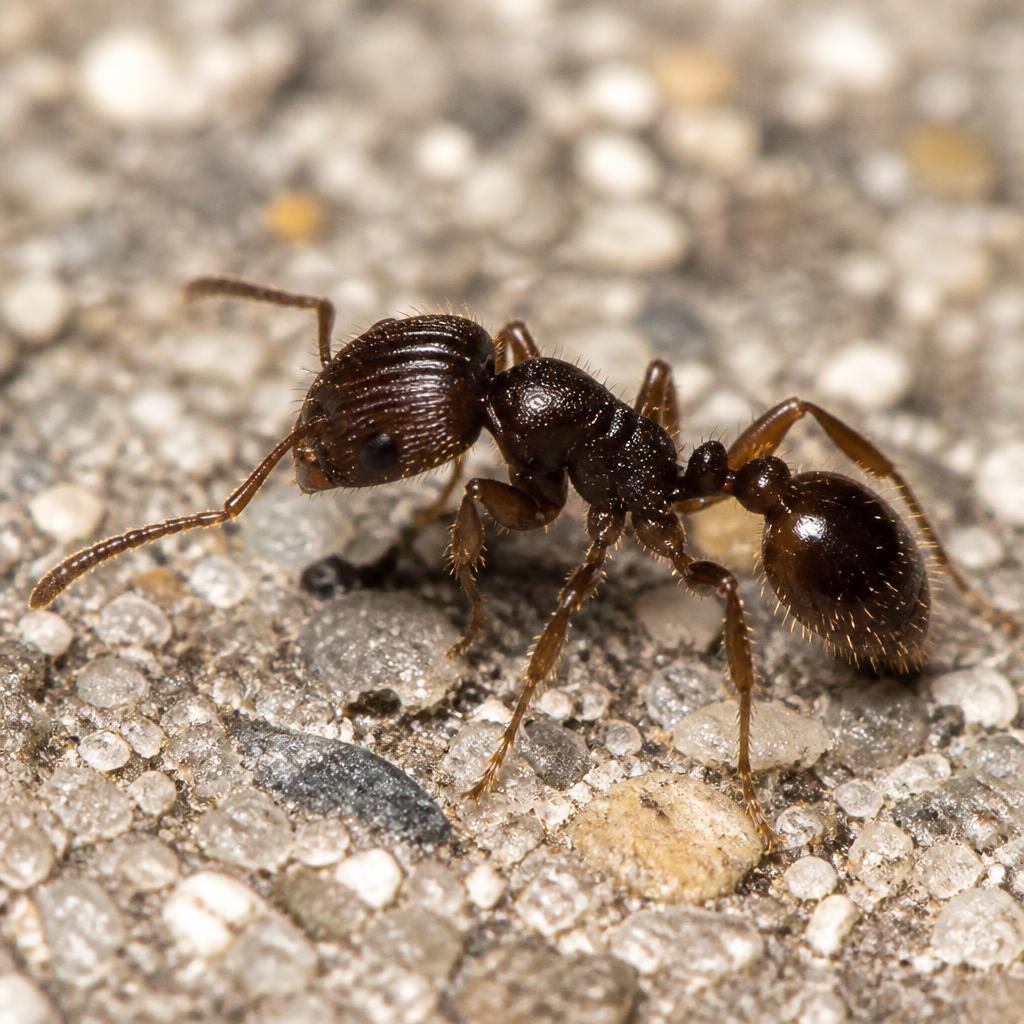
Tetramorium immigrans, commonly known as the pavement ant, is a small, dark brown ant measuring approximately 2.5–4.0 mm in length. A key identifying feature includes distinct parallel grooves or striae on the head and thorax, visible under magnification, and a 12-segmented antenna ending in a 3-segmented club. Colonies are typically monogynous, with a single queen, though polygnous populations with multiple queens have been observed, ranging in size from 3,000 to 10,000 workers or more. Queens can live for several years, with worker lifespan generally 1-3 years; complete metamorphosis includes egg, larval, pupal, and adult stages, with eggs hatching in 2-3 weeks and pupal development taking 2-3 weeks, optimal development occurring between 24-30 degrees Celsius and moderate humidity. Reproductive swarms of winged alates occur from late spring to mid-summer, dispersing to establish new colonies.
Behaviour
Pavement ants exhibit primarily nocturnal foraging behavior, though activity is also observed during daylight hours, especially in cooler conditions or shaded areas. They are highly social, communicating through chemical pheromone trails laid by successful foragers to guide nestmates to food sources. While generally not aggressive towards humans, they will readily bite and sting when their nest is disturbed, though their sting is typically mild and non-venomous. Their omnivorous diet includes a wide range of proteins, carbohydrates, and fats, demonstrating adaptability in food acquisition. Within a colony, workers are responsible for foraging, nest maintenance, and brood care, exhibiting a division of labor crucial for colony survival and growth.
Habits
Pavement ants predominantly establish nests outdoors under paved surfaces such as sidewalks, driveways, patios, and building foundations, often excavating soil directly beneath these structures. Their foraging patterns extend several meters from the colony entrance, often following defined trails along structural edges, expansion joints, and utility conduits, readily entering structures through cracks and crevices in foundations. Indoor infestations are often driven by seasonal changes, especially during periods of heavy rain or extreme heat, or when outdoor food sources become scarce. Technicians should look for tell-tale piles of excavated soil pushed up through pavement cracks or along foundation lines, particularly after rainfall, as well as foraging trails leading into and out of structures, often around doorways, windows, and utility penetrations.
Control methods
- 1Granular bait around foundation and slab edges
- 2Inject gel bait into cracks at activity points
- 3Seal expansion joints and slab penetrations
- 4Remove food spills and sweep crumbs daily
- 5Non-repellent perimeter spray as a barrier
- 6Identify and treat the source nest, not just trails
Tailored to Pavement Ant
IPM Procedure Checklist
Inspection
- Follow trails to nests, food and moisture sources
- Inspect wall voids, slab edges and exterior soil
- Place non-repellent monitors at trail crossings
Identification
- Confirm Pavement Ant (Tetramorium immigrans) — not a look-alike
- Note life stage and risk level: Low
- Capture clear photos and samples for the record
Action Thresholds
- Tolerate low-level activity outside sensitive zones
- Act if activity moves indoors or near food
- Review threshold seasonally with the client
Prevention
- Seal entry cracks, utility penetrations and weep holes
- Eliminate honeydew-producing pests on landscape plants
- Store food in sealed containers and clean spills promptly
Control Methods
- Granular bait around foundation and slab edges
- Inject gel bait into cracks at activity points
- Seal expansion joints and slab penetrations
- Remove food spills and sweep crumbs daily
Monitoring & Evaluation
- Service monitors on schedule and trend captures
- Re-inspect for Pavement Ant activity at follow-up
- Adjust tactics based on data; report findings to client