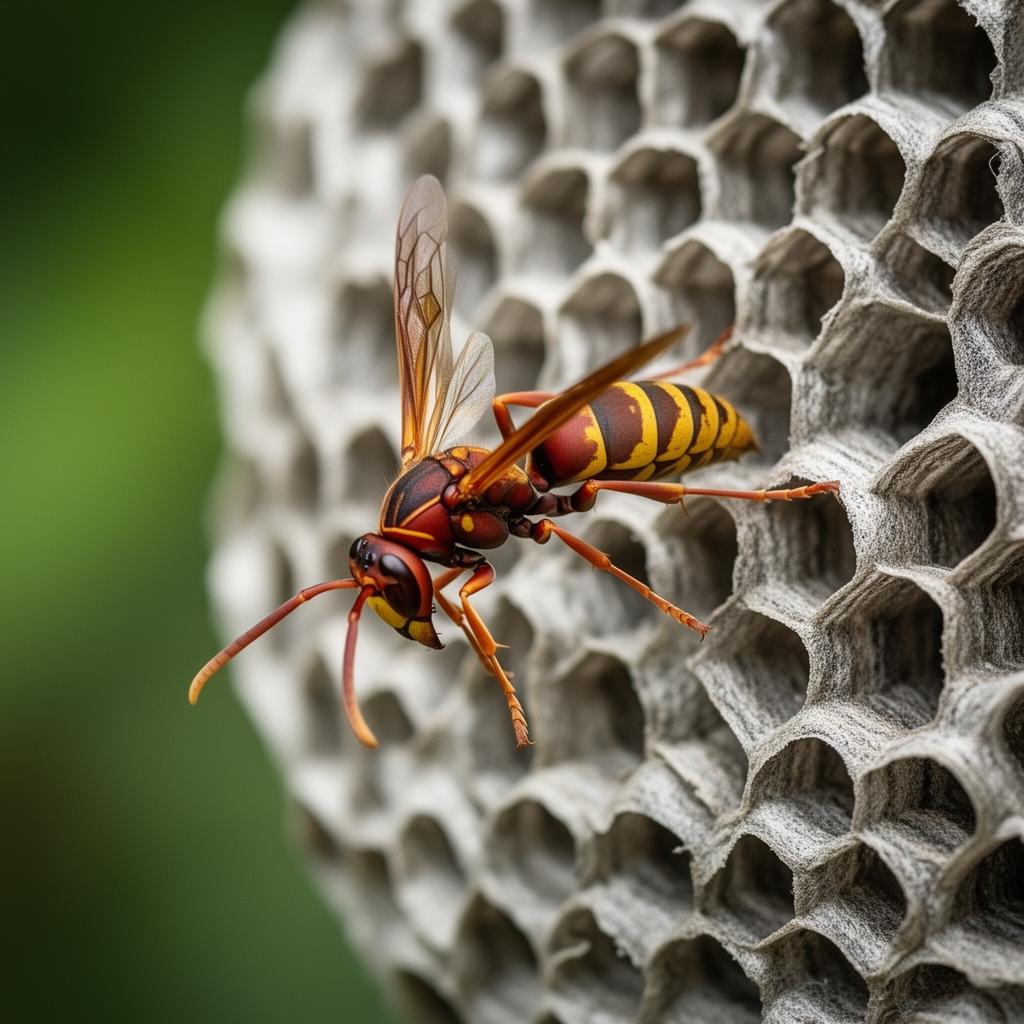
Stinging Insect
Paper Wasp
Polistes spp.
Biology
Paper wasps (genus Polistes, order Hymenoptera, family Vespidae) are medium-sized wasps, typically 15-25 mm in length, characterized by their slender bodies, petiolate waists, and distinctive yellow and brown or black markings, varying by species (e.g., Polistes dominula with prominent yellow faces and abdominal bands, P. fuscata being darker). Their lifecycle is annual, beginning with overwintered gynes (fertilized queens) emerging in spring to initiate new colonies. A single queen can lay up to 2,000 eggs over her lifespan, with successive broods developing through four larval instars and a pupal stage, completing metamorphosis in approximately 30-45 days depending on ambient temperatures (ideal 25-30°C). Workers live for a few weeks to months, while the queen can live for up to a year, with colony size peaking at 20-75 individuals before new reproductive gynes and males emerge in late summer.
Behaviour
Paper wasps exhibit semi-social behavior, forming colonies with a division of labor but without a true worker caste in the early stages. Communication within the colony relies on tactile cues and chemical signals, including alarm pheromones released during nest defense. While generally less aggressive than yellowjackets, they will defend their nests vigorously if disturbed, primarily by stinging, and can deliver multiple, painful stings due to their smooth stingers. Foraging workers are opportunistic, collecting nectar for carbohydrate energy, water for nest construction and thermoregulation, and masticated caterpillars and other insects as protein for developing larvae. Their 'dangling legs' flight pattern is a distinctive behavioral identifier. Public health impact is primarily through stings, which can cause anaphylaxis in sensitive individuals.
Habits
Paper wasps construct characteristic open-faced, umbrella-shaped paper combs primarily in sheltered, elevated locations, such as under eaves, porch ceilings, window frames, attics, and even within utility boxes or dense shrubbery. These nests, composed of wood fibers mixed with saliva, typically contain 20-75 cells. Foraging patterns involve flights of several hundred meters from the nest, with workers returning directly to provision larvae and contribute to nest maintenance. Conducive conditions for colonization include readily available nesting sites protected from wind and rain, proximity to food sources (flowers, gardens with caterpillars), and overwintering sites like wall voids, attics, or shed corners for new queens. Signs of infestation include visible nests, characteristic flight patterns near structures, and the presence of adult wasps, especially near potential food or water sources.
Control methods
- 1Treat exposed combs at dusk with wasp/hornet aerosol
- 2Knock down empty nests in winter and seal soffits
- 3Caulk exterior gaps where queens overwinter
- 4Wear PPE — multiple stings possible from defensive workers
- 5Inspect under eaves, deck rails and shutters in spring
- 6Avoid swatting; sudden movement triggers stinging
Tailored to Paper Wasp
IPM Procedure Checklist
Inspection
- Survey interior and exterior for evidence and conducive conditions
- Document findings with photos and a site map
- Place monitors to confirm activity
Identification
- Confirm Paper Wasp (Polistes spp.) — not a look-alike
- Note life stage and risk level: Moderate
- Capture clear photos and samples for the record
Action Thresholds
- Trigger action when monitor counts trend up
- Re-evaluate weekly during active season
- Document trigger criteria in the IPM plan
Prevention
- Exclude entry points and harborage
- Improve sanitation and moisture control
- Modify habitat around the structure
Control Methods
- Treat exposed combs at dusk with wasp/hornet aerosol
- Knock down empty nests in winter and seal soffits
- Caulk exterior gaps where queens overwinter
- Wear PPE — multiple stings possible from defensive workers
Monitoring & Evaluation
- Service monitors on schedule and trend captures
- Re-inspect for Paper Wasp activity at follow-up
- Adjust tactics based on data; report findings to client