Bat
Pallid Bat
Antrozous pallidus
Biology
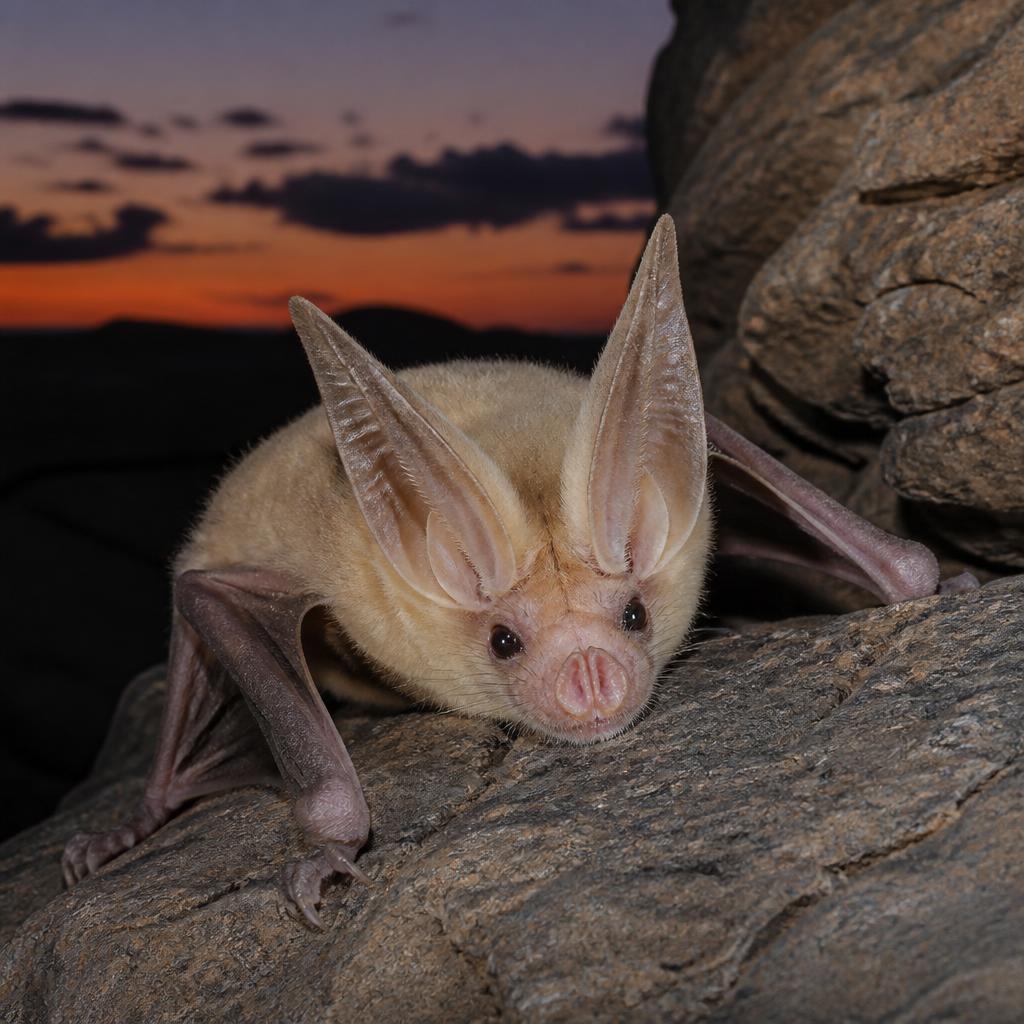
Antrozous pallidus is a large, pale bat of western North America, 10–14 cm long with a 35–40 cm wingspan and 14–25 g in weight. It is unmistakable: cream to light blond fur, very large ears exceeding 2.5 cm, big dark eyes and a blunt pig-like snout with raised nostril ridges. Females bear one to two pups in May or June in maternity colonies of 20 to 200. The species has an unusual defensive skunk-like odour produced by glandular secretions, which is often the first clue to an occupied void.
Behaviour
Uniquely among North American bats, it is largely a gleaner, dropping to the ground to take scorpions, centipedes, Jerusalem crickets, beetles and even small lizards, and it locates prey by listening for their movement rather than by echolocation alone. It is immune to the sting of the bark scorpions it eats. Colonies use night roosts separate from day roosts, often an open porch or carport where partly eaten insect parts and guano accumulate on the floor — the most common homeowner complaint. Rabies precautions apply as with any bat, but the species is docile and non-aggressive.
Habits
Day roosts are rock crevices, cliff faces, mine shafts, bridge expansion joints, attics, tile roofs and barns; night roosts are open porches, carports, breezeways and building overhangs. Signs are guano and discarded insect parts such as scorpion tails and beetle elytra on porch floors and vehicles, plus the distinctive musky odour near an occupied void. Conducive conditions are open tile roof ends, unscreened attic and gable vents, and unlit sheltered overhangs. Night-roost complaints are usually resolved by simple deterrence rather than full exclusion.
Control methods
- 1Distinguish night-roost nuisance from an actual day-roost colony
- 2Deter night roosting with lighting or smooth panelling on the overhang
- 3Exclude day roosts only outside the maternity period
- 4Install one-way excluders, then seal tile ends, vents and crevice gaps
- 5Clean guano and prey remains with PPE and disinfectant
- 6Value the colony — it removes scorpions and large ground insects
- 7Provide crevice-style bat houses in a warm, sheltered spot
Tailored to Pallid Bat
IPM Procedure Checklist
Inspection
- Inspect at dusk to locate active entry/exit points
- Check attics, soffits and chimneys for guano
- Identify maternity colonies before any action
Identification
- Confirm Pallid Bat (Antrozous pallidus) — not a look-alike
- Note life stage and risk level: Moderate
- Capture clear photos and samples for the record
Action Thresholds
- Trigger action when monitor counts trend up
- Re-evaluate weekly during active season
- Document trigger criteria in the IPM plan
Prevention
- Seal gaps ≥6 mm with caulk, mesh and flashing
- Cap chimneys and screen attic vents
- Provide alternative bat houses on the property
Control Methods
- Distinguish night-roost nuisance from an actual day-roost colony
- Deter night roosting with lighting or smooth panelling on the overhang
- Exclude day roosts only outside the maternity period
- Install one-way excluders, then seal tile ends, vents and crevice gaps
Monitoring & Evaluation
- Service monitors on schedule and trend captures
- Re-inspect for Pallid Bat activity at follow-up
- Adjust tactics based on data; report findings to client