Insect
Pacific Dampwood Termite
Zootermopsis angusticollis
Biology
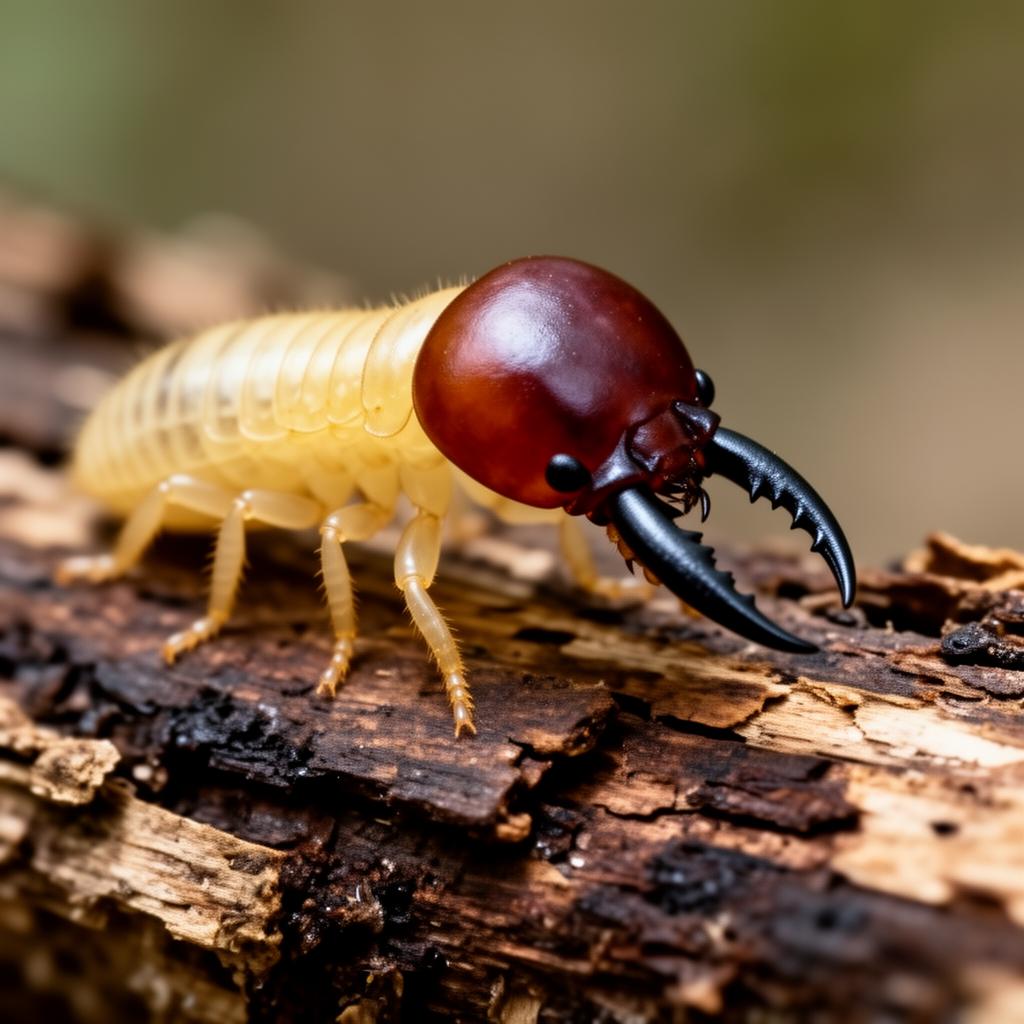
Zootermopsis angusticollis Hagen, belonging to the family Archotermopsidae, is among the largest termite species in North America. Reproductives and soldiers can reach up to 25 mm in length. Alates are dark brown to reddish-brown with heavily sclerotized bodies and prominent, dark wings. Soldiers are characterized by their large, glossy, reddish-brown heads and powerful, toothed mandibles. Nymphs are creamy white with distinct body segments. These termites create galleries within damp, decayed wood, and their colonies are relatively small, typically numbering a few thousand individuals.
Behaviour
Pacific dampwood termites are known for their cryptic habits, rarely venturing into the open. They feed exclusively on wood with high moisture content, often associated with leaks, decay, or direct ground contact. Unlike subterranean termites, they do not construct mud tubes, but their fecal pellets, which are large, oblong, and lack the hexagonal facets of drywood termite frass, can be found within galleries or expelled. Swarming occurs from late summer to early fall.
Habits
Z. angusticollis is prevalent in coastal areas of the Pacific Northwest, where high humidity and abundant moisture create ideal conditions for infestations. They prefer wood with a moisture content exceeding 20%, commonly infesting logs, stumps, utility poles, and structural timbers compromise by water damage. Conducive conditions include prolonged exposure of wood to moisture, such as leaky roofs, plumbing leaks, and poor drainage that allows water accumulation around foundations. Undisturbed decaying wood is particularly attractive.
Control methods
- 1Remove all sources of moisture and repair leaks.
- 2Replace all water-damaged and decaying wood.
- 3Improve ventilation in crawl spaces and attics.
- 4Apply borate treatments to susceptible wood.
- 5Eliminate wood-to-soil contact where possible.
- 6Create a dry environment around structures.
Tailored to Pacific Dampwood Termite
IPM Procedure Checklist
Inspection
- Inspect harborage near food, water and warmth
- Check cracks, voids and appliance interiors
- Place sticky monitors at suspected hot-spots
Identification
- Confirm Pacific Dampwood Termite (Zootermopsis angusticollis) — not a look-alike
- Note life stage and risk level: Moderate
- Capture clear photos and samples for the record
Action Thresholds
- Trigger action when monitor counts trend up
- Re-evaluate weekly during active season
- Document trigger criteria in the IPM plan
Prevention
- Seal cracks, plumbing penetrations and wall voids
- Eliminate moisture sources and standing water
- Improve sanitation: sealed food storage, grease removal
Control Methods
- Remove all sources of moisture and repair leaks.
- Replace all water-damaged and decaying wood.
- Improve ventilation in crawl spaces and attics.
- Apply borate treatments to susceptible wood.
Monitoring & Evaluation
- Service monitors on schedule and trend captures
- Re-inspect for Pacific Dampwood Termite activity at follow-up
- Adjust tactics based on data; report findings to client