Blood Feeder
Oriental Rat Flea
Xenopsylla cheopis
Biology
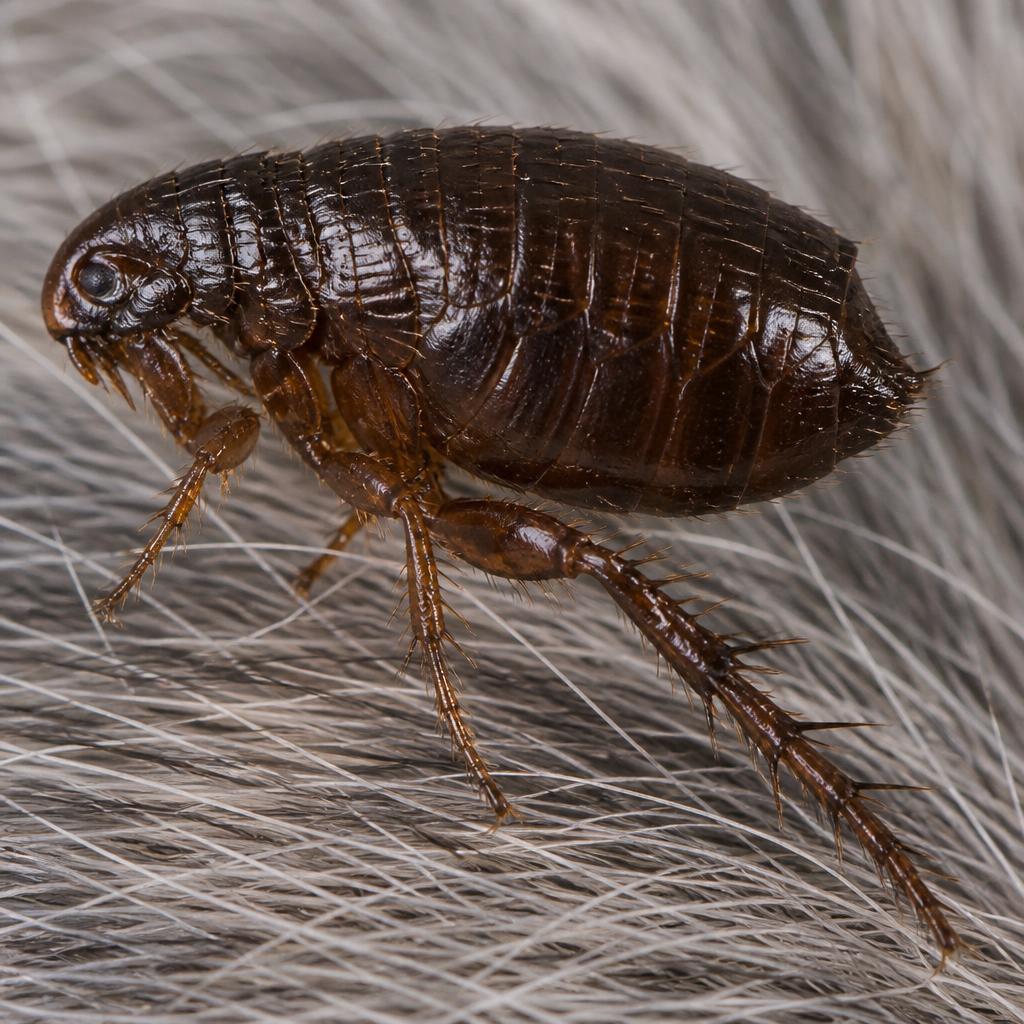
*Xenopsylla cheopis* is the classic plague vector flea, 1.5–4 mm, dark brown and laterally flattened, and readily separated from *Ctenocephalides* by the complete absence of genal and pronotal combs. Its normal hosts are commensal rats, chiefly *Rattus rattus* and *Rattus norvegicus*. Females lay eggs in nest material after each blood meal; larvae feed on nest debris and adult flea faeces, pupate in a cocoon, and emerge as adults in as little as two to three weeks in warm humid conditions. Adults can survive weeks off-host in a nest, which is why they are still infective after the host rodent dies.
Behaviour
Feeding is frequent and messy. In plague-infected fleas the *Yersinia pestis* biofilm blocks the proventriculus, the flea regurgitates bacteria into each new bite wound, and the starving flea bites repeatedly and indiscriminately — the mechanism that drives transmission. The same species transmits murine (endemic) typhus, *Rickettsia typhi*, through infected flea faeces scratched into the bite, and serves as intermediate host of the rodent tapeworms *Hymenolepis diminuta* and *H. nana*. When a rodent host dies or is removed, hungry fleas leave the carcass and readily bite people, which makes rodent control without concurrent flea treatment actively dangerous.
Habits
Populations live in rat nests, burrows, wall and ceiling voids, subfloors, sewers, dock and warehouse areas, and around grain and refuse storage — anywhere commensal rats harbour. Conducive conditions are active rodent infestation, accessible food waste, unsealed voids and burrow systems, and warm humid microclimates. Inspection follows the rodent: droppings, runways, rub marks, burrows, and dead rodents, with flea presence confirmed by white-sock or sticky-trap sampling in the affected void.
Control methods
- 1Treat voids and runways for fleas BEFORE removing rodents
- 2Apply an insecticidal dust to burrows, nests and wall voids
- 3Then execute rodent trapping and carcass removal
- 4Remove nesting material and sanitise contaminated voids with PPE
- 5Rodent-proof: seal gaps, screen vents, secure refuse and food storage
- 6Report suspected plague or murine typhus exposure to public health
- 7Monitor with sticky traps for six weeks post-treatment
Tailored to Oriental Rat Flea
IPM Procedure Checklist
Inspection
- Survey interior and exterior for evidence and conducive conditions
- Document findings with photos and a site map
- Place monitors to confirm activity
Identification
- Confirm Oriental Rat Flea (Xenopsylla cheopis) — not a look-alike
- Note life stage and risk level: Severe
- Capture clear photos and samples for the record
Action Thresholds
- Zero-tolerance: act on first confirmed sighting
- Notify client and document the trigger event
- Prioritize health and regulatory risk in the plan
Prevention
- Exclude entry points and harborage
- Improve sanitation and moisture control
- Modify habitat around the structure
Control Methods
- Treat voids and runways for fleas BEFORE removing rodents
- Apply an insecticidal dust to burrows, nests and wall voids
- Then execute rodent trapping and carcass removal
- Remove nesting material and sanitise contaminated voids with PPE
Monitoring & Evaluation
- Service monitors on schedule and trend captures
- Re-inspect for Oriental Rat Flea activity at follow-up
- Adjust tactics based on data; report findings to client