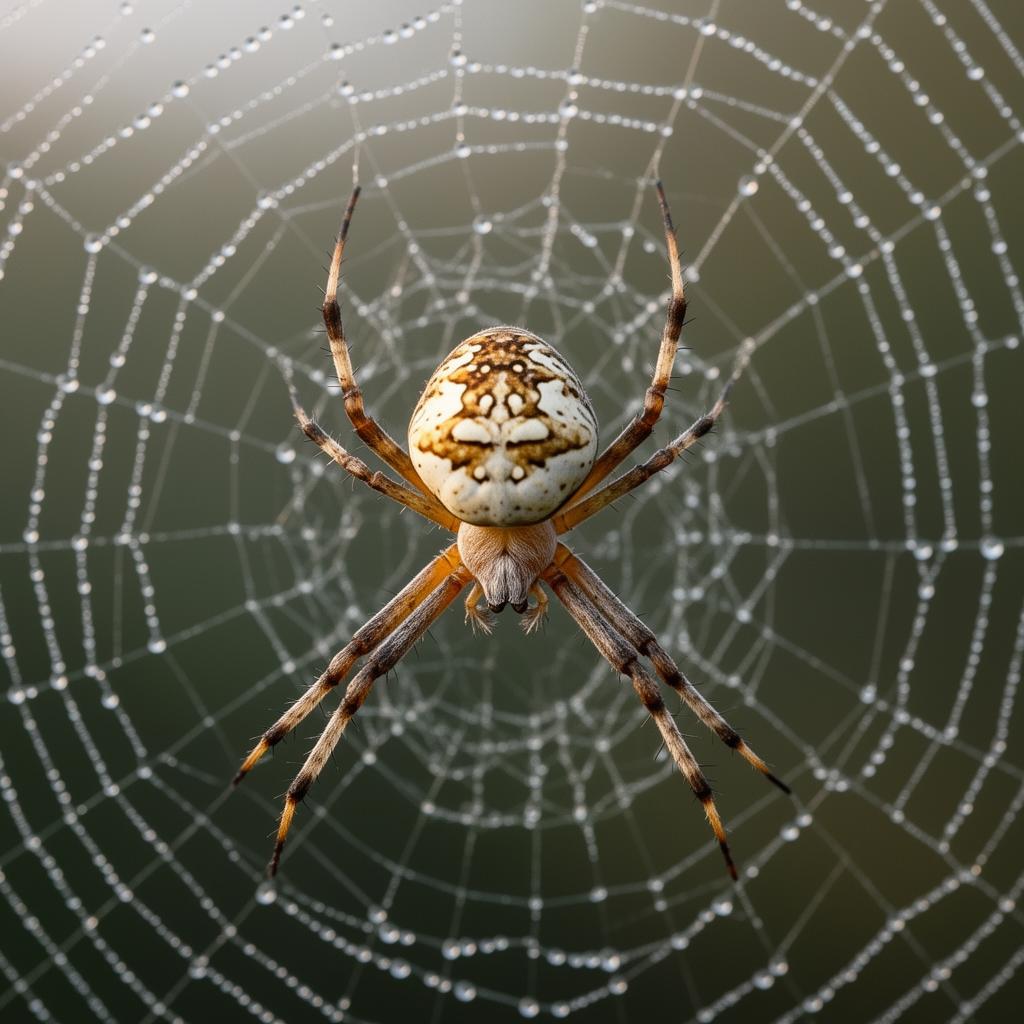
Spider
Orb Weaver
Araneidae
Biology
Orb weavers, family Araneidae, comprise a large and diverse group of spiders renowned for constructing classic, spiral, wheel-shaped webs. These spiders vary significantly in size, color, and morphology; some common genera include Argiope, Araneus, and Neoscona. Females are generally much larger than males, with body lengths ranging from 5 mm to over 30 mm. Many species exhibit cryptic coloration or body shapes to camouflage themselves. Their life cycle is typically annual, with eggs laid in a silken sac in late summer or fall, hatching the following spring. Spiderlings disperse and mature over the summer.
Behaviour
Orb weavers are primarily nocturnal web builders, though some species maintain their webs during the day. They construct intricate webs to intercept flying insects, often consuming and rebuilding their webs daily, especially if damaged or unproductive. The spider typically waits in the center of the web or a nearby retreat, connected by a signal line, to detect vibrations from captured prey. When prey is ensnared, the spider quickly moves to subdue and wrap it in silk before feeding. They are generally shy and non-aggressive towards humans, biting only if provoked or accidentally trapped.
Habits
Orb weavers are found in a wide variety of outdoor habitats, including gardens, forests, fields, and urban areas, wherever suitable anchor points for their webs are available. They prefer areas with abundant flying insects, such as near lights, dense vegetation, or water sources. Webs are typically suspended between branches, tall grasses, or structures. Conducive conditions include areas with ample vegetation and undisturbed spaces for web construction. While beneficial predators, their large webs can be a nuisance in residential or public areas. They play a significant role in controlling insect populations.
Control methods
- 1Remove existing webs with a broom or vacuum.
- 2Reduce outdoor light sources that attract prey.
- 3Keep vegetation trimmed away from structures.
- 4Seal cracks and openings in building exteriors.
- 5Minimize clutter in storage areas and around homes.
- 6Consider targeted insecticide application for severe infestations.
Tailored to Orb Weaver
IPM Procedure Checklist
Inspection
- Inspect undisturbed corners, voids and stored items
- Identify webs, egg sacs and prey debris
- Note conducive insect prey populations
Identification
- Confirm Orb Weaver (Araneidae) — not a look-alike
- Note life stage and risk level: Low
- Capture clear photos and samples for the record
Action Thresholds
- Tolerate low-level activity outside sensitive zones
- Act if activity moves indoors or near food
- Review threshold seasonally with the client
Prevention
- Reduce clutter and seal cracks around the structure
- Switch exterior lights to yellow / sodium to reduce prey
- Install door sweeps and screen vents
Control Methods
- Remove existing webs with a broom or vacuum.
- Reduce outdoor light sources that attract prey.
- Keep vegetation trimmed away from structures.
- Seal cracks and openings in building exteriors.
Monitoring & Evaluation
- Service monitors on schedule and trend captures
- Re-inspect for Orb Weaver activity at follow-up
- Adjust tactics based on data; report findings to client