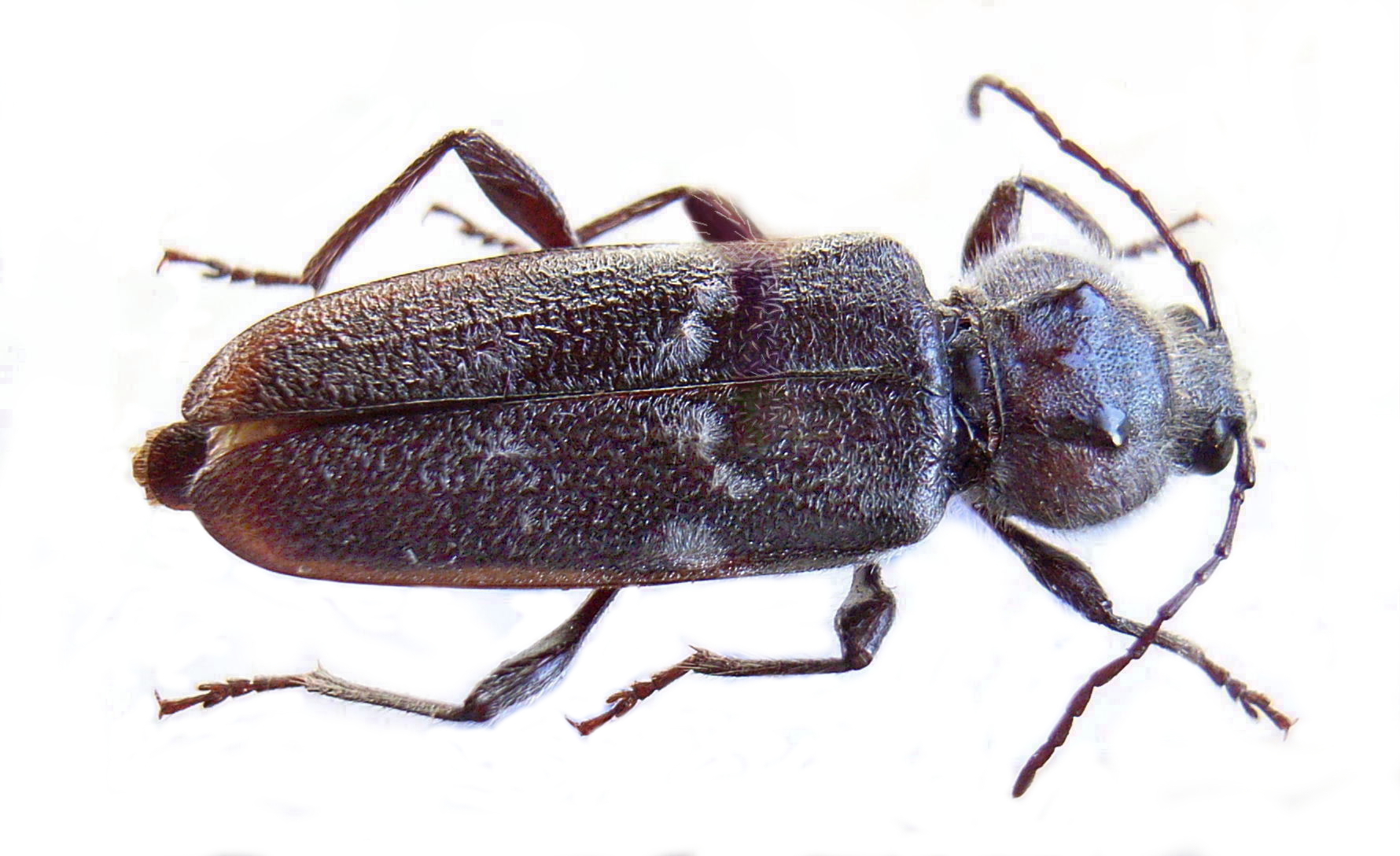
Insect
Old House Borer
Hylotrupes bajulus
Biology
The old house borer, Hylotrupes bajulus (Linnaeus), is a cerambycid beetle, belonging to the order Coleoptera. Adults are characterized by their flattened, elongated body, typically ranging from 8–25 mm in length, and possess distinct antennal segments that are longer than the head and thorax combined. Females are generally larger than males. Larvae are creamy-white, grub-like, and can reach up to 30 mm, displaying strong mandibles for wood boring. The life cycle can span 2–15 years, heavily influenced by temperature, humidity, and the nutritional value of the wood, with optimal development occurring between 25-30°C and 80-90% relative humidity. Egg deposition occurs in cracks and crevices of softwood timbers, with females laying 100–200 eggs over several days.
Behaviour
Hylotrupes bajulus larvae are exclusively xylophagous, feeding on the cellulose and hemicellulose components of sound sapwood of coniferous species, with a particular preference for pine, fir, and spruce. Their characteristic chewing sound, a rasping or ticking, is often audible in quiet environments, produced by their mandibles excavating galleries. Larval activity significantly compromises structural integrity over time, though external damage may be minimal until emergence. Adults are typically active during warm summer months, primarily for reproduction, and exhibit limited dispersal capabilities beyond the structure from which they emerge, relying on passive transport for wider distribution. They pose no direct public health risk, but their destructive feeding can lead to costly structural damage and necessitate extensive timber replacement.
Habits
Optimal harborage for old house borer larvae is the sapwood of newly installed (<10 years old) softwood timbers within heated structures, particularly attics, crawl spaces, and subflooring, where moisture content is typically 10–30%. Infestations are primarily indoor, though adults may emerge outdoors if infested wood is present. Technicians should meticulously inspect accessible wooden components for oval emergence holes, typically 6–10 mm in diameter, with frayed edges, indicative of adult exit. Frass, a fine, powdery, gritty wood dust that may be audible when scraped, is often present in larval galleries but rarely expelled, making internal inspection difficult without specialized tools or sonic detectors. Conducive conditions include timbers with high sapwood content and moderate humidity, as sustained damp conditions favor rapid larval development and survival.
Control methods
- 1Map active galleries with stethoscope or moisture meter
- 2Borate surface and pressure treatment of structural wood
- 3Whole-structure fumigation for widespread infestation
- 4Replace badly damaged framing
- 5Reduce attic humidity below 20% MC
- 6Re-inspect annually after treatment
Tailored to Old House Borer
IPM Procedure Checklist
Inspection
- Inspect harborage near food, water and warmth
- Check cracks, voids and appliance interiors
- Place sticky monitors at suspected hot-spots
Identification
- Confirm Old House Borer (Hylotrupes bajulus) — not a look-alike
- Note life stage and risk level: High
- Capture clear photos and samples for the record
Action Thresholds
- Zero-tolerance: act on first confirmed sighting
- Notify client and document the trigger event
- Prioritize health and regulatory risk in the plan
Prevention
- Seal cracks, plumbing penetrations and wall voids
- Eliminate moisture sources and standing water
- Improve sanitation: sealed food storage, grease removal
Control Methods
- Map active galleries with stethoscope or moisture meter
- Borate surface and pressure treatment of structural wood
- Whole-structure fumigation for widespread infestation
- Replace badly damaged framing
Monitoring & Evaluation
- Service monitors on schedule and trend captures
- Re-inspect for Old House Borer activity at follow-up
- Adjust tactics based on data; report findings to client