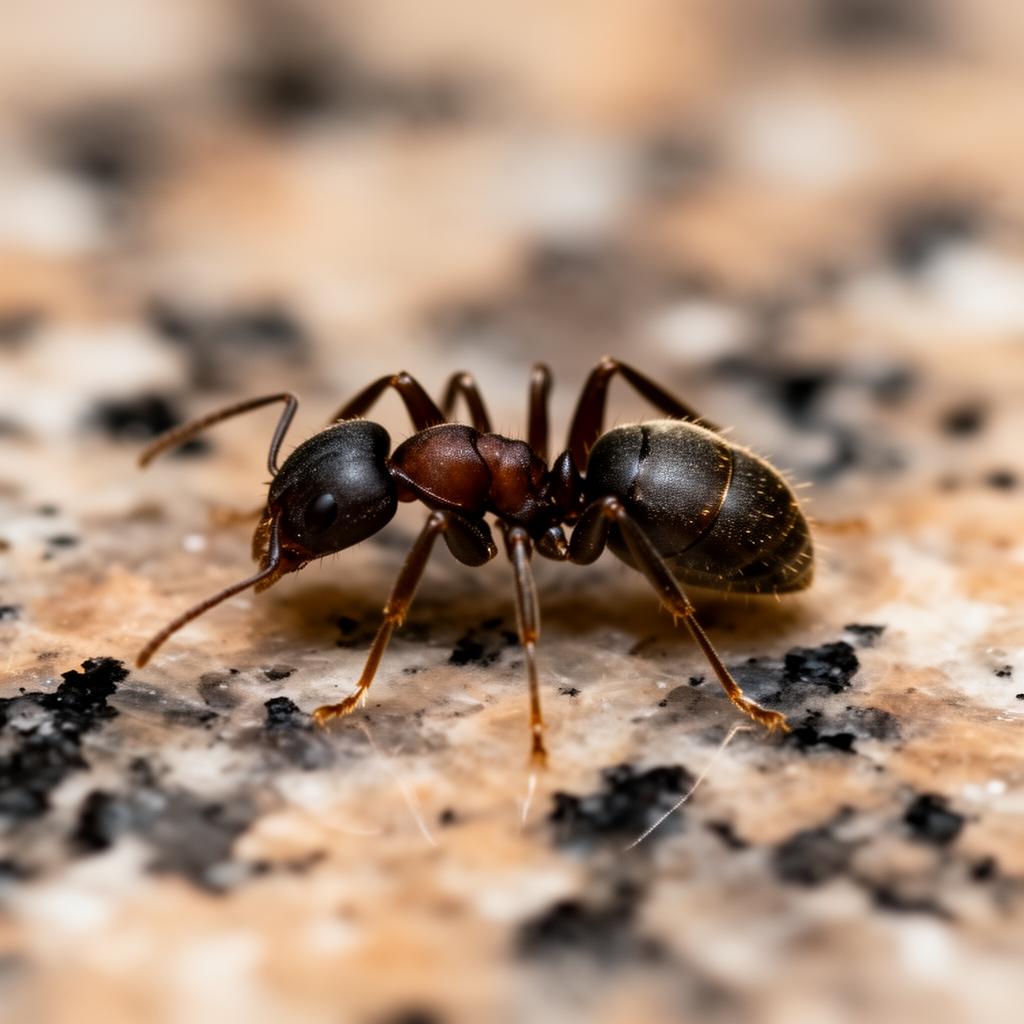
Ant
Odorous House Ant
Tapinoma sessile
Biology
The odorous house ant, Tapinoma sessile, is a Dolichoderine ant within the family Formicidae. Workers are monomorphic, ranging from 2.4 to 3.3 mm in length, characterized by their dark brown to black coloration and a flattened body profile with a single, hidden petiole node. Colonies are typically polygynous, housing multiple queens, and can range in size from a few hundred to over 100,000 workers, with queen numbers often in the hundreds. Queens have a lifespan of several years, while workers live for approximately 2-3 months. Reproduction occurs through budding, a process where a subset of the colony, including queens, workers, and brood, detaches to form a new colony, often in close proximity to the original nest. This species exhibits a high tolerance for varying environmental conditions, thriving in temperatures between 20-30°C and moderately humid environments, contributing to its widespread distribution across North America.
Behaviour
Tapinoma sessile exhibits primarily diurnal foraging activity, though they can forage at night, especially indoors or during warmer periods. They are highly adaptable in their social structure, transitioning from monodomous to polydomous colonies as they grow or encounter resource limitations. Communication within the colony relies heavily on chemical signals, with workers using trail pheromones for recruitment to food sources and alarm pheromones when disturbed, which is why crushing them releases a characteristic rotten-coconut smell (attributed to methyl ketones like 2-hexanone and 2-heptanone). They are omnivorous generalist feeders, with a strong preference for sugary substances, honeydew from aphids and mealybugs, and also consume protein sources like small insects and pet food. While not directly damaging to structures, their foraging activities can contaminate food storage areas and their prolific nesting can become a nuisance, particularly in sensitive environments like hospitals or food processing plants. They do not sting, but can bite, though this is rare.
Habits
Odorous house ants are opportunistic nesters, establishing colonies in a wide variety of protected locations, both indoors and outdoors. Preferred outdoor harborage sites include shallow nests under rocks, logs, leaf litter, landscaping timbers, and pavers, often near moisture sources. Indoors, they commonly nest in wall voids, insulation, under sinks, behind dishwashers, in potted plant soil, and within cluttered areas like attics or crawl spaces. Foraging patterns typically involve following established chemical trails along edges and structural lines, such as baseboards, counter edges, window sills, and utility pipes, often forming distinct trails. They are highly responsive to environmental changes; colony relocation via budding is common if nests are disturbed by pesticides, flooding, or persistent human activity, facilitating their rapid spread. Conducive conditions for infestation include readily available food and water sources, structural entry points like cracks in foundations or unsealed utility penetrations, and high moisture areas from leaky pipes or condensation.
Control methods
- 1Slow-acting sweet liquid baits (sugar/borate)
- 2Avoid spraying — causes budding and spread
- 3Find and treat satellite nests in voids
- 4Trim plants touching the structure
- 5Seal utility penetrations and weep holes
- 6Wipe trails with soapy water after baiting
Tailored to Odorous House Ant
IPM Procedure Checklist
Inspection
- Follow trails to nests, food and moisture sources
- Inspect wall voids, slab edges and exterior soil
- Place non-repellent monitors at trail crossings
Identification
- Confirm Odorous House Ant (Tapinoma sessile) — not a look-alike
- Note life stage and risk level: Low
- Capture clear photos and samples for the record
Action Thresholds
- Tolerate low-level activity outside sensitive zones
- Act if activity moves indoors or near food
- Review threshold seasonally with the client
Prevention
- Seal entry cracks, utility penetrations and weep holes
- Eliminate honeydew-producing pests on landscape plants
- Store food in sealed containers and clean spills promptly
Control Methods
- Slow-acting sweet liquid baits (sugar/borate)
- Avoid spraying — causes budding and spread
- Find and treat satellite nests in voids
- Trim plants touching the structure
Monitoring & Evaluation
- Service monitors on schedule and trend captures
- Re-inspect for Odorous House Ant activity at follow-up
- Adjust tactics based on data; report findings to client