Rodent
Nutria
Myocastor coypus
Biology
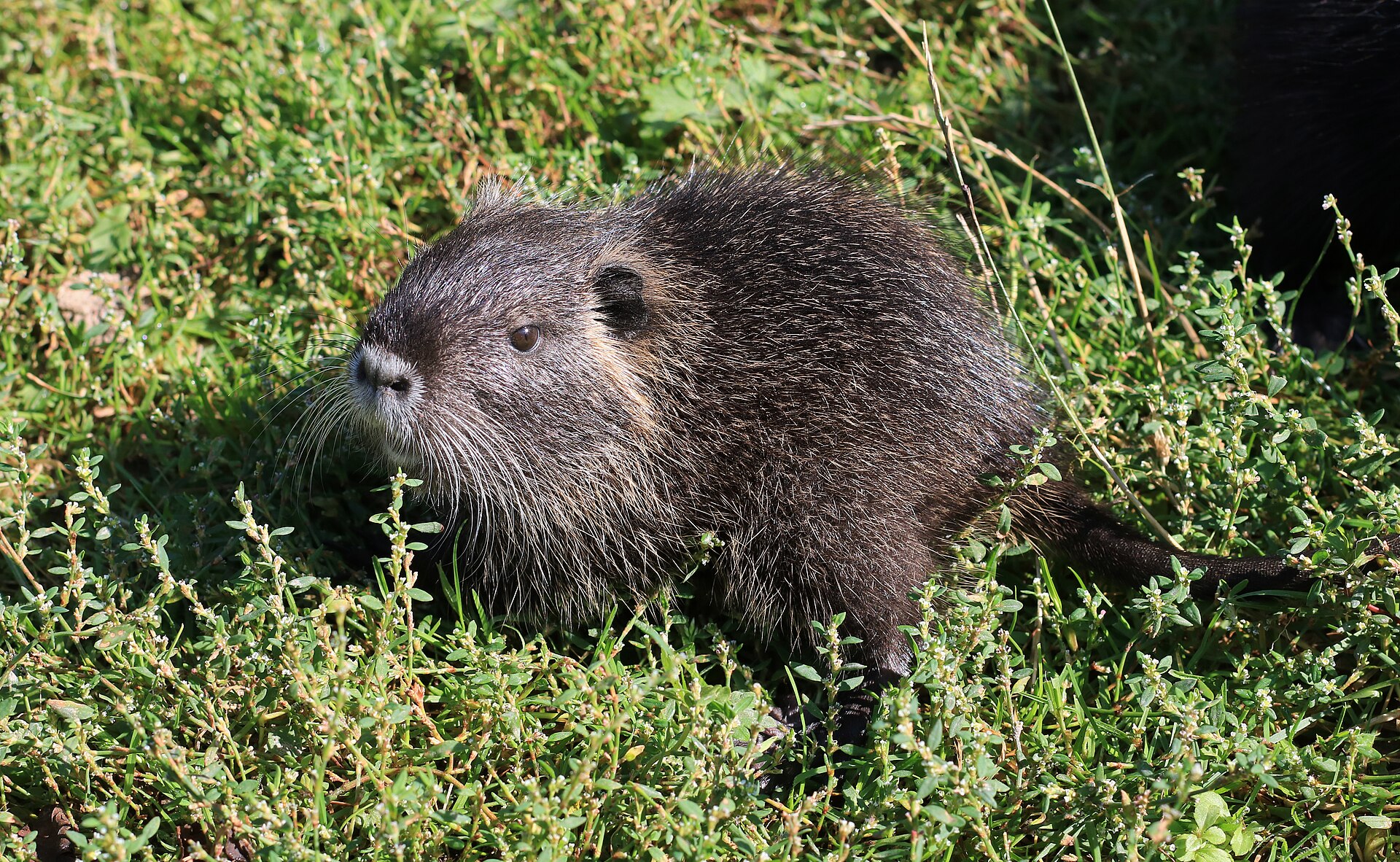
Myocastor coypus, commonly known as the nutria or coypu, is a large, semi-aquatic, herbivorous rodent native to South America, introduced to North America. Adults typically weigh 4-10 kg and measure 70-100 cm in total length, including a long, round, scaly tail. They possess coarse brown fur, prominent white whiskers, webbed hind feet, and bright orange incisors, which grow continually. Nutria are primarily crepuscular and nocturnal. They are highly prolific breeders, capable of year-round reproduction in warm climates, producing 1-3 litters annually of 2-13 young (average 4-5) after a gestation of 130 days. Young are precocial. Lifespan is 1-3 years in the wild.
Behaviour
Nutria are voracious herbivores, consuming up to 25% of their body weight daily in various aquatic and terrestrial vegetation. Their diet includes roots, rhizomes, tubers, and shoots of wetland plants, as well as agricultural crops. They cause extensive damage to wetlands by converting vegetated areas into open water through destructive foraging, known as 'eat-outs.' Nutria are highly adept swimmers and divers. They construct burrows in banks, contributing to erosion and undermining infrastructure. They are generally shy but can be aggressive when cornered. Their burrowing can destabilize levees, dikes, roads, and bridge abutments, leading to significant structural damage.
Habits
Nutria inhabit a wide range of aquatic environments, including marshes, swamps, ponds, lakes, rivers, and ditches, preferring slow-moving or stagnant water with abundant emergent vegetation. They construct burrows into banks, often with multiple entrances, or create platforms of vegetation to rest and feed. Conducive conditions for nutria proliferation include mild climates, abundant wetland vegetation, and the absence of natural predators. Their destructive foraging habits lead to habitat degradation and loss, particularly of coastal wetlands. In agricultural areas, they cause significant crop damage. Their presence is often indicated by distinctive trails through vegetation and 'clipped' stems of plants.
Control methods
- 1Implement targeted trapping programs.
- 2Restore natural wetland vegetation.
- 3Install exclusion fencing around vulnerable areas.
- 4Utilize habitat modification to deter them.
- 5Destroy active burrows and feeding platforms.
- 6Educate public on invasive species impact.
Tailored to Nutria
IPM Procedure Checklist
Inspection
- Locate runways, droppings, rub marks and gnaw damage
- Identify entry points (gaps ≥6 mm) and harborage
- Place tracking patches or non-toxic monitors
Identification
- Confirm Nutria (Myocastor coypus) — not a look-alike
- Note life stage and risk level: High
- Capture clear photos and samples for the record
Action Thresholds
- Zero-tolerance: act on first confirmed sighting
- Notify client and document the trigger event
- Prioritize health and regulatory risk in the plan
Prevention
- Exclude with steel wool, hardware cloth and door sweeps
- Trim vegetation 0.5 m from structure; clear debris
- Secure trash, pet food and stored grain
Control Methods
- Implement targeted trapping programs.
- Restore natural wetland vegetation.
- Install exclusion fencing around vulnerable areas.
- Utilize habitat modification to deter them.
Monitoring & Evaluation
- Service monitors on schedule and trend captures
- Re-inspect for Nutria activity at follow-up
- Adjust tactics based on data; report findings to client