Bat
Northern Long-eared Bat
Myotis septentrionalis
Biology
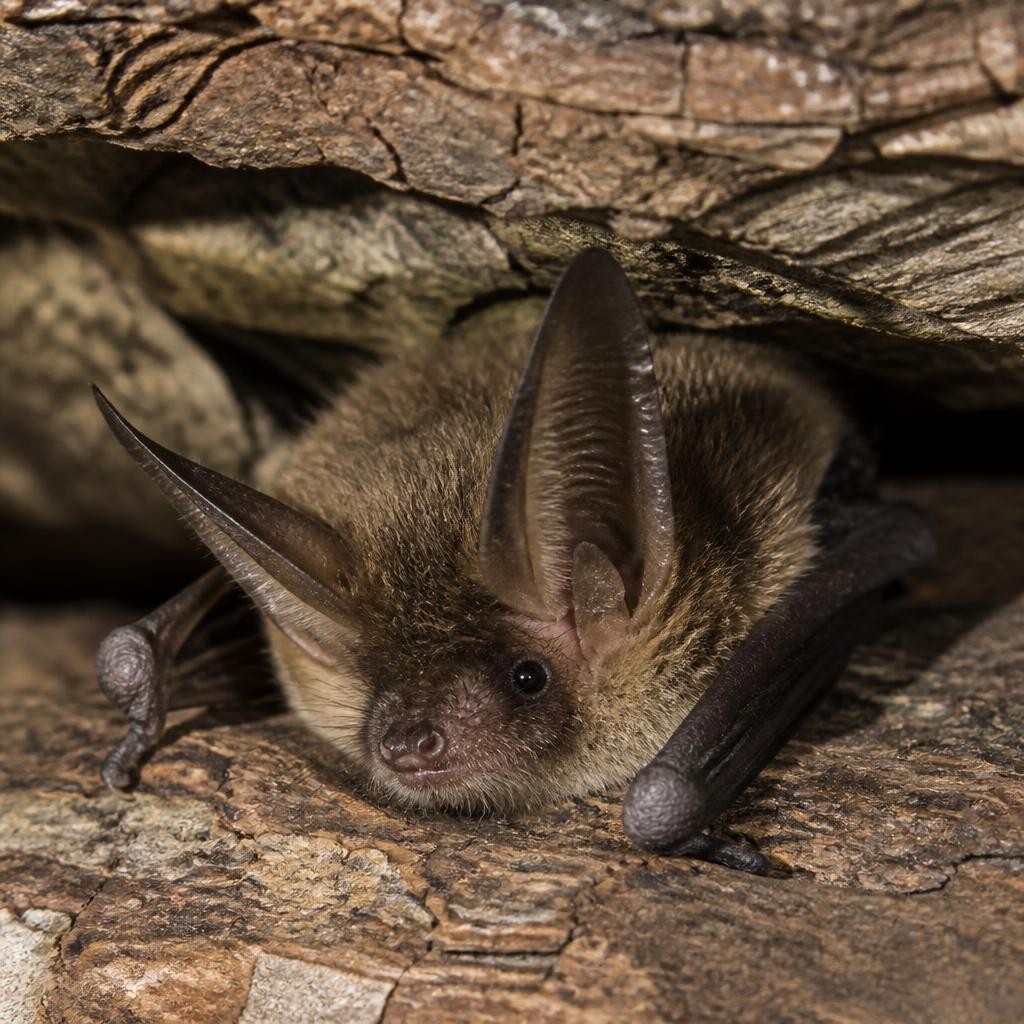
Myotis septentrionalis is a medium-small Myotis, 8–9.5 cm long with a 23–26 cm wingspan and 5–8 g in weight, separated from other Myotis by conspicuously long ears that extend beyond the nose when pressed forward and a long, sharply pointed tragus. Females bear a single pup in June in small maternity groups, usually 30 to 60 individuals, under loose bark or in tree cavities rather than in buildings. White-nose syndrome has reduced populations by more than 95% in the core of its range, and it is listed as endangered under the United States Endangered Species Act.
Behaviour
It forages within cluttered forest interiors, using short high-frequency calls and frequently gleaning insects directly from leaves and bark rather than catching them in open flight — a specialisation few North American bats share. Roost trees are switched every few days, so it rarely builds up guano anywhere. It hibernates in caves and mines, tucked into small cracks and often deep in the coldest, most humid recesses. Structural encounters are uncommon and usually involve a single individual in a barn, shed or cabin rather than an established colony.
Habits
Summer roosts are under exfoliating bark, in tree cavities and cracks, occasionally in barns and sheds; winter roosts are caves and mines. Signs of building use are minimal — a few scattered pellets and a lone bat tucked into a crack. Conducive conditions are wooded properties with open outbuildings. Because the species is federally endangered, any work at a known or suspected roost triggers regulatory obligations: confirm identification, document it, and consult the relevant wildlife agency before touching the roost. Standard rabies precautions still apply to any grounded bat.
Control methods
- 1Confirm identification by ear and tragus length before any action
- 2Stop and consult wildlife authorities — the species is federally endangered
- 3Do not exclude or disturb a confirmed roost without authorisation
- 4Retain snags and bark-shedding trees where possible on the property
- 5Screen outbuildings only during the authorised seasonal window
- 6Decontaminate equipment to avoid spreading white-nose syndrome
- 7Refer grounded or injured bats to licensed rehabilitators
Tailored to Northern Long-eared Bat
IPM Procedure Checklist
Inspection
- Inspect at dusk to locate active entry/exit points
- Check attics, soffits and chimneys for guano
- Identify maternity colonies before any action
Identification
- Confirm Northern Long-eared Bat (Myotis septentrionalis) — not a look-alike
- Note life stage and risk level: Low
- Capture clear photos and samples for the record
Action Thresholds
- Tolerate low-level activity outside sensitive zones
- Act if activity moves indoors or near food
- Review threshold seasonally with the client
Prevention
- Seal gaps ≥6 mm with caulk, mesh and flashing
- Cap chimneys and screen attic vents
- Provide alternative bat houses on the property
Control Methods
- Confirm identification by ear and tragus length before any action
- Stop and consult wildlife authorities — the species is federally endangered
- Do not exclude or disturb a confirmed roost without authorisation
- Retain snags and bark-shedding trees where possible on the property
Monitoring & Evaluation
- Service monitors on schedule and trend captures
- Re-inspect for Northern Long-eared Bat activity at follow-up
- Adjust tactics based on data; report findings to client