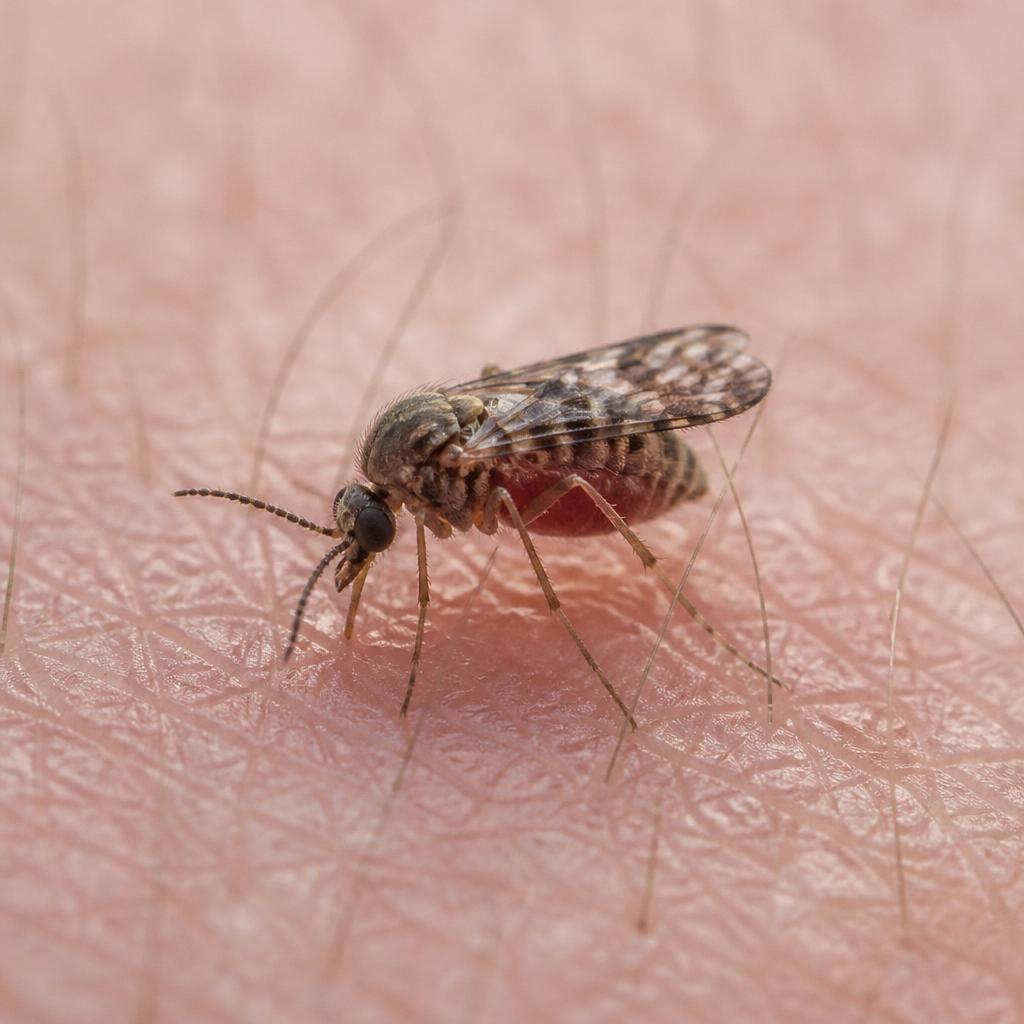
Blood Feeder
Biting Midge (No-See-Um)
Culicoides
Biology
Culicoides, commonly known as biting midges or 'no-see-ums', belong to the family Ceratopogonidae. These are minute flies, typically 1-3 mm in length, with broad, mottled wings and a humped thorax. Their small size makes them notoriously difficult to observe. The lifecycle from egg to adult varies by species but generally takes 2-6 weeks, heavily influenced by temperature and moisture. Females lay eggs singly or in rafts on moist soil or vegetation near water. Larvae are elongated, worm-like, and semi-aquatic, developing through four instars over 1-4 weeks, feeding on decaying organic matter and small invertebrates. Pupation occurs in moist soil near the larval habitat.
Behaviour
Biting midges are notorious for their painful bites, often feeling like pinpricks, which are disproportionate to their size. Only the female takes a blood meal for egg development; males feed on nectar. They are most active at dawn and dusk ('crepuscular'), but some species will bite throughout the day or night. Their flight is weak and easily influenced by wind, causing them to remain close to their breeding sites, often within a few hundred meters. They are attracted to host cues like CO2 and lactic acid and can readily penetrate standard window screens.
Habits
Culicoides species are found in diverse habitats, but all require moist or wet areas for larval development. Harborage sites for adults include dense vegetation, shaded areas, and sometimes indoors when seeking shelter from wind or extreme temperatures. Larvae thrive in mud, muck, and moist soil rich in organic matter, often along the edges of salt marshes, ponds, and streams, or in tree holes. Conducive conditions include high humidity, stagnant or slow-moving water, and dense vegetation that provides shelter and retains moisture. Warm temperatures accelerate their breeding and activity.
Control methods
- 1Avoid outdoor activity at dawn/dusk.
- 2Wear long sleeves and pants.
- 3Apply insect repellents with DEET.
- 4Install fine-mesh screens (16-18 mesh).
- 5Eliminate standing water sources.
- 6Trim vegetation around properties.
Tailored to Biting Midge (No-See-Um)
IPM Procedure Checklist
Inspection
- Survey interior and exterior for evidence and conducive conditions
- Document findings with photos and a site map
- Place monitors to confirm activity
Identification
- Confirm Biting Midge (No-See-Um) (Culicoides) — not a look-alike
- Note life stage and risk level: Moderate
- Capture clear photos and samples for the record
Action Thresholds
- Trigger action when monitor counts trend up
- Re-evaluate weekly during active season
- Document trigger criteria in the IPM plan
Prevention
- Exclude entry points and harborage
- Improve sanitation and moisture control
- Modify habitat around the structure
Control Methods
- Avoid outdoor activity at dawn/dusk.
- Wear long sleeves and pants.
- Apply insect repellents with DEET.
- Install fine-mesh screens (16-18 mesh).
Monitoring & Evaluation
- Service monitors on schedule and trend captures
- Re-inspect for Biting Midge (No-See-Um) activity at follow-up
- Adjust tactics based on data; report findings to client