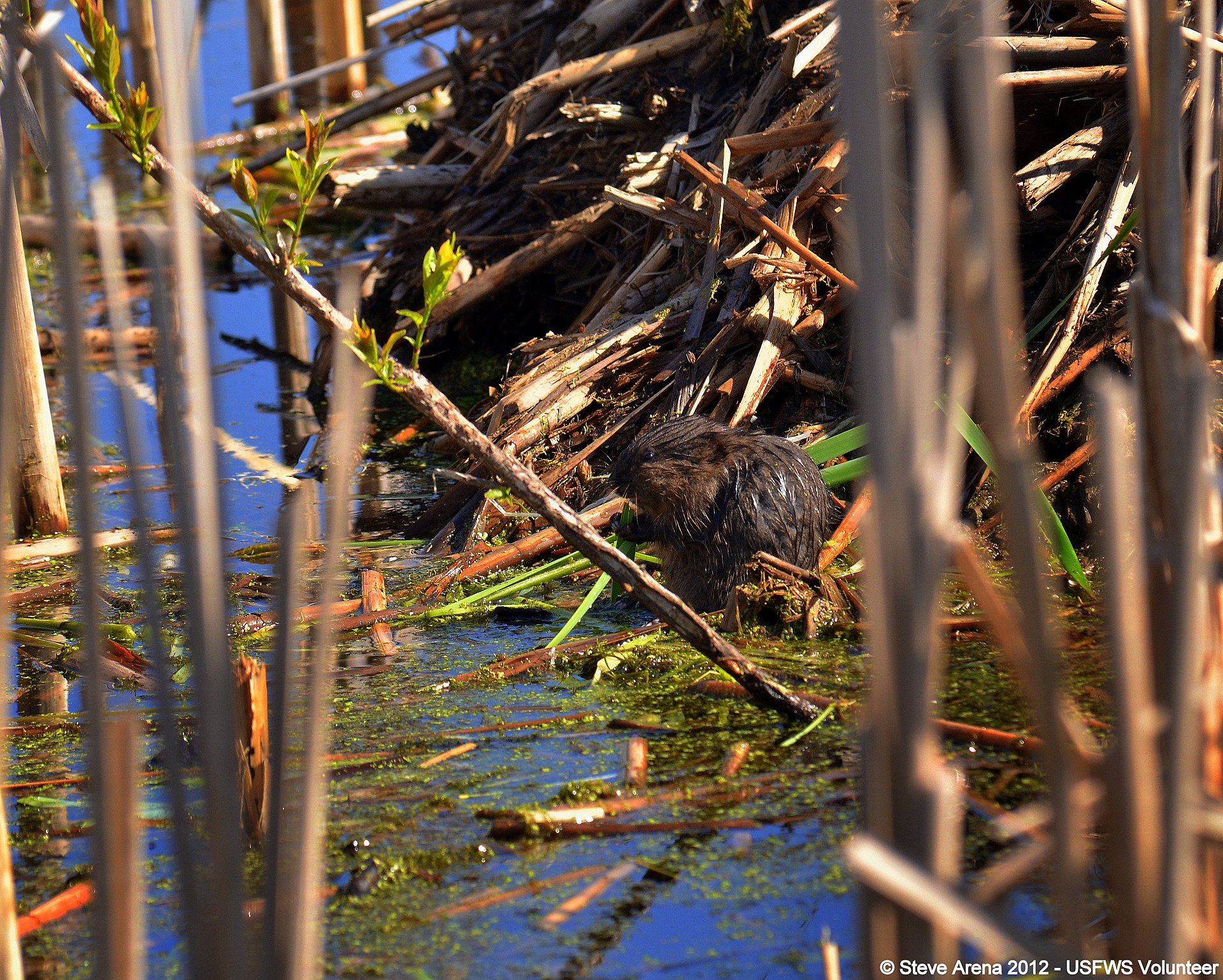
Rodent
Muskrat
Ondatra zibethicus
Biology
Ondatra zibethicus, the muskrat, is a semi-aquatic rodent native to North America, weighing 0.6-2 kg and measuring 40-70 cm in total length, including a vertically flattened, scaly tail. They possess glossy dark brown fur, slightly webbed hind feet, and inner-sealing lips behind their incisors, adaptations for an aquatic existence. Muskrats are primarily crepuscular and nocturnal. They breed multiple times a year, depending on geography and conditions, producing litters of 1-11 young (average 4-8) after a gestation of 28-30 days. Young are weaned at 3-4 weeks. Lifespan in the wild is typically 1-3 years. Their metabolic rate varies with water temperature.
Behaviour
Muskrats are herbivores, feeding mainly on aquatic vegetation such as cattails, bulrushes, and water lilies, but will also consume crops near waterways. They construct distinctive 'push-ups' (feeding platforms) and lodges from vegetation in shallow water, or burrow extensively into stream and pond banks for shelter and nesting. Muskrats are generally social in their lodges but defend their feeding territories. Their burrowing activity can cause significant damage to earthen dams, dikes, levees, roads, and irrigation systems, leading to erosion and structural collapse. They are named for the musky scent produced by flank glands, used for territory marking.
Habits
Muskrats inhabit a wide variety of permanent freshwater and brackish environments, including marshes, swamps, ponds, lakes, rivers, and slow-moving streams, particularly those with abundant emergent aquatic vegetation. They construct dome-shaped lodges of vegetation in shallow water or excavate intricate burrow systems into banks, often with underwater entrances and multiple tunnels and chambers. Conducive conditions involve stable water levels, dense stands of preferred aquatic vegetation, and suitable soil for burrowing. Their presence is often indicated by feeding platforms and trails through vegetation. Damage to infrastructure is most common where water bodies are adjacent to human developments.
Control methods
- 1Remove abundant aquatic vegetation near structures.
- 2Reinforce banks with rip-rap or sheet piling.
- 3Install exclusion fencing or barriers.
- 4Trap and remove nuisance muskrats.
- 5Lower water levels to expose burrows (if feasible).
- 6Consult with wildlife control specialists.
Tailored to Muskrat
IPM Procedure Checklist
Inspection
- Locate runways, droppings, rub marks and gnaw damage
- Identify entry points (gaps ≥6 mm) and harborage
- Place tracking patches or non-toxic monitors
Identification
- Confirm Muskrat (Ondatra zibethicus) — not a look-alike
- Note life stage and risk level: Moderate
- Capture clear photos and samples for the record
Action Thresholds
- Trigger action when monitor counts trend up
- Re-evaluate weekly during active season
- Document trigger criteria in the IPM plan
Prevention
- Exclude with steel wool, hardware cloth and door sweeps
- Trim vegetation 0.5 m from structure; clear debris
- Secure trash, pet food and stored grain
Control Methods
- Remove abundant aquatic vegetation near structures.
- Reinforce banks with rip-rap or sheet piling.
- Install exclusion fencing or barriers.
- Trap and remove nuisance muskrats.
Monitoring & Evaluation
- Service monitors on schedule and trend captures
- Re-inspect for Muskrat activity at follow-up
- Adjust tactics based on data; report findings to client