Bird
Mourning Dove
Zenaida macroura
Biology
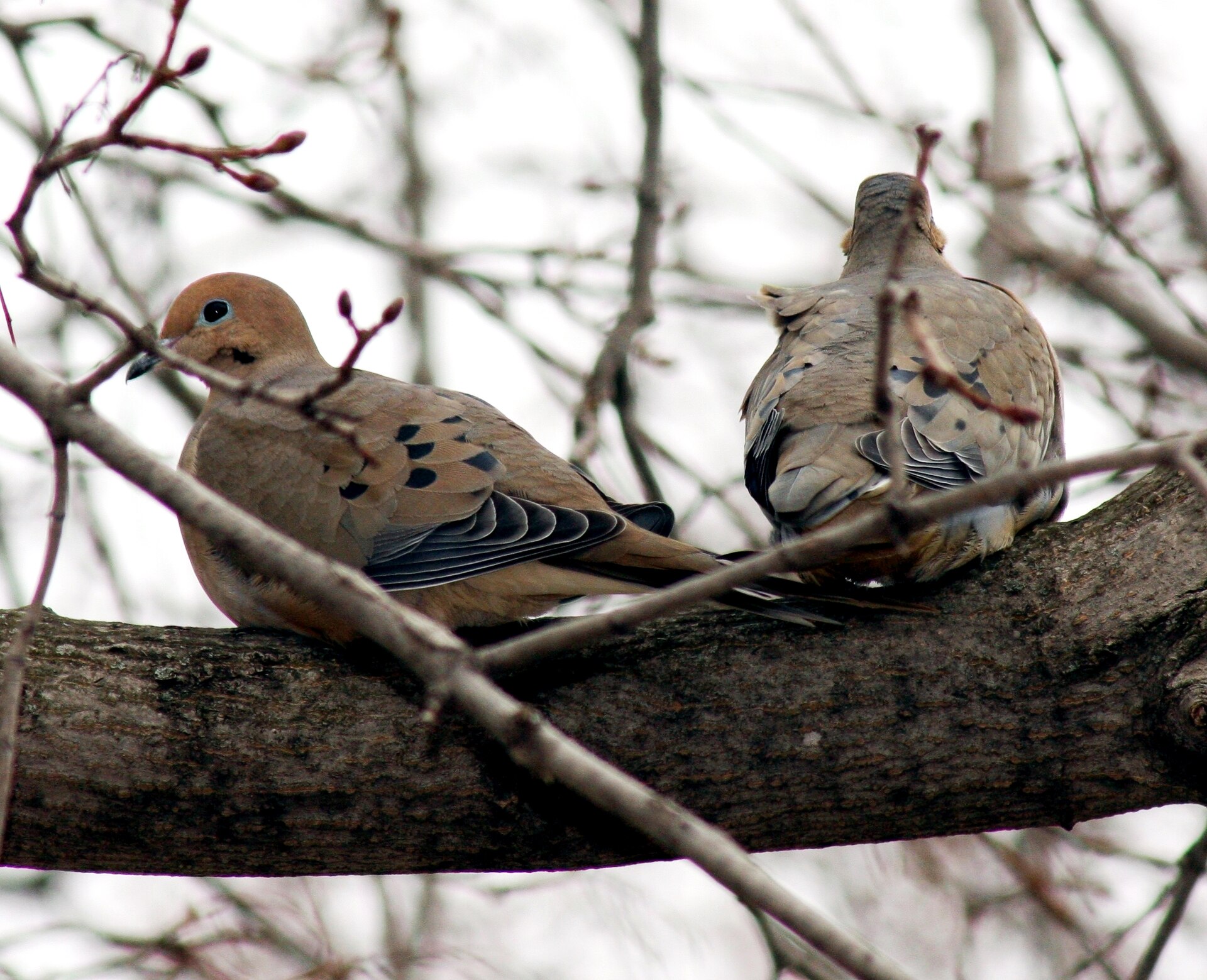
The mourning dove, Zenaida macroura (Order Columbiformes, Family Columbidae), is a slender, medium-sized dove, typically 22-34 cm in length with a wingspan of 37-45 cm, weighing 96-170 grams. Its plumage is a soft grayish-brown with black spots on the wings and a distinctive pointed tail edged with white. Males and females are similar in appearance, though males may have slightly more iridescent pinkish-purple necks. Mourning doves are prolific breeders, often raising multiple broods (up to 6 per year) during their extended breeding season (February-October). Clutch size is typically two white eggs, incubated for 14 days. Young fledge in about 11-15 days and are fed 'crop milk' by both parents.
Behaviour
Mourning doves are known for their mournful cooing calls, which are vocalizations for courtship and territorial defense. They are generally gregarious, forming flocks outside the breeding season, especially during migration and at roosting sites. They are ground foragers, walking or hopping while bobbing their heads. Flight is strong and swift, often with a characteristic whistling sound produced by their wings. They frequently dust-bathe to maintain feather condition and are reliant on open water sources.
Habits
Z. macroura is primarily granivorous, feeding almost exclusively on seeds, which constitute over 99% of its diet. Preferred seeds include cultivated grains, weed seeds, and various grasses. They forage on the ground in open areas, such as agricultural fields, lawns, and roadsides. Harbors include trees and shrubs for nesting and roosting, often choosing relatively open branches. Conducive conditions include open woodlands, suburban areas, parks, and agricultural fields that provide abundant food sources, nesting sites, and access to water.
Control methods
- 1Remove all accessible seed sources.
- 2Install bird netting in vulnerable areas.
- 3Limit available perching/roosting sites.
- 4Trim dense foliage on trees and shrubs.
- 5Use visual deterrents.
- 6Employ auditory deterrents.
Tailored to Mourning Dove
IPM Procedure Checklist
Inspection
- Identify roosting, loafing and nesting sites
- Document droppings, feathers and damage to structure
- Note food and water sources attracting birds
Identification
- Confirm Mourning Dove (Zenaida macroura) — not a look-alike
- Note life stage and risk level: Low
- Capture clear photos and samples for the record
Action Thresholds
- Tolerate low-level activity outside sensitive zones
- Act if activity moves indoors or near food
- Review threshold seasonally with the client
Prevention
- Install spikes, netting or shock track on ledges
- Remove standing water and accessible food
- Close openings to attics, vents and signage voids
Control Methods
- Remove all accessible seed sources.
- Install bird netting in vulnerable areas.
- Limit available perching/roosting sites.
- Trim dense foliage on trees and shrubs.
Monitoring & Evaluation
- Service monitors on schedule and trend captures
- Re-inspect for Mourning Dove activity at follow-up
- Adjust tactics based on data; report findings to client