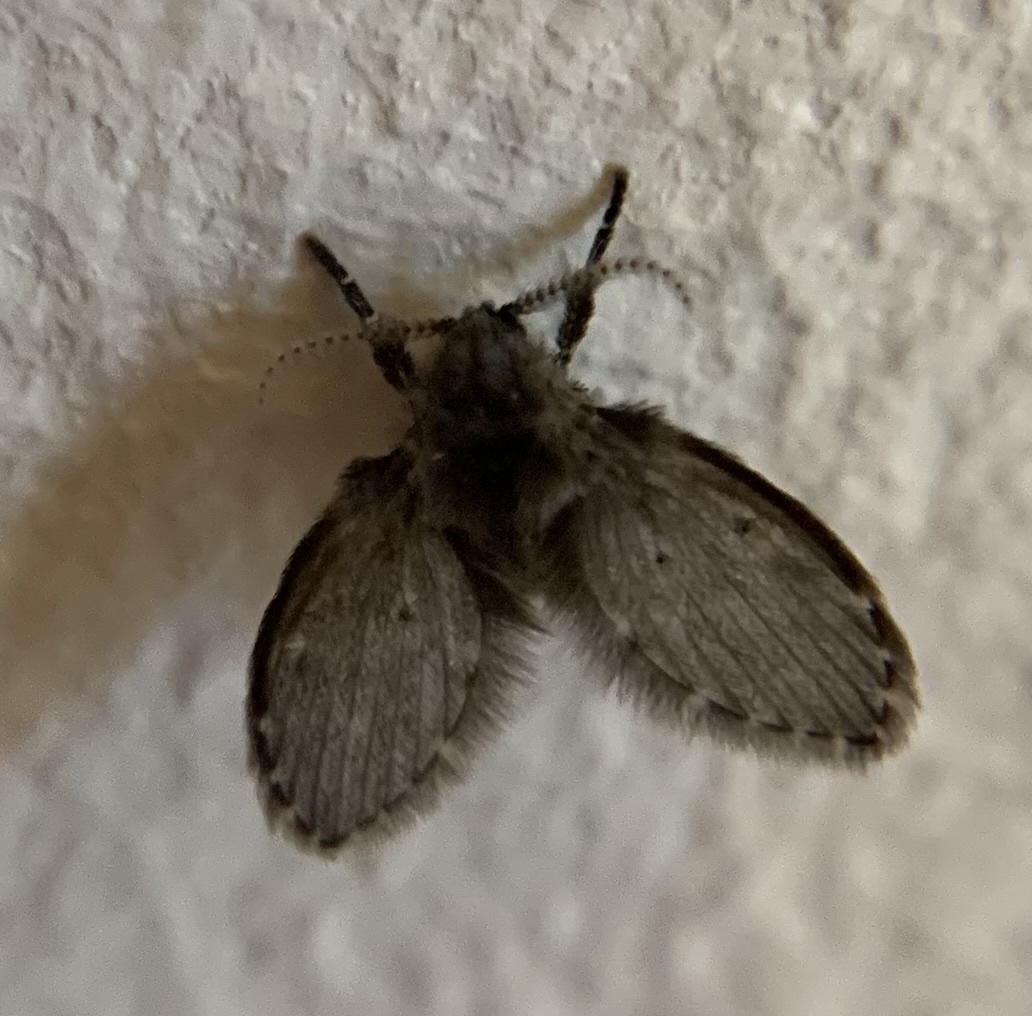
Fly
Moth Fly
Clogmia albipunctata
Biology
Clogmia albipunctata, commonly known as the moth fly or drain fly, belongs to the family Psychodidae, sub-family Psychodinae. Adults are diminutive, typically measuring 2–5 mm in length, characterized by a fuzzy, scale-covered body and distinctive broad, ovate wings held in a roof-like position over the abdomen when at rest. Their lifecycle proceeds through egg, four larval instars, pupa, and adult stages, with total development from egg to adult ranging from 8 to 24 days under optimal conditions—specifically, temperatures between 20–30°C and high humidity within the larval substrate. Females lay clutches of 30–100 eggs directly into gelatinous organic films, with adults living approximately 7–14 days. Morphologically, their densely hirsute bodies and wings, coupled with an 'eye bridge' that separates the anterior ommatidia, distinguish them from other small dipterans.
Behaviour
Moth flies exhibit crepuscular or nocturnal activity rhythms, primarily engaging in short, erratic, hopping flights near their breeding sites. While not truly social, their congregations around nutrient-rich biofilms can create localized populations. Dispersal is typically limited, often less than 20 feet from the larval habitat, though passive transport via air currents or plumbing systems can extend their range. Feeding ecology for adults involves imbibing liquids, fermenting fluids, and nectar, while larvae are obligate scavengers, consuming bacteria, fungi, algae, and detritus within the aquatic biofilm—a crucial aspect of their environmental impact as bio-fouling agents. Their presence, particularly larval setae and adult scales, can act as inhalant allergens, exacerbating asthma and other respiratory sensitivities in susceptible individuals, thus posing a public health concern.
Habits
Moth flies primarily harbor in areas providing continuous moisture and a reliable source of organic detritus, with drains, P-traps, overflow pipes, and sewage sumps being prime locations. Larvae are specialist feeders within the gelatinous biofilm of these aquatic environments. Adults typically rest on vertical surfaces – walls, ceilings, and fixtures – proximate to their breeding sites, exhibiting characteristic weak, short-distance flights when disturbed. Infestations are often indicative of underlying plumbing issues, such as slow drains, leaky pipes, or infrequently used fixtures, allowing biofilm accumulation. Signs of infestation include adult flies resting near potential harborage, visible larval masses within drain films, and a distinct musty odor emanating from heavily infested areas. Foraging patterns are limited, with adults typically remaining within a few meters of their emergence site.
Control methods
- 1Scrub drain walls with stiff brush to remove biofilm
- 2Apply enzymatic/bacterial drain foam at end of day
- 3Repair leaking traps, broken tile and standing-water voids
- 4Cover floor drains with mesh during low-use periods
- 5Use tape-over-drain test to confirm breeding source
- 6Avoid bleach — it does not remove the gel layer
Tailored to Moth Fly
IPM Procedure Checklist
Inspection
- Locate breeding sites: drains, decaying matter, moist organics
- Use tape-over-drain tests and UV/light traps to confirm
- Map dumpster, grease and floor-drain hot-spots
Identification
- Confirm Moth Fly (Clogmia albipunctata) — not a look-alike
- Note life stage and risk level: Moderate
- Capture clear photos and samples for the record
Action Thresholds
- Trigger action when monitor counts trend up
- Re-evaluate weekly during active season
- Document trigger criteria in the IPM plan
Prevention
- Clean drains with enzymatic foam to remove biofilm
- Manage trash, recycling and grease daily
- Screen windows, doors and air curtains at entries
Control Methods
- Scrub drain walls with stiff brush to remove biofilm
- Apply enzymatic/bacterial drain foam at end of day
- Repair leaking traps, broken tile and standing-water voids
- Cover floor drains with mesh during low-use periods
Monitoring & Evaluation
- Service monitors on schedule and trend captures
- Re-inspect for Moth Fly activity at follow-up
- Adjust tactics based on data; report findings to client