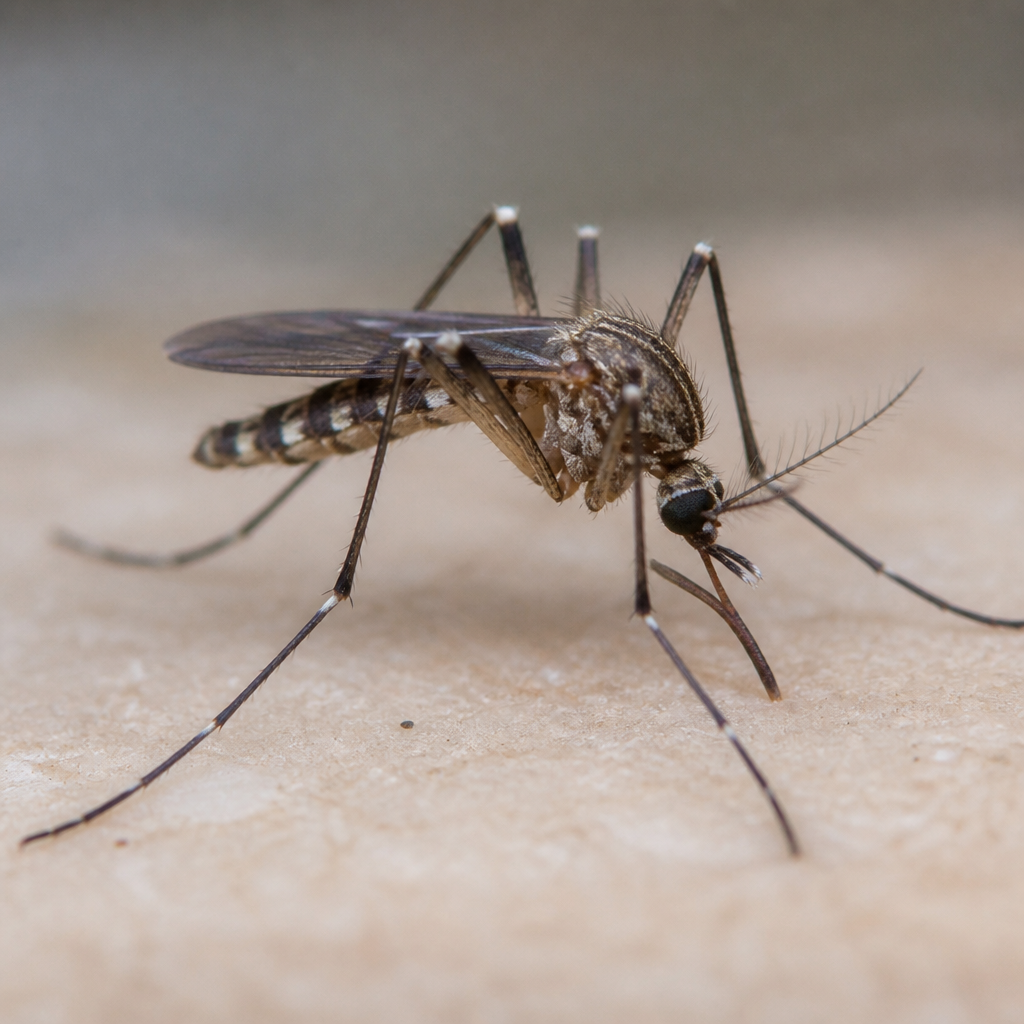
Blood Feeder
Mosquito
Culex / Aedes spp.
Life cycle
Stages of development
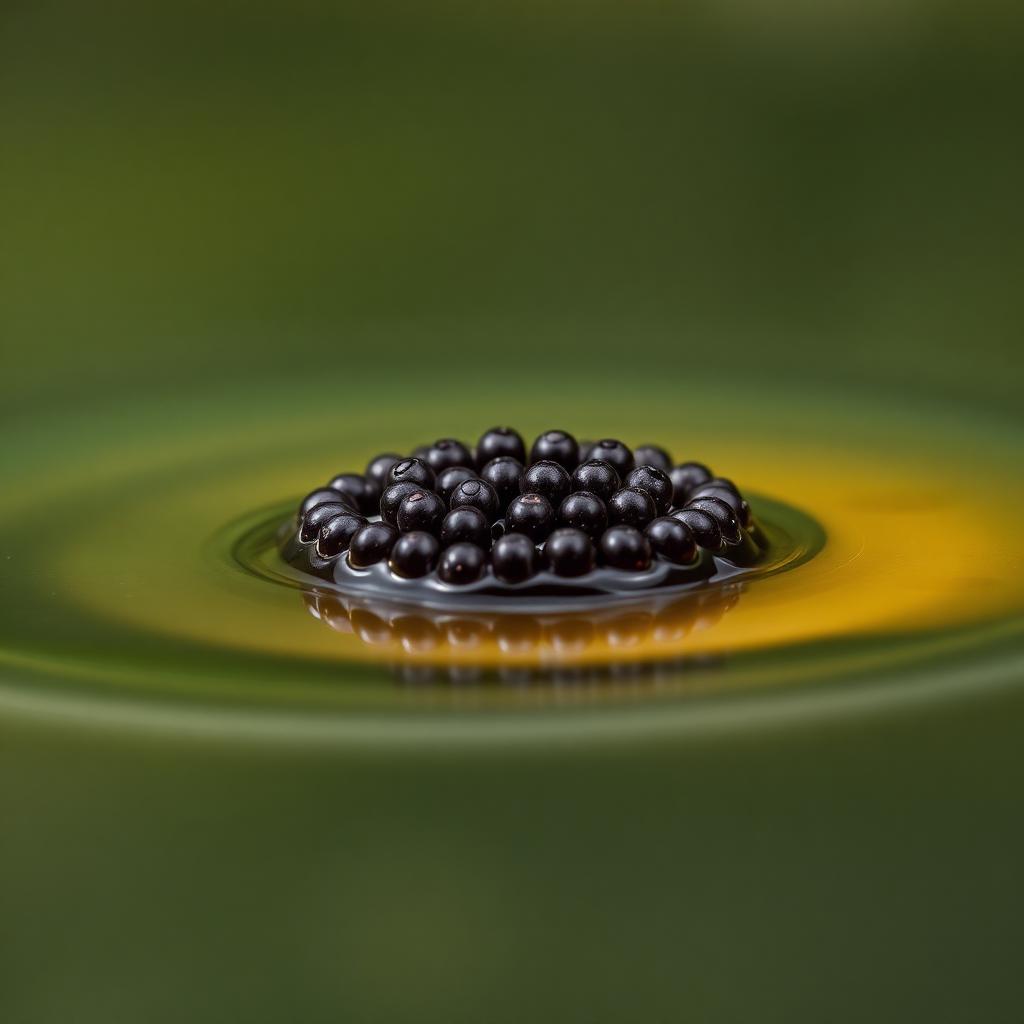
Stage 1 of 4
Egg raft
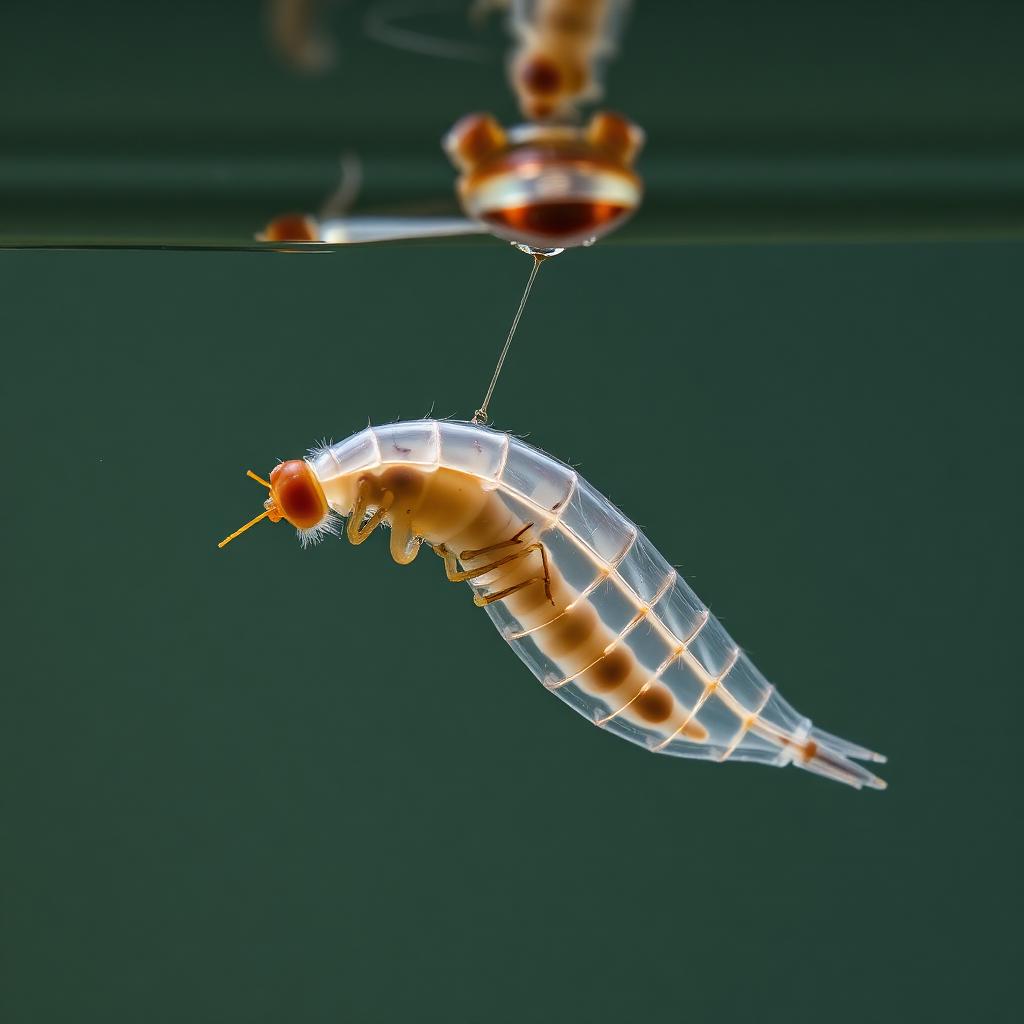
Stage 2 of 4
Larva (wriggler)
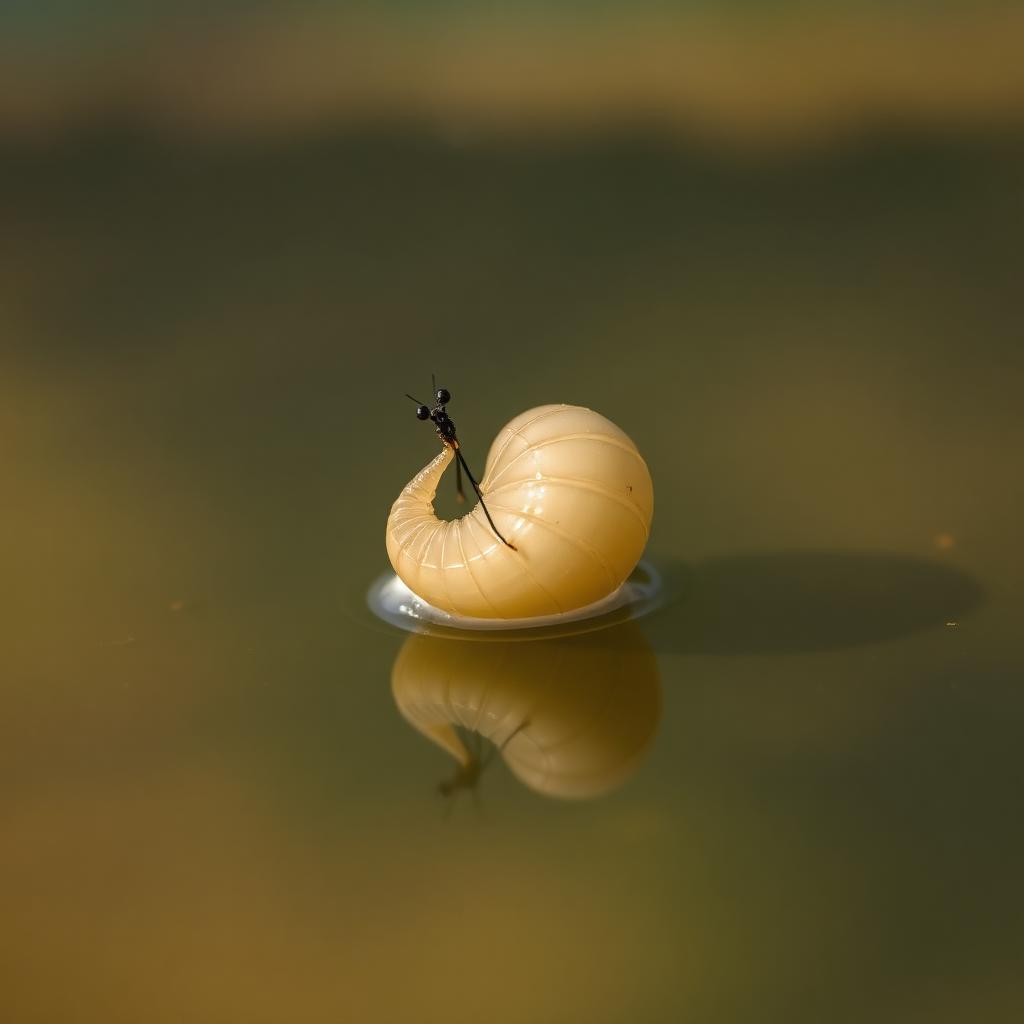
Stage 3 of 4
Pupa (tumbler)
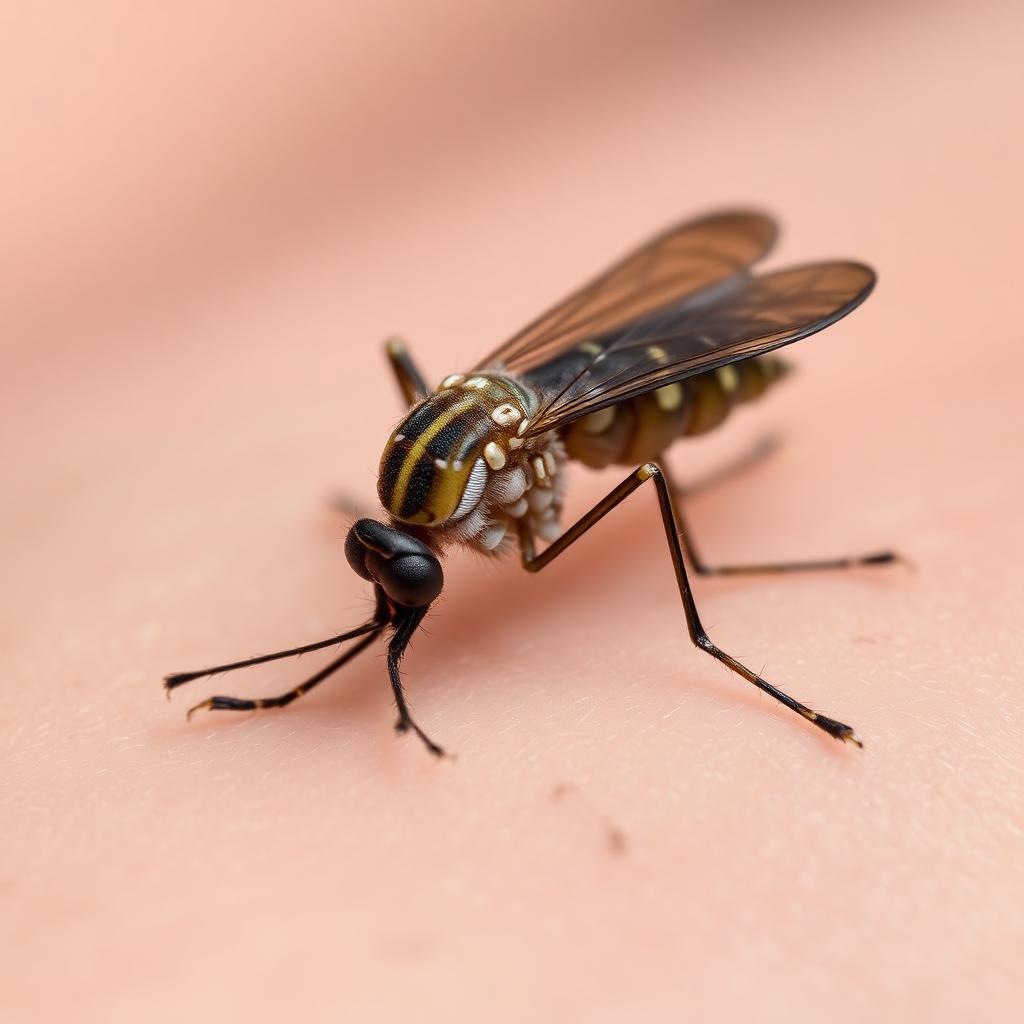
Stage 4 of 4
Adult
Biology
Mosquitoes, specifically Culex and Aedes species, are holometabolous insects belonging to the family Culicidae, order Diptera. Their lifecycle comprises four distinct stages: egg, larva, pupa, and adult, typically completed within 7–10 days under optimal ambient temperatures (25–30 °C) and high humidity. Adult females are obligate blood-feeders, requiring a blood meal rich in protein and iron for ovarian development and subsequent oviposition, while males and non-gravid females subsist on nectar and plant juices. A single gravid female can lay between 50 and 300 eggs per clutch, with Aedes spp. typically laying on damp substrates and Culex spp. ovipositing egg rafts directly on water; adult longevity averages 2–3 weeks depending on species and environmental factors. Key identifying features include species-specific wing vein patterns, scutellar scaling, and palpal lengths that differentiate them from other nematocerans like chironomids.
Behaviour
Mosquito activity patterns vary significantly between genera: Culex species are primarily crepuscular and nocturnal, exhibiting peak biting during dusk and dawn hours, while Aedes species are generally diurnal, actively seeking hosts throughout the day. Host location is a complex process mediated by multi-modal sensory cues, with gravid females detecting CO₂ plumes, lactic acid, octenol, and body heat gradients from distances up to 30 meters. Upon close approach, visual cues and humidity gradients guide the final landing and probing phases. Female mosquitoes inject anticoagulants and pain suppressants during feeding, facilitating blood uptake and often leading to localized inflammatory responses in hosts. Their impact extends beyond nuisance, as they are principal vectors for serious arboviral diseases and parasitic infections like West Nile, Zika, Dengue, Chikungunya, and filariasis, posing significant public health risks.
Habits
Gravid female mosquitoes exhibit specific harborage preferences during resting and before oviposition, favoring dark, humid, and sheltered environments such as dense vegetation, under eaves, within shaded porches, and inside poorly ventilated structures. Foraging patterns are driven by host-seeking behaviors, with flight ranges varying from several hundred meters (Aedes aegypti) to several kilometers (Culex quinquefasciatus) from their breeding sites. Larval habitats typically consist of stagnant or slow-moving water sources, ranging from temporary puddles and discarded tires (Aedes) to foul water in storm drains and septic tanks (Culex). Conducive conditions for heavy infestation include prolonged periods of warm temperatures, high rainfall facilitating water accumulation, and neglected artificial containers. Technicians should inspect for signs of infestation such as active biting, adult mosquitoes at resting sites, and the presence of larvae or pupae in potential water sources using larval dippers.
Control methods
- 1Eliminate standing water weekly (tip & toss)
- 2Bti larvicide briquettes in ponds and drains
- 3Residual barrier spray on vegetation 1–1.5 m up
- 4Install/repair window and door screens
- 5Use EPA-registered repellents (DEET, picaridin)
- 6Treat catch basins monthly in season
Tailored to Mosquito
IPM Procedure Checklist
Inspection
- Survey interior and exterior for evidence and conducive conditions
- Document findings with photos and a site map
- Place monitors to confirm activity
Identification
- Confirm Mosquito (Culex / Aedes spp.) — not a look-alike
- Note life stage and risk level: Severe
- Capture clear photos and samples for the record
Action Thresholds
- Zero-tolerance: act on first confirmed sighting
- Notify client and document the trigger event
- Prioritize health and regulatory risk in the plan
Prevention
- Exclude entry points and harborage
- Improve sanitation and moisture control
- Modify habitat around the structure
Control Methods
- Eliminate standing water weekly (tip & toss)
- Bti larvicide briquettes in ponds and drains
- Residual barrier spray on vegetation 1–1.5 m up
- Install/repair window and door screens
Monitoring & Evaluation
- Service monitors on schedule and trend captures
- Re-inspect for Mosquito activity at follow-up
- Adjust tactics based on data; report findings to client