Mammal
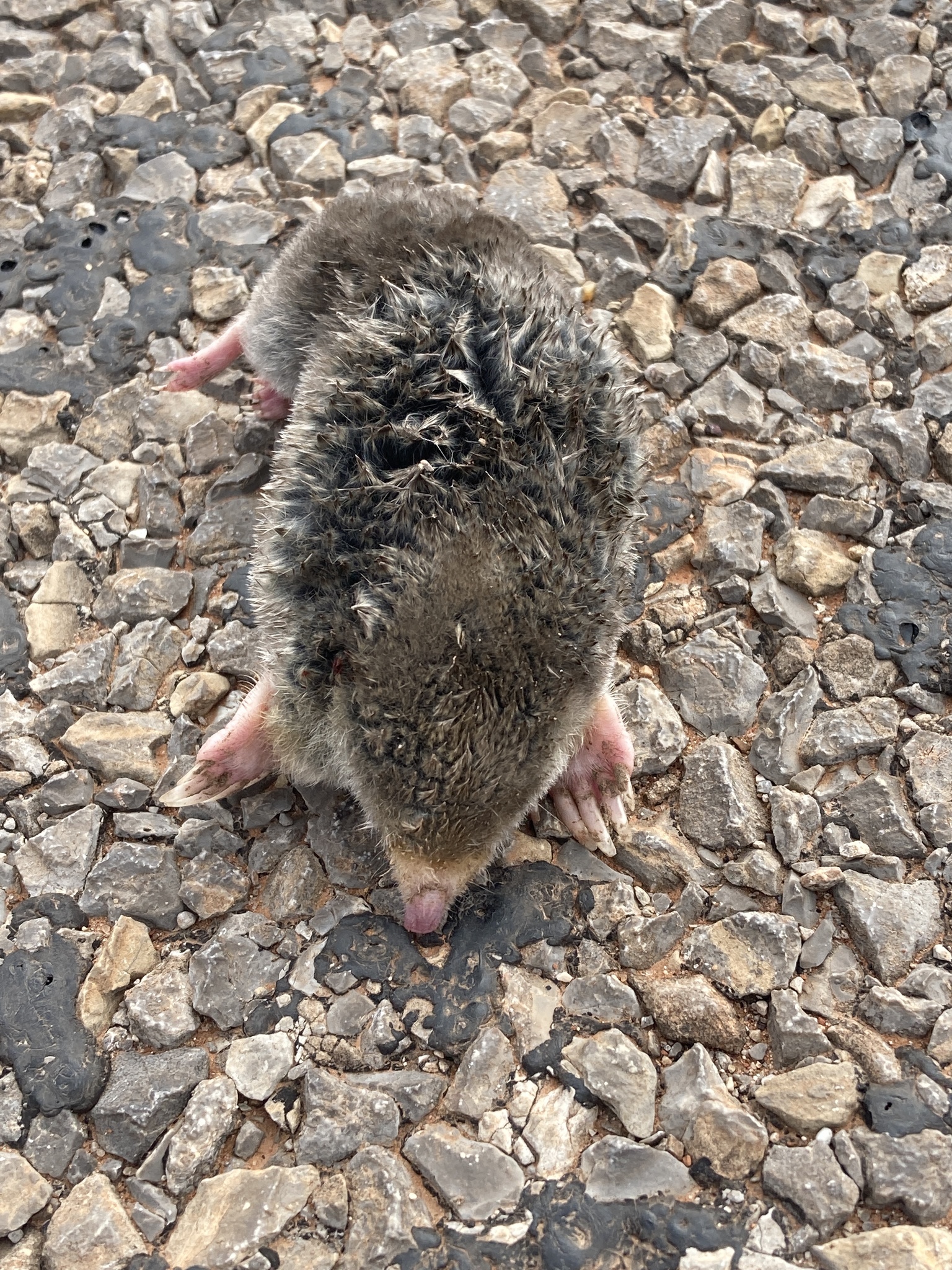
Eastern Mole
Scalopus aquaticus
Biology
The Eastern Mole, *Scalopus aquaticus*, belongs to the family Talpidae within the order Eulipotyphla, not Rodentia. Adults typically measure 12–17 cm in head-body length with a short (2–3 cm) tail, weighing 80–140 grams. They possess a highly specialized fusiform body, short velvet-like fur (dark gray to silvery-brown) that can lie in any direction to facilitate tunneling, and large spade-like forefeet with powerful claws. Reproduction occurs once annually, primarily in March-April, with gestation lasting approximately 4 weeks, yielding a litter of 2–5 altricial young. Longevity in the wild is typically 3–6 years, supported by their extensive metabolic adaptations for hypogean life, including robust respiratory and circulatory systems and a high red blood cell count to tolerate low oxygen levels.
Behaviour
Eastern Moles are largely fossorial and solitary, spending upwards of 95% of their lives underground. Their activity rhythms are polyphasic, with several periods of intense tunneling and feeding throughout a 24-hour cycle, influenced by soil moisture and prey availability. Communication primarily involves olfactory cues and tactile sensations within their tunnel networks; auditory communication is minimal due to reduced hearing specialized for detecting vibrations. They are opportunistic insectivores, preying almost exclusively on soil-dwelling invertebrates, particularly earthworms, which comprise up to 90% of their diet, complemented by insect larvae, grubs, and occasionally small snakes or mice encountered in their tunnels. While not aggressive towards humans, their extensive tunneling can cause significant damage to turf, agricultural crops, and even undermine shallow foundations, representing an economic and structural pest nuisance rather than a public health threat.
Habits
Eastern Moles construct an intricate, multi-level tunnel system: shallow feeding runways (1–4 inches deep) and deeper, more permanent galleries (6–24 inches deep) for nesting and overwintering. These extensive networks, which can cover up to an acre for a single individual, are constantly expanded and maintained. Signature signs of infestation include raised surface ridges, indicative of active feeding tunnels, and volcano-shaped molehills, formed from excavated soil pushed to the surface from deeper tunnels. Preferred harborage soil conditions are moist, loose loams rich in organic matter and earthworms, providing both structural stability for tunnels and abundant food. Foraging patterns involve systematic exploration of feeding tunnels, with daily food consumption equivalent to 50–100% of their body weight. Conducive landscape conditions include well-irrigated lawns, gardens, and golf courses, which attract earthworms and offer easily workable soil year-round.
Control methods
- 1Identify active runs by flattening and rechecking
- 2Set harpoon or scissor-jaw traps in active runs
- 3Apply beneficial nematodes to reduce grubs
- 4Reduce excessive lawn watering
- 5Mole-tunnel granular baits (gel worms)
- 6Tolerate at low levels — moles aerate soil
Tailored to Eastern Mole
IPM Procedure Checklist
Inspection
- Survey interior and exterior for evidence and conducive conditions
- Document findings with photos and a site map
- Place monitors to confirm activity
Identification
- Confirm Eastern Mole (Scalopus aquaticus) — not a look-alike
- Note life stage and risk level: Moderate
- Capture clear photos and samples for the record
Action Thresholds
- Trigger action when monitor counts trend up
- Re-evaluate weekly during active season
- Document trigger criteria in the IPM plan
Prevention
- Exclude entry points and harborage
- Improve sanitation and moisture control
- Modify habitat around the structure
Control Methods
- Identify active runs by flattening and rechecking
- Set harpoon or scissor-jaw traps in active runs
- Apply beneficial nematodes to reduce grubs
- Reduce excessive lawn watering
Monitoring & Evaluation
- Service monitors on schedule and trend captures
- Re-inspect for Eastern Mole activity at follow-up
- Adjust tactics based on data; report findings to client