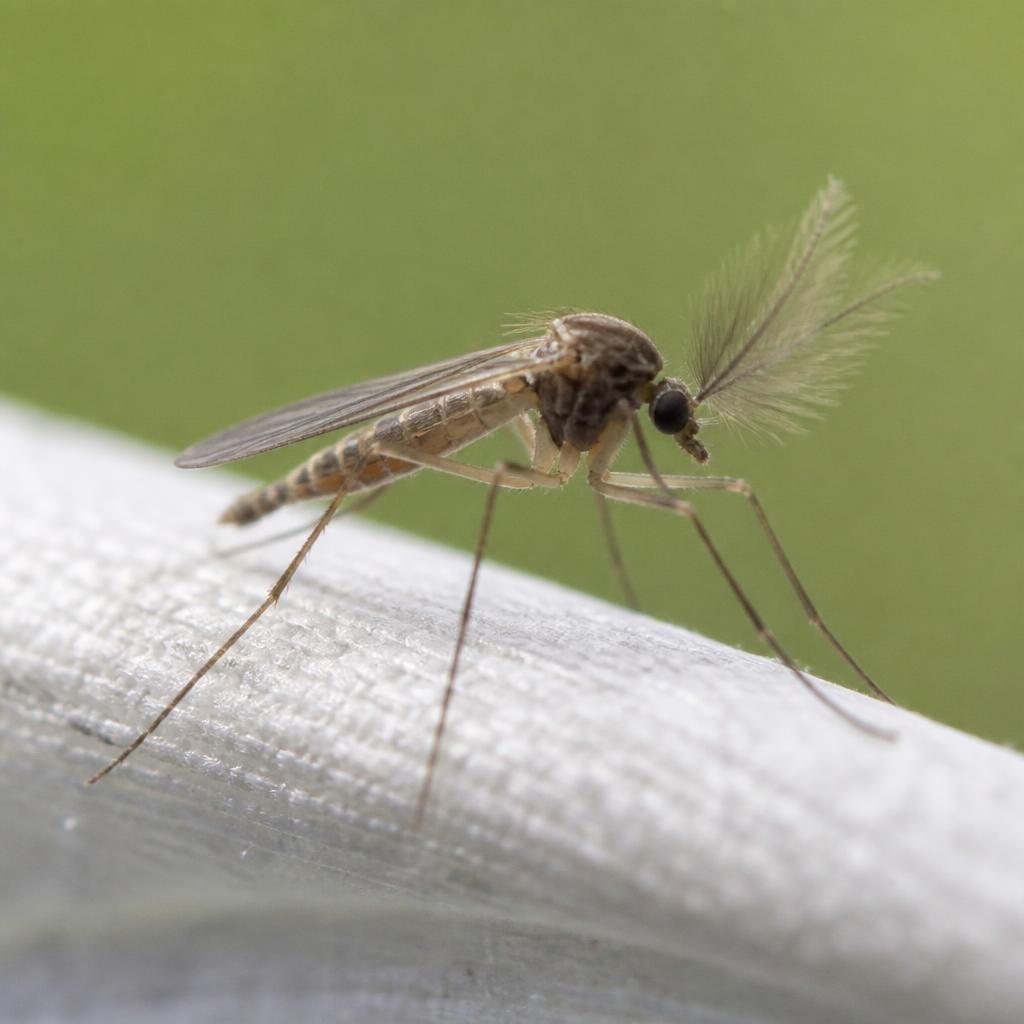
Fly
Non-biting Midge
Chironomidae
Biology
Chironomidae, commonly known as non-biting midges, represent a large and diverse family of flies. Adults are slender, mosquito-like insects, typically 2-10 mm in length, but lack the piercing-sucking mouthparts of mosquitoes. They possess feathery antennae, especially pronounced in males. Larvae are often red, known as 'bloodworms' due to the presence of hemoglobin, residing in various aquatic environments. The lifecycle varies greatly by species, but generally involves eggs laid on water, aquatic larval development through four instars lasting weeks to months, and a pupal stage of a few days. Adult lifespan is brief, often only a few days, focused on reproduction.
Behaviour
Adult non-biting midges are characterized by their swarming behavior, particularly at dusk or dawn, often forming large, dense aggregations near water bodies. Swarming is primarily a mating ritual, with males participating in complex aerial dances. They are weak fliers and are highly attracted to light sources, which can draw them into structures in large numbers. Adults do not feed, focusing solely on reproduction. Larvae are filter feeders or detritivores, playing an important role in aquatic ecosystems. Their presence is often indicative of good water quality, though some species tolerate pollution.
Habits
Non-biting midges are entirely dependent on aquatic environments for their larval development, including lakes, ponds, slow-moving rivers, and even temporary puddles. Harborage sites for adults are usually in close proximity to these water sources, often resting on vegetation or structures during the day. Conducive conditions for large populations include abundant standing water, warm temperatures, and nutrient-rich aquatic sediments that support larval food sources. Their short adult lifespan means that continuous emergence from water bodies can lead to sustained nuisance problems.
Control methods
- 1Identify and treat larval breeding sites.
- 2Improve water circulation in ponds.
- 3Install screens on windows and doors.
- 4Reduce outdoor lighting at night.
- 5Use insect light traps outdoors.
- 6Consult with aquatic pest management experts.
Tailored to Non-biting Midge
IPM Procedure Checklist
Inspection
- Locate breeding sites: drains, decaying matter, moist organics
- Use tape-over-drain tests and UV/light traps to confirm
- Map dumpster, grease and floor-drain hot-spots
Identification
- Confirm Non-biting Midge (Chironomidae) — not a look-alike
- Note life stage and risk level: Low
- Capture clear photos and samples for the record
Action Thresholds
- Tolerate low-level activity outside sensitive zones
- Act if activity moves indoors or near food
- Review threshold seasonally with the client
Prevention
- Clean drains with enzymatic foam to remove biofilm
- Manage trash, recycling and grease daily
- Screen windows, doors and air curtains at entries
Control Methods
- Identify and treat larval breeding sites.
- Improve water circulation in ponds.
- Install screens on windows and doors.
- Reduce outdoor lighting at night.
Monitoring & Evaluation
- Service monitors on schedule and trend captures
- Re-inspect for Non-biting Midge activity at follow-up
- Adjust tactics based on data; report findings to client