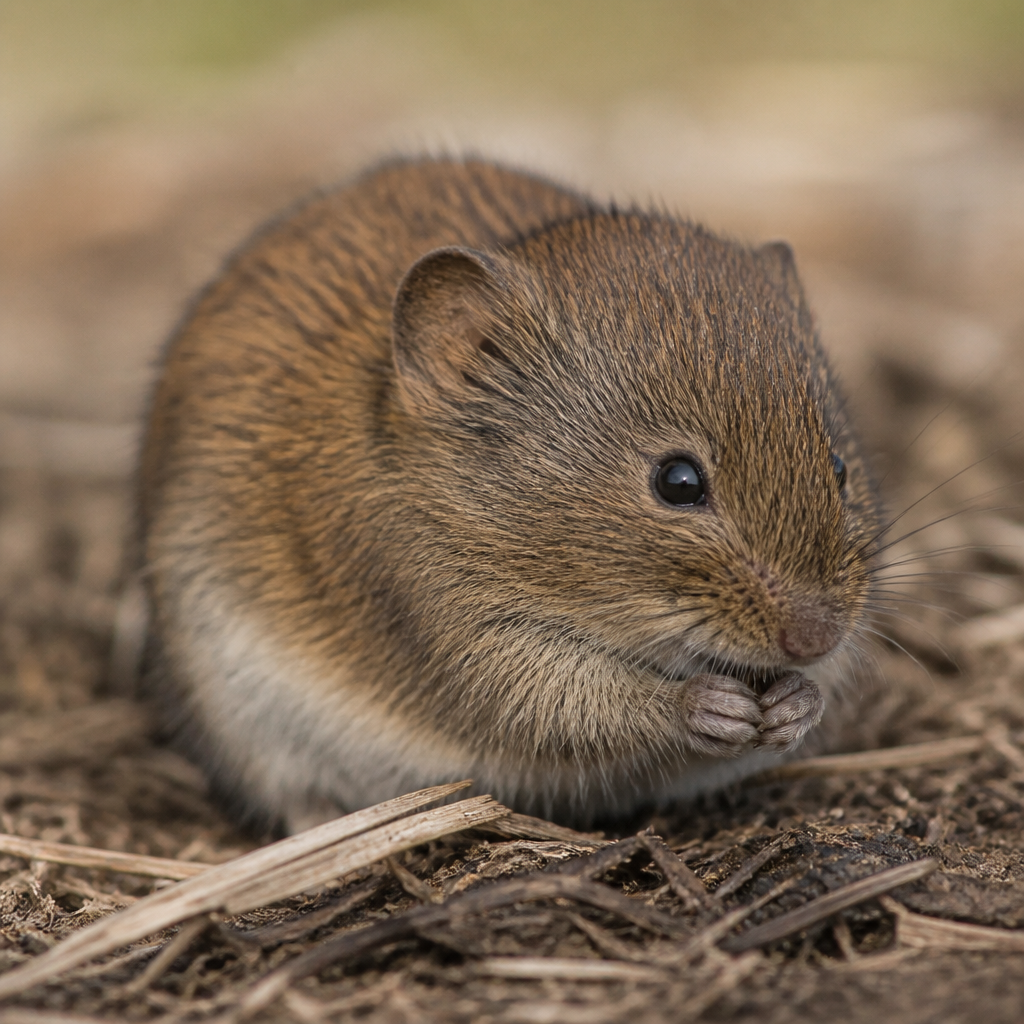
Rodent
Meadow Vole
Microtus pennsylvanicus
Biology
The meadow vole, Microtus pennsylvanicus, is a widespread murid rodent, typically measuring 10–19 cm in length, with a tail constituting about one-third of its body length (3–6 cm). Adults weigh between 30–70 grams, characterized by coarse brown-grey fur and disproportionately small ears partially concealed within the fur. Sexual maturity is reached rapidly, often within 20–30 days. Gestation is approximately 21 days, yielding litters of 3–8 young (average 5), with females capable of producing 5–10 litters annually under optimal conditions. The lifespan is typically short, averaging 2–5 months in the wild due to intense predation pressure, though individuals can live up to 16 months in protected environments. They thrive in temperatures between 10–30°C and maintain high reproductive rates in areas with abundant moisture.
Behaviour
Meadow voles exhibit a polyphasic activity pattern, meaning they are active intermittently throughout both day and night, specifically engaging in 12–16 activity bouts daily, each lasting 30–60 minutes. While generally solitary outside of breeding and rearing, high population densities can lead to complex social interactions and communal nesting, though territories are not strictly defended. Communication largely involves ultrasonic vocalizations and olfactory cues via urine and glandular secretions, particularly for mating and alarm. Their feeding ecology is herbivorous, focusing on monocotyledonous plants, grasses, and sedges, consuming up to 60% of their body weight daily. Their constant activity and excavating can severely compromise landscape aesthetics and agricultural yields, especially in orchards and cultivated fields.
Habits
Meadow voles extensively utilize dense grassy or herbaceous cover as preferred harborage, constructing intricate networks of surface runways – 2–5 cm wide paths – through vegetation, which are crucial for protection from predators and efficient foraging. These runways often lead to shallow burrows (<30 cm deep) where nests are constructed and food is cached. Their foraging range is typically limited to within 10–15 meters of their burrows, reflecting their reliance on dense cover. During winter, they remain active beneath snow cover, creating subnivean tunnels and frequently girdling the bark of young trees and shrubs, leading to significant structural damage. High populations are often indicative of favorable conditions, including lush vegetation, mild winters, and reduced predator activity, which can lead to rapid population explosions (irruptions) every 2–5 years.
Control methods
- 1Mow vegetation short around trees and structures
- 2Hardware cloth tree guards 45 cm tall around trunks
- 3Snap traps baited with peanut butter on runways
- 4Zinc phosphide pellets in bait stations along runs
- 5Remove mulch within 30 cm of trunks; thin ground cover
- 6Encourage raptor perches and avoid dense weed cover
Tailored to Meadow Vole
IPM Procedure Checklist
Inspection
- Locate runways, droppings, rub marks and gnaw damage
- Identify entry points (gaps ≥6 mm) and harborage
- Place tracking patches or non-toxic monitors
Identification
- Confirm Meadow Vole (Microtus pennsylvanicus) — not a look-alike
- Note life stage and risk level: Moderate
- Capture clear photos and samples for the record
Action Thresholds
- Trigger action when monitor counts trend up
- Re-evaluate weekly during active season
- Document trigger criteria in the IPM plan
Prevention
- Exclude with steel wool, hardware cloth and door sweeps
- Trim vegetation 0.5 m from structure; clear debris
- Secure trash, pet food and stored grain
Control Methods
- Mow vegetation short around trees and structures
- Hardware cloth tree guards 45 cm tall around trunks
- Snap traps baited with peanut butter on runways
- Zinc phosphide pellets in bait stations along runs
Monitoring & Evaluation
- Service monitors on schedule and trend captures
- Re-inspect for Meadow Vole activity at follow-up
- Adjust tactics based on data; report findings to client