All pests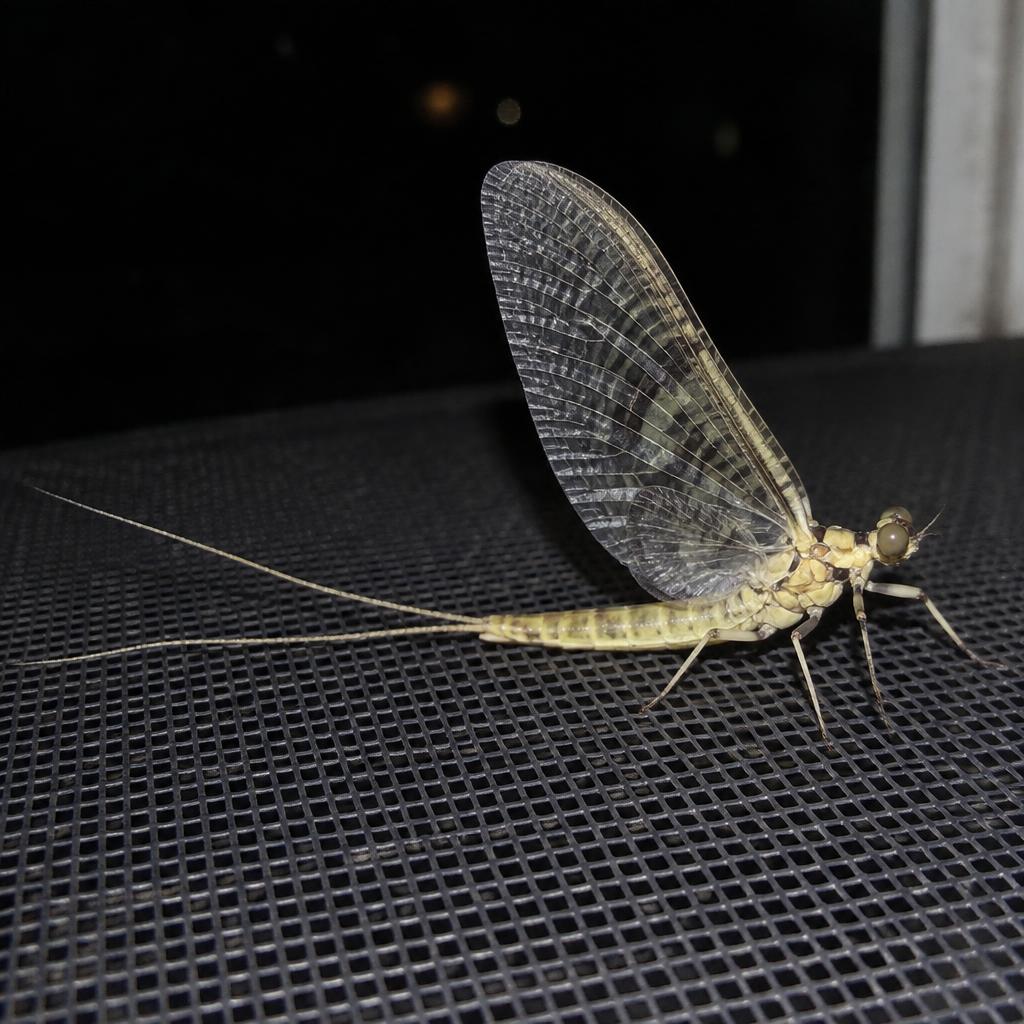 View full procedure
Insect
Mayfly
Hexagenia limbata
Low Risk
Biology
Hexagenia limbata is a large pale yellow mayfly with upright transparent wings and two or three long tail filaments. Nymphs burrow in lake and river sediment for one to two years; adults live one to two days and do not feed.
Behaviour
Synchronized emergences produce enormous nightly swarms around lakeside lighting from late spring through summer. Adults are harmless, cannot bite, and die within hours of mating.
Habits
Drifts of dead mayflies pile against buildings, block vents and gutters, create slippery road surfaces, and generate a fishy odor. They are a strong indicator of clean surface water nearby.
Control methods
- 1Turn off or shield exterior lights during emergence nights
- 2Use warm amber LEDs that attract far fewer insects
- 3Sweep and compost drifts promptly to limit odor
- 4Screen vents, gutters, and intake louvers
- 5Close doors and windows during peak evening flights
- 6Pressure-wash siding after large emergences
Tailored to Mayfly
IPM Procedure Checklist
Step 1
Inspection
- Inspect harborage near food, water and warmth
- Check cracks, voids and appliance interiors
- Place sticky monitors at suspected hot-spots
Step 2
Identification
- Confirm Mayfly (Hexagenia limbata) — not a look-alike
- Note life stage and risk level: Low
- Capture clear photos and samples for the record
Step 3
Action Thresholds
- Tolerate low-level activity outside sensitive zones
- Act if activity moves indoors or near food
- Review threshold seasonally with the client
Step 4
Prevention
- Seal cracks, plumbing penetrations and wall voids
- Eliminate moisture sources and standing water
- Improve sanitation: sealed food storage, grease removal
Step 5
Control Methods
- Turn off or shield exterior lights during emergence nights
- Use warm amber LEDs that attract far fewer insects
- Sweep and compost drifts promptly to limit odor
- Screen vents, gutters, and intake louvers
Step 6
Monitoring & Evaluation
- Service monitors on schedule and trend captures
- Re-inspect for Mayfly activity at follow-up
- Adjust tactics based on data; report findings to client