All pests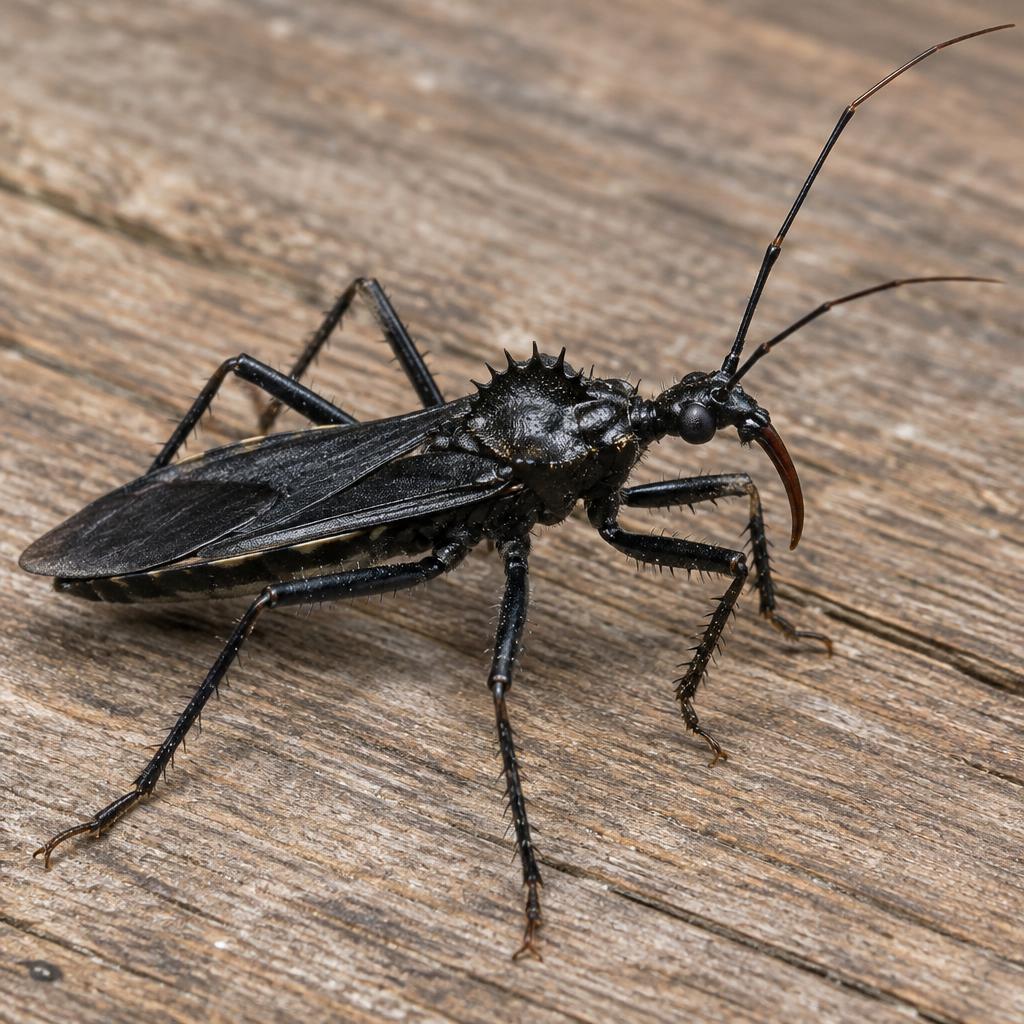 View full procedure
Insect
Masked Hunter
Reduvius personatus
Moderate Risk
Biology
Reduvius personatus is a shiny black assassin bug 17–22 mm long with a stout curved beak. Nymphs coat themselves in dust and lint, giving the species its name, and development takes one to two years.
Behaviour
It is a nocturnal predator of bed bugs, carpet beetles, and other indoor arthropods, hunting in dusty attics, sheds, and along baseboards. It is attracted to lights and may enter homes in summer.
Habits
Presence often signals an underlying prey population such as bed bugs or carpet beetles. It does not feed on blood but delivers a painful defensive bite if handled or pressed against skin.
Control methods
- 1Inspect for and treat the underlying prey infestation
- 2Vacuum dusty attics, sheds, and baseboard voids
- 3Seal exterior gaps and repair window and door screens
- 4Reduce bright exterior lighting near entry doors
- 5Never handle the bug with bare hands; use a cup and card
- 6Use sticky monitors along walls to confirm activity
Tailored to Masked Hunter
IPM Procedure Checklist
Step 1
Inspection
- Inspect harborage near food, water and warmth
- Check cracks, voids and appliance interiors
- Place sticky monitors at suspected hot-spots
Step 2
Identification
- Confirm Masked Hunter (Reduvius personatus) — not a look-alike
- Note life stage and risk level: Moderate
- Capture clear photos and samples for the record
Step 3
Action Thresholds
- Trigger action when monitor counts trend up
- Re-evaluate weekly during active season
- Document trigger criteria in the IPM plan
Step 4
Prevention
- Seal cracks, plumbing penetrations and wall voids
- Eliminate moisture sources and standing water
- Improve sanitation: sealed food storage, grease removal
Step 5
Control Methods
- Inspect for and treat the underlying prey infestation
- Vacuum dusty attics, sheds, and baseboard voids
- Seal exterior gaps and repair window and door screens
- Reduce bright exterior lighting near entry doors
Step 6
Monitoring & Evaluation
- Service monitors on schedule and trend captures
- Re-inspect for Masked Hunter activity at follow-up
- Adjust tactics based on data; report findings to client