Blood Feeder
Lone Star Tick
Amblyomma americanum
Biology
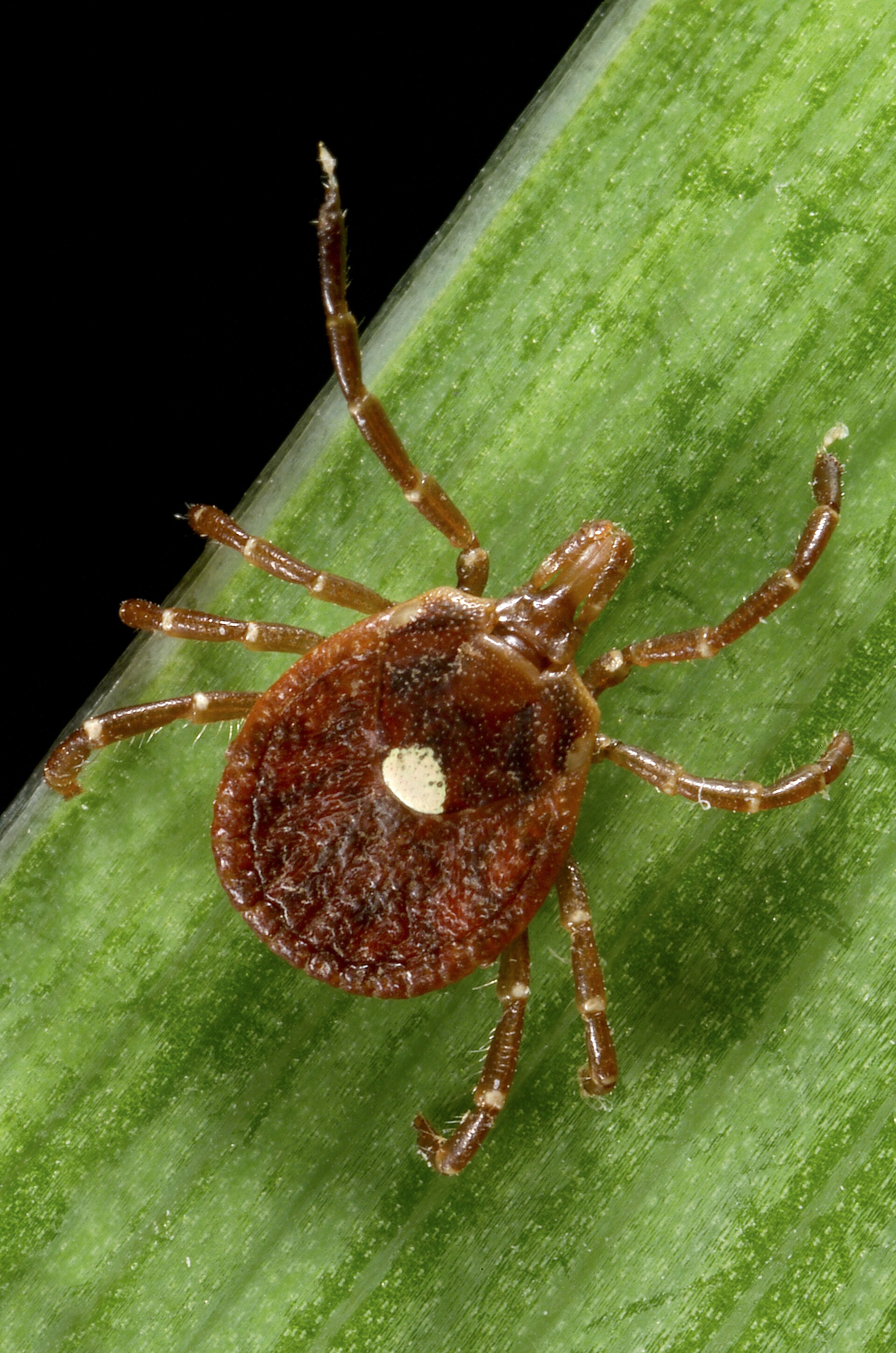
The Lone Star tick, Amblyomma americanum (Linnaeus), is a three-host hard tick of the family Ixodidae. All active life stages (larva, nymph, adult) are aggressive human biters and vector pathogens. Adults are reddish-brown, with females possessing a distinctive white or silvery spot (the
Behaviour
Female American dog ticks typically lay vast quantities of eggs (up to several thousand) in a sheltered location, often in leaf litter or beneath vegetation. After hatching, the entire life cycle, involving larvae, nymphs, and adults, can span from months to over three years, depending on environmental conditions and host availability. Each active stage seeks a single host to feed on before detaching and molting to the next stage or for adults, to oviposit. Larvae and nymphs primarily feed on small to medium-sized mammals, while adults prefer larger mammals. After feeding, they drop off the host and seek a suitable microhabitat for molting or egg-laying.
Habits
American dog ticks are commonly found in grassy, brushy, and wooded areas, particularly along trails, roads, and at the edges of forests. They do not actively hunt but rather employ a strategy called "questing," climbing onto vegetation and waiting for a suitable host to pass by. They prefer hosts such as raccoons, opossums, and domestic dogs for immature stages, with adults often infesting larger mammals including humans. Conducive conditions for high populations include overgrown vegetation, ample wildlife corridors, and moderate to high humidity. These ticks are known vectors of Rocky Mountain spotted fever and tularemia.
Control methods
- 1Conduct regular tick checks on humans and pets.
- 2Use EPA-approved tick repellents on skin and clothing.
- 3Create a tick-safe zone around homes with landscaping.
- 4Keep grass mowed short and remove leaf litter.
- 5Treat pets with veterinary-approved tick preventatives.
- 6Apply acaricides to high-use outdoor areas.
Tailored to Lone Star Tick
IPM Procedure Checklist
Inspection
- Survey interior and exterior for evidence and conducive conditions
- Document findings with photos and a site map
- Place monitors to confirm activity
Identification
- Confirm Lone Star Tick (Amblyomma americanum) — not a look-alike
- Note life stage and risk level: High
- Capture clear photos and samples for the record
Action Thresholds
- Zero-tolerance: act on first confirmed sighting
- Notify client and document the trigger event
- Prioritize health and regulatory risk in the plan
Prevention
- Exclude entry points and harborage
- Improve sanitation and moisture control
- Modify habitat around the structure
Control Methods
- Conduct regular tick checks on humans and pets.
- Use EPA-approved tick repellents on skin and clothing.
- Create a tick-safe zone around homes with landscaping.
- Keep grass mowed short and remove leaf litter.
Monitoring & Evaluation
- Service monitors on schedule and trend captures
- Re-inspect for Lone Star Tick activity at follow-up
- Adjust tactics based on data; report findings to client