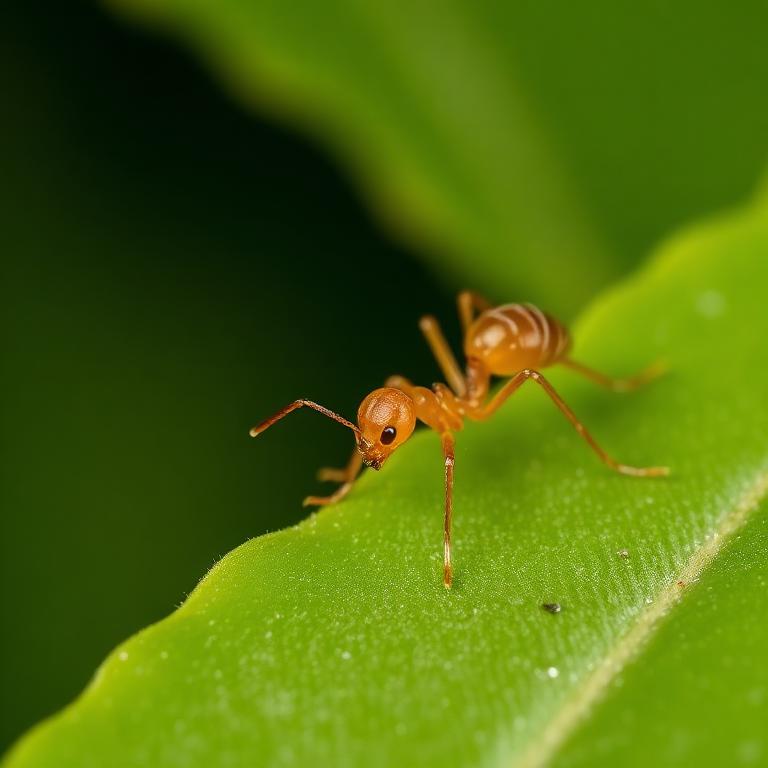
Ant
Little Fire Ant
Wasmannia auropunctata
Biology
The little fire ant is a minute pale golden to orange-brown ant only 1.5 mm long with a two-segmented waist and a disproportionately powerful sting. It is one of the world's most damaging invasive ants: colonies are polygynous, polydomous and unicolonial, so workers from different nests do not fight and populations build to extraordinary densities. Reproduction is largely clonal, and spread is almost entirely by budding and by human transport of plants, mulch, soil and equipment.
Behaviour
Workers move slowly and are easily dislodged from foliage, dropping onto people, pets and livestock below. The sting causes severe burning pain out of proportion to the ant's size, with welts persisting for days; chronic stinging causes keratopathy and blindness in dogs, cats and livestock, and makes farming, harvesting and outdoor living genuinely difficult in infested areas. The species tends honeydew-producing hemipterans, boosting plant pests, and displaces native invertebrates wholesale.
Habits
Nests are diffuse and shallow — in leaf litter, mulch, potted plants, tree crotches, epiphytes, under debris, in wall voids and beneath objects on the ground — with arboreal and ground nests connected across the site. Indoors they infest kitchens, bedding and stored goods. Conducive conditions are warm humid climates, dense vegetation, heavy mulch, and above all the movement of infested nursery stock, which is the primary spread pathway. Inspect with peanut-butter-baited sticks placed in vegetation and on the ground, and report suspected finds to agricultural authorities.
Control methods
- 1Report suspected finds — this is a regulated invasive species in many regions
- 2Survey with peanut-butter baited sticks in vegetation and on the ground
- 3Do not move soil, mulch or plants off an infested site
- 4Apply repeated broadcast baits targeting both ground and arboreal nests
- 5Treat tree canopies as well as ground harborage — nests are three-dimensional
- 6Follow up over multiple seasons; a single treatment round will not eradicate
Tailored to Little Fire Ant
IPM Procedure Checklist
Inspection
- Follow trails to nests, food and moisture sources
- Inspect wall voids, slab edges and exterior soil
- Place non-repellent monitors at trail crossings
Identification
- Confirm Little Fire Ant (Wasmannia auropunctata) — not a look-alike
- Note life stage and risk level: Severe
- Capture clear photos and samples for the record
Action Thresholds
- Zero-tolerance: act on first confirmed sighting
- Notify client and document the trigger event
- Prioritize health and regulatory risk in the plan
Prevention
- Seal entry cracks, utility penetrations and weep holes
- Eliminate honeydew-producing pests on landscape plants
- Store food in sealed containers and clean spills promptly
Control Methods
- Report suspected finds — this is a regulated invasive species in many regions
- Survey with peanut-butter baited sticks in vegetation and on the ground
- Do not move soil, mulch or plants off an infested site
- Apply repeated broadcast baits targeting both ground and arboreal nests
Monitoring & Evaluation
- Service monitors on schedule and trend captures
- Re-inspect for Little Fire Ant activity at follow-up
- Adjust tactics based on data; report findings to client