Stored Product Pest
Lesser Grain Borer
Rhyzopertha dominica
Biology
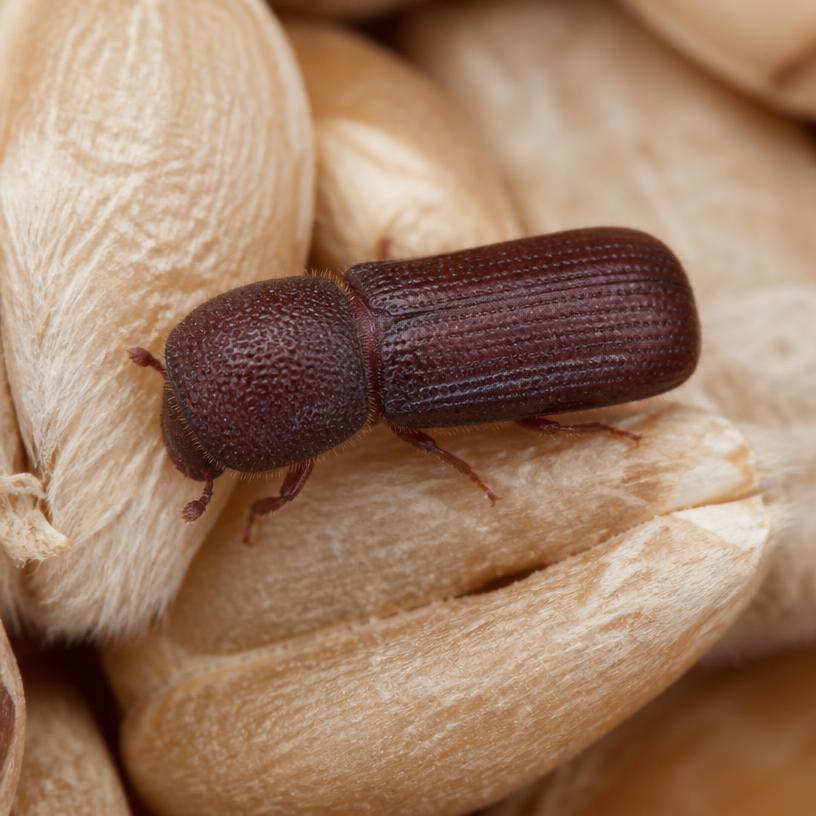
A 2.5–3 mm cylindrical, dark reddish-brown bostrichid whose rough, hood-like pronotum conceals the downturned head. Females lay 300–500 eggs loose among grain; larvae bore into whole kernels and complete development inside, so a full generation takes about 25 days at 34°C and high humidity.
Behaviour
Both adults and larvae feed on whole grain, and the adults are strong fliers that readily move between farm bins, mills and outdoor grain piles. Feeding produces a sweet, musty odour and large amounts of fine flour-like dust mixed with frass, one of the most reliable early signs of infestation.
Habits
Prefers wheat, rice, corn and sorghum in long-term storage, especially in warm regions and in bins that were not cleaned between harvests. Residual pockets in bin floors, augers and elevator boots re-infest clean grain. Populations build fastest above 27°C with grain moisture over 12%.
Control methods
- 1Clean and vacuum bins, augers and elevator boots before loading
- 2Do not store new grain on top of old grain
- 3Cool and aerate grain to below 15°C where climate allows
- 4Keep grain moisture at or below 12%
- 5Use pheromone-baited traps to monitor adult flight
- 6Fumigate or treat heavily infested lots through a licensed applicator
- 7Dispose of spilled grain around the storage area
Tailored to Lesser Grain Borer
IPM Procedure Checklist
Inspection
- Inspect grain, spices, pet food and dry goods for larvae and webbing
- Deploy pheromone monitors near storage and shelving
- Check spillage in seams, cracks and shelf liners
Identification
- Confirm Lesser Grain Borer (Rhyzopertha dominica) — not a look-alike
- Note life stage and risk level: High
- Capture clear photos and samples for the record
Action Thresholds
- Zero-tolerance: act on first confirmed sighting
- Notify client and document the trigger event
- Prioritize health and regulatory risk in the plan
Prevention
- Rotate stock FIFO; reject damaged packaging at receiving
- Store products in airtight containers
- Maintain low humidity and clean storage surfaces
Control Methods
- Clean and vacuum bins, augers and elevator boots before loading
- Do not store new grain on top of old grain
- Cool and aerate grain to below 15°C where climate allows
- Keep grain moisture at or below 12%
Monitoring & Evaluation
- Service monitors on schedule and trend captures
- Re-inspect for Lesser Grain Borer activity at follow-up
- Adjust tactics based on data; report findings to client