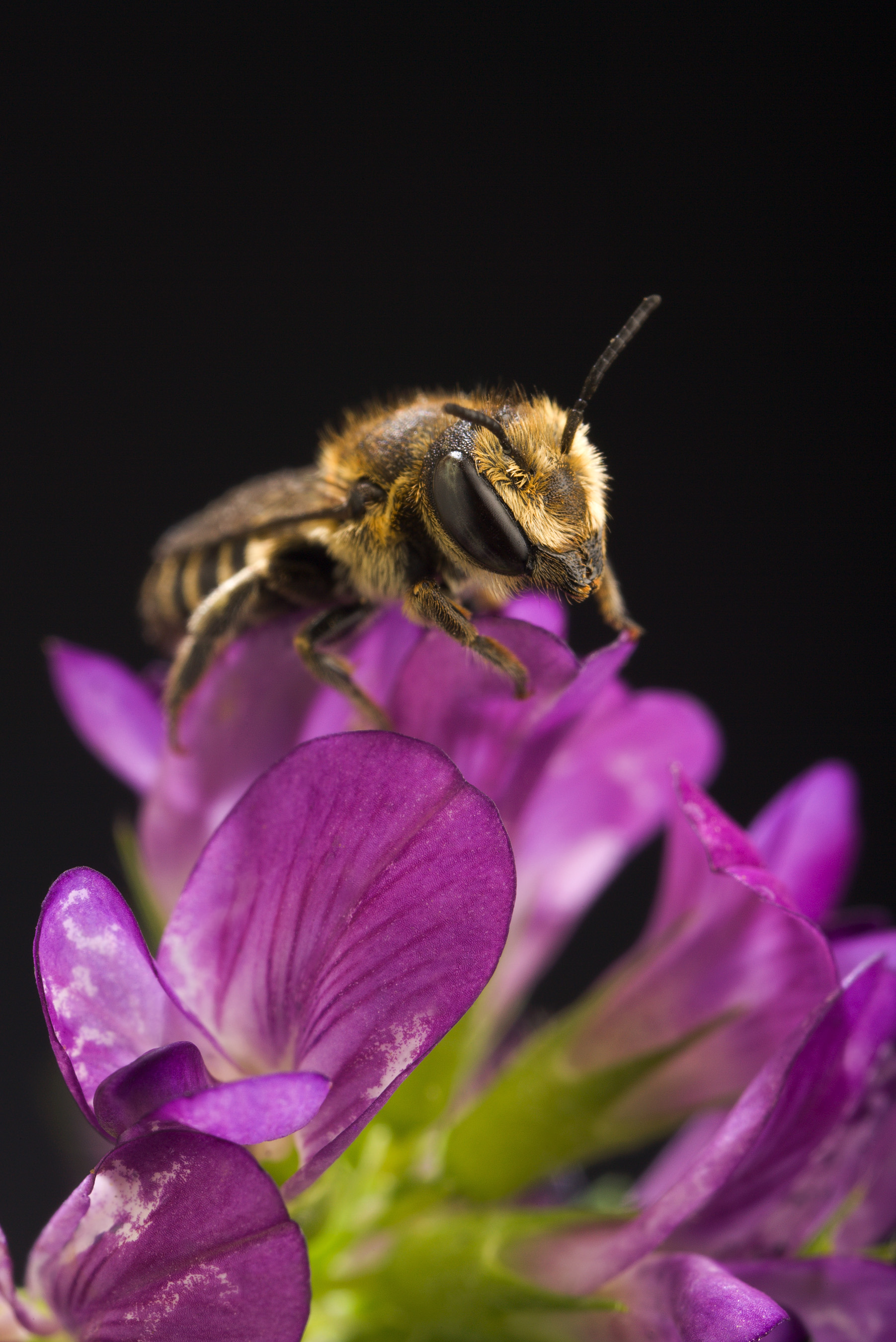
Stinging Insect
Leafcutter Bee
Megachile rotundata
Biology
Megachile rotundata (Fabricius), the alfalfa leafcutter bee (family Megachilidae), is a solitary bee, usually 6-10 mm in length, with a robust, dark body sparsely covered with pale hairs. Like other Megachilidae, females possess a scopa on the underside of the abdomen used for collecting and carrying pollen. They are non-aggressive and rarely sting. Females construct linear nests in pre-existing cavities, lining and dividing individual cells with neatly cut pieces of leaves, typically circular or oval sections. Each cell contains a pollen-nectar provision and a single egg. Multiple generations can occur in warmer regions.
Behaviour
Leafcutter bees are important pollinators, particularly of alfalfa and other legumes. Females use their mandibles to cut distinctive circular or oval pieces from leaves, which they then transport to their nesting sites. These leaf pieces are meticulously used to construct and line individual brood cells within the pre-existing tunnels. They are solitary bees, meaning each female independently builds and provisions her nest without social cooperation. Adult activity begins in late spring and continues through summer.
Habits
M. rotundata is a cosmopolitan species, being widely introduced globally for crop pollination. They prefer warm, dry climates and utilize a variety of pre-existing tunnels for nesting, including hollow stems, beetle borings in wood, and artificial nesting blocks. Conducive conditions include readily available broad-leaved plants for leaf material (e.g., roses, alfalfa, lilac), suitable nesting cavities 4-7 mm in diameter, and access to flowering plants for pollen and nectar. Presence of these bees is typically indicative of a healthy pollinator environment.
Control methods
- 1Provide artificial nesting blocks for desired activity.
- 2Ensure access to non-toxic leaf sources.
- 3Plant diverse flowering plants for foraging.
- 4Avoid insecticide use during their active season.
- 5Relocate undesirable nests if necessary.
- 6Educate on their beneficial pollination role.
Tailored to Leafcutter Bee
IPM Procedure Checklist
Inspection
- Survey interior and exterior for evidence and conducive conditions
- Document findings with photos and a site map
- Place monitors to confirm activity
Identification
- Confirm Leafcutter Bee (Megachile rotundata) — not a look-alike
- Note life stage and risk level: Low
- Capture clear photos and samples for the record
Action Thresholds
- Tolerate low-level activity outside sensitive zones
- Act if activity moves indoors or near food
- Review threshold seasonally with the client
Prevention
- Exclude entry points and harborage
- Improve sanitation and moisture control
- Modify habitat around the structure
Control Methods
- Provide artificial nesting blocks for desired activity.
- Ensure access to non-toxic leaf sources.
- Plant diverse flowering plants for foraging.
- Avoid insecticide use during their active season.
Monitoring & Evaluation
- Service monitors on schedule and trend captures
- Re-inspect for Leafcutter Bee activity at follow-up
- Adjust tactics based on data; report findings to client