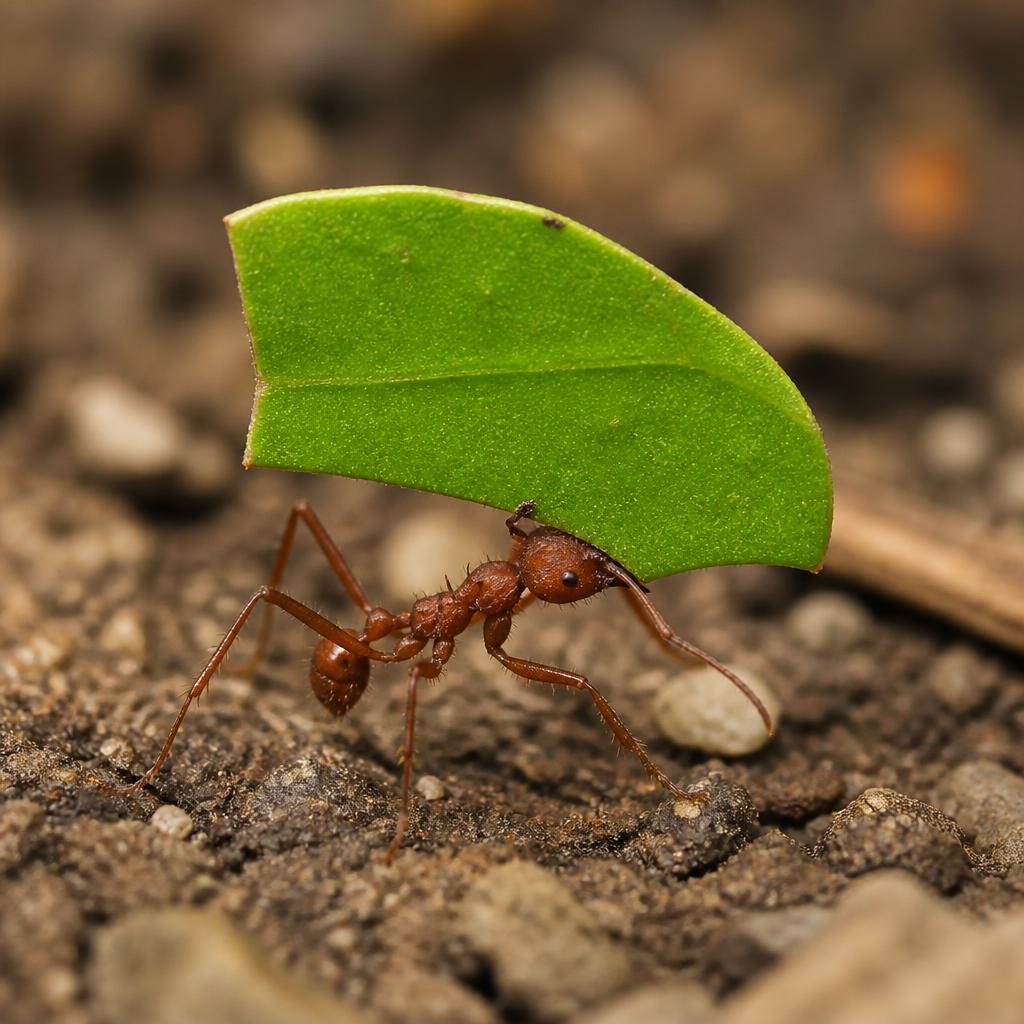
Ant
Leafcutter Ant
Atta texana
Biology
The Texas leafcutter ant, Atta texana (Family: Formicidae, Subfamily: Myrmicinae), is a highly dimorphic species with distinct worker castes. Minor workers are small (2-3 mm) and tend fungi, while major workers, or soldiers, are much larger (up to 12-14 mm) with massive heads and powerful mandibles, specialized for cutting leaves and defense. Their coloration ranges from reddish-brown to blackish-brown. Queens are considerably larger (up to 20 mm), alate during nuptial flights, and have a unique physiological adaptation to carry a starter pellet of fungus from her natal colony. Males are also alate. This species exhibits complete metamorphosis. Colonies are founded by a single queen and can become massive, housing millions of individuals within a complex network of subterranean chambers over many years, with some colonies estimated to be decades old.
Behaviour
Atta texana exhibits an extraordinary mutualistic relationship with a specific fungus, which it cultivates as its sole food source. Workers meticulously cut and collect fresh plant material (leaves, flowers, grasses), which they transport along well-defined foraging trails back to the nest. This plant material serves as a substrate for their symbiotic fungus, which they 'feed' and maintain within subterranean gardens. Foraging activity is primarily crepuscular and nocturnal but can extend into daylight hours, especially on overcast or humid days. They are highly destructive to vegetation, defoliating plants and trees in their foraging range. Soldiers fiercely defend colonies, and their powerful mandibles can inflict a painful bite.
Habits
Leafcutter ants construct massive, complex subterranean nests, often characterized by multiple surface mounds that mark the entrances to their extensive tunnel systems. Nests can extend over several thousand square feet in area and reach depths of 6 meters or more, containing numerous fungus gardens, brood chambers, and refuse dumps. They prefer sandy, well-drained soils and forested or semi-forested areas but can also infest agricultural and urban landscapes. Conducive conditions include the presence of host vegetation for foraging material and undisturbed soil for nest construction. Their destructive foraging behavior can cause significant economic damage to agriculture, forestry, and ornamental plantings, making them significant pests.
Control methods
- 1Locate and treat primary nest entrances with insecticide.
- 2Apply granular baits specifically formulated for leafcutter ants.
- 3Protect desirable plants with physical barriers or repellents.
- 4Remove vegetation immediately surrounding the nest.
- 5Consult specialists for large or persistent infestations.
- 6Monitor for new foraging trails and colony expansion.
Tailored to Leafcutter Ant
IPM Procedure Checklist
Inspection
- Follow trails to nests, food and moisture sources
- Inspect wall voids, slab edges and exterior soil
- Place non-repellent monitors at trail crossings
Identification
- Confirm Leafcutter Ant (Atta texana) — not a look-alike
- Note life stage and risk level: Moderate
- Capture clear photos and samples for the record
Action Thresholds
- Trigger action when monitor counts trend up
- Re-evaluate weekly during active season
- Document trigger criteria in the IPM plan
Prevention
- Seal entry cracks, utility penetrations and weep holes
- Eliminate honeydew-producing pests on landscape plants
- Store food in sealed containers and clean spills promptly
Control Methods
- Locate and treat primary nest entrances with insecticide.
- Apply granular baits specifically formulated for leafcutter ants.
- Protect desirable plants with physical barriers or repellents.
- Remove vegetation immediately surrounding the nest.
Monitoring & Evaluation
- Service monitors on schedule and trend captures
- Re-inspect for Leafcutter Ant activity at follow-up
- Adjust tactics based on data; report findings to client