Stored Product Pest
Larder Beetle
Dermestes lardarius
Biology
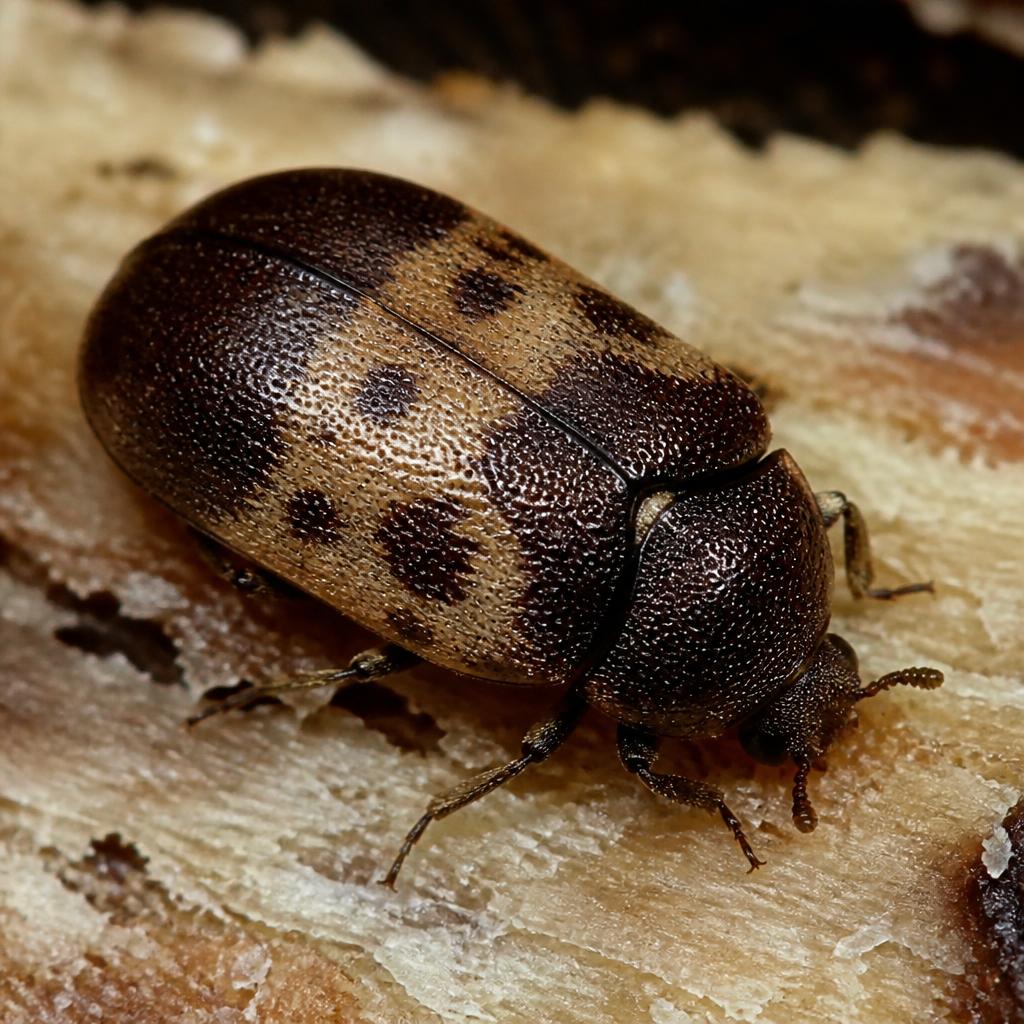
The larder beetle, Dermestes lardarius Linnaeus, is classified within the order Coleoptera, family Dermestidae. Adults are typically 7-9 mm long, oval-shaped, and distinctly dark brown to black, characterized by a prominent, irregular pale-yellow or cream-colored band across the anterior half of the elytra, dotted with three to four dark spots on each side. The antennae are short, clubbed, and serrate. Larvae are elongate, up to 15 mm long, reddish-brown, densely covered with stiff setae ('hairs'), and possess two prominent, curved, spine-like urogomphi at the posterior end. The life cycle, from egg to adult, typically spans 40-50 days under optimal conditions (25-30°C, 60-70% RH), but can extend significantly in cooler, drier environments. Females lay approximately 200 eggs over several weeks, often in cracks or crevices near food sources.
Behaviour
Dermestes lardarius exhibits nocturnal activity, primarily foraging for food during darkness, though adults may be seen dispersing during the day. While not truly social, aggregations often occur around abundant food sources for feeding and mating. Dispersal mechanisms include flight for adults, allowing them to colonize new resources or structures, and crawling for larvae if food is depleted. Their feeding ecology is necrophagous and keratinophilous, primarily consuming dried animal proteins such as cured meats, dried fish, pet foods, taxidermied specimens, furs, and deceased insects or rodents. Larvae are particularly destructive, boring into non-edible materials like wood, insulation, or plaster to create pupation chambers. They do not pose a direct public health threat through disease transmission, but their presence indicates unsanitary conditions and can cause significant structural damage or contamination of stored products.
Habits
Larder beetles exhibit a strong preference for dark, undisturbed harborage sites that are in close proximity to their protein-rich food sources. Common harborage locations include wall voids, attics, crawlspaces, basements, and behind baseboards, particularly where dead insects, rodents, or bird carcasses may accumulate. Foraging patterns involve both adults and larvae actively seeking out dried animal remains, often moving considerable distances from their harborage. Seasonal movements typically involve adults flying into structures during warmer months. Conducive conditions for infestation include poor sanitation, especially in food storage areas, and the presence of dead animals within wall voids or structural elements. Technicians should look for cast larval skins, pupal casings (often within boreholes), frass (excrement resembling fine sawdust), and actual live or dead adults and larvae near infested materials or harborage points.
Control methods
- 1Locate and remove dead animal/insect food source
- 2Vacuum window sills and attic spaces
- 3Seal exterior cracks and roof penetrations
- 4Store dried meats and pet food in sealed containers
- 5Pheromone monitors in pantries
- 6Residual treatment of infested voids
Tailored to Larder Beetle
IPM Procedure Checklist
Inspection
- Inspect grain, spices, pet food and dry goods for larvae and webbing
- Deploy pheromone monitors near storage and shelving
- Check spillage in seams, cracks and shelf liners
Identification
- Confirm Larder Beetle (Dermestes lardarius) — not a look-alike
- Note life stage and risk level: Moderate
- Capture clear photos and samples for the record
Action Thresholds
- Trigger action when monitor counts trend up
- Re-evaluate weekly during active season
- Document trigger criteria in the IPM plan
Prevention
- Rotate stock FIFO; reject damaged packaging at receiving
- Store products in airtight containers
- Maintain low humidity and clean storage surfaces
Control Methods
- Locate and remove dead animal/insect food source
- Vacuum window sills and attic spaces
- Seal exterior cracks and roof penetrations
- Store dried meats and pet food in sealed containers
Monitoring & Evaluation
- Service monitors on schedule and trend captures
- Re-inspect for Larder Beetle activity at follow-up
- Adjust tactics based on data; report findings to client