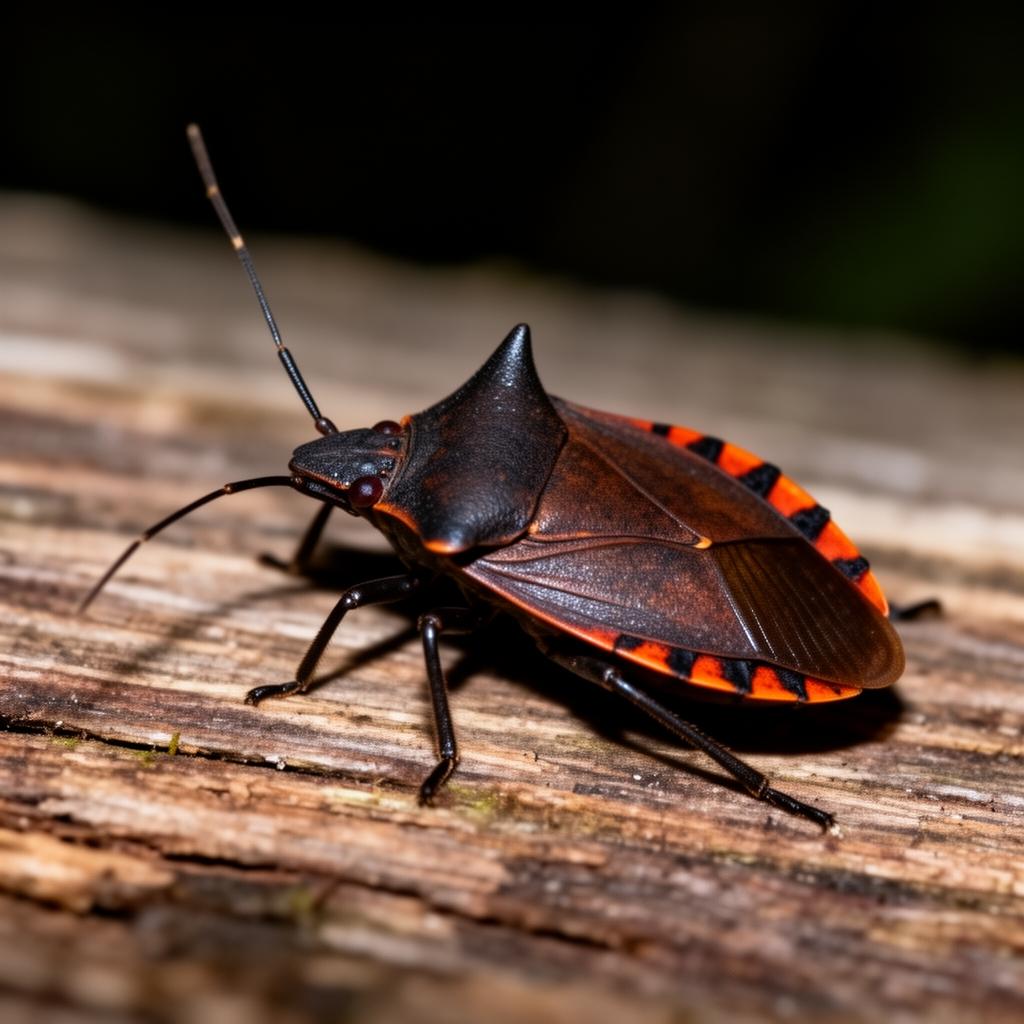
Blood Feeder
Kissing Bug
Triatoma sanguisuga
Biology
Triatoma sanguisuga, commonly known as the eastern bloodsucking conenose or kissing bug, belongs to the family Reduviidae and subfamily Triatominae, within the order Hemiptera. Adults typically measure 15-20 mm in length, possessing an elongated, cone-shaped head and a relatively flattened body, often dark brown or black with reddish or yellowish markings on the lateral margins of the abdomen. They have prominent antennae and a strong, piercing-sucking proboscis. All nymphal stages, of which there are five, resemble smaller versions of adults and are also hematophagous. Eggs are laid in cryptic locations. The life cycle duration is highly variable, typically requiring 1-2 years to complete depending on temperature, humidity, and the availability of blood meals.
Behaviour
Kissing bugs are primarily nocturnal, emerging from harborage to feed on vertebrate blood, a necessity for both nymphal development and adult reproduction. They are attracted to host cues such as heat, carbon dioxide, and odors. Feeding is typically quiescent and prolonged, lasting 10-30 minutes, often occurring around the host's face, hence the common name. These insects are vectors of Trypanosoma cruzi, the causative agent of Chagas disease, which is transmitted through their feces deposited during or shortly after feeding. Dispersal occurs through flight (adults) and crawling (nymphs and adults), and they are frequently attracted to artificial light sources at night.
Habits
Triatoma sanguisuga primarily lives outdoors in sylvatic or peridomestic environments, often associated with nests of their natural hosts such as raccoons, opossums, and rodents. They can also be found in woodpiles, rock crevices, under bark, and in animal burrows. While not typically infesting structures, adults are frequently attracted to homes by outdoor lights during warmer months and may enter through open doors or windows. Indoors, they may harbor in cracks and crevices, attics, or behind wall hangings. Conducive conditions include the presence of wild animal reservoirs near human habitations, unsealed structural entry points, and outdoor lighting that attracts adults.
Control methods
- 1Seal cracks and crevices in structures.
- 2Turn off unnecessary outdoor lighting.
- 3Use screens on windows and doors.
- 4Remove potential outdoor harborage.
- 5Relocate or manage wildlife reservoirs.
- 6Avoid direct contact; do not crush bugs.
Tailored to Kissing Bug
IPM Procedure Checklist
Inspection
- Survey interior and exterior for evidence and conducive conditions
- Document findings with photos and a site map
- Place monitors to confirm activity
Identification
- Confirm Kissing Bug (Triatoma sanguisuga) — not a look-alike
- Note life stage and risk level: Severe
- Capture clear photos and samples for the record
Action Thresholds
- Zero-tolerance: act on first confirmed sighting
- Notify client and document the trigger event
- Prioritize health and regulatory risk in the plan
Prevention
- Exclude entry points and harborage
- Improve sanitation and moisture control
- Modify habitat around the structure
Control Methods
- Seal cracks and crevices in structures.
- Turn off unnecessary outdoor lighting.
- Use screens on windows and doors.
- Remove potential outdoor harborage.
Monitoring & Evaluation
- Service monitors on schedule and trend captures
- Re-inspect for Kissing Bug activity at follow-up
- Adjust tactics based on data; report findings to client