Insect
June Beetle
Phyllophaga
Biology
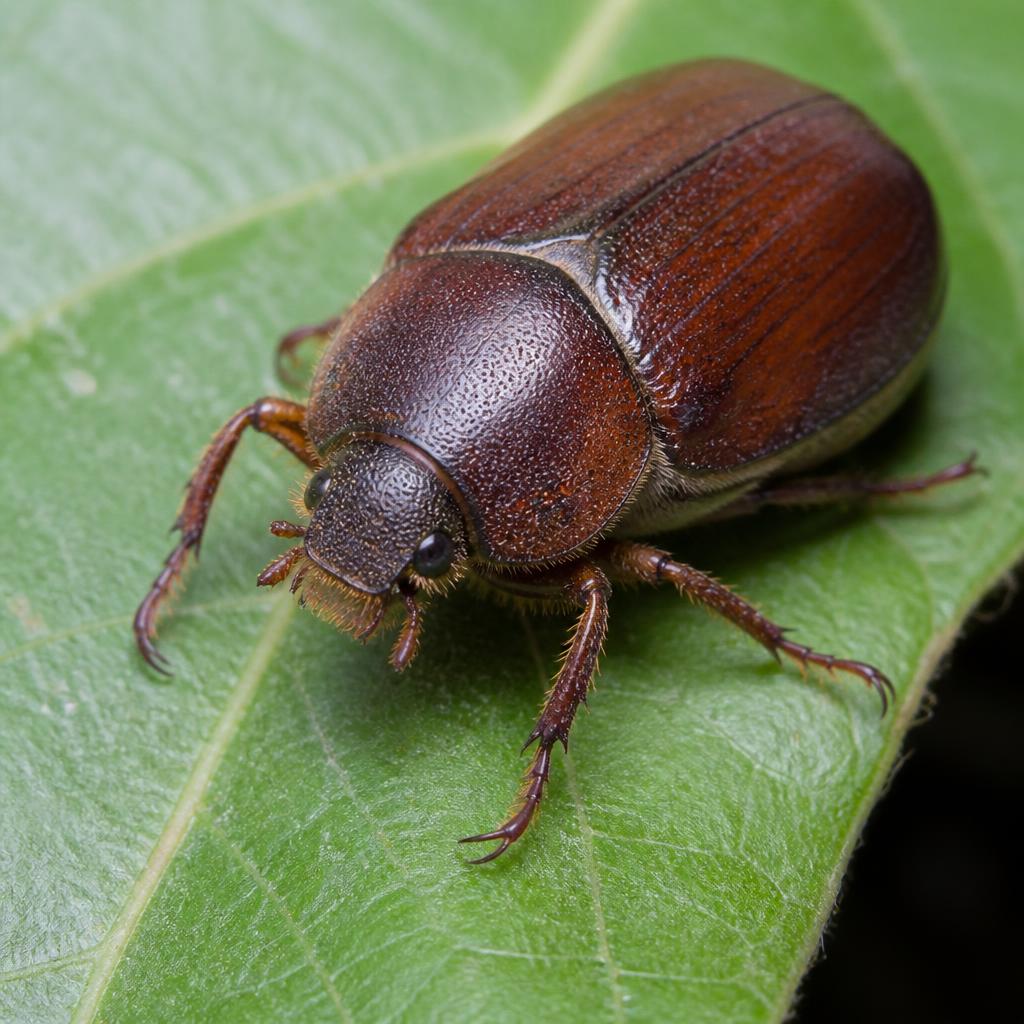
June beetles, belonging to the genus Phyllophaga within the family Scarabaeidae, encompass numerous species of nocturnal, robust-bodied scarabs. Adults are typically reddish-brown to black, range from 12-25 mm in length, and possess lamellate antennae. Females deposit white, oval eggs singly in the soil, usually in grassy areas. The larvae, commonly known as white grubs, are C-shaped, creamy white with a brown head capsule, and possess three pairs of thoracic legs. Development of the grubs can take one to three years, depending on the species and environmental conditions, with pupation occurring in an earthen cell in the soil. Optimal soil moisture and moderate temperatures are crucial for larval development.
Behaviour
Adult June beetles are primarily nocturnal, emerging at dusk to feed on the foliage of deciduous trees and shrubs, and are strongly attracted to lights. Males often emerge before females. Females tunnel into the soil to lay eggs. White grubs remain subterranean throughout their development, feeding on the roots of grasses and other plants. They typically move deeper into the soil in response to cold temperatures, overwintering below the frost line. Larval locomotion is often accomplished by crawling on their backs.
Habits
Adult June beetles can defoliate trees and shrubs, though significant damage is less common than that caused by their larval stage. White grubs are significant pests of turfgrass, corn, small grains, and various vegetable crops, severing roots and causing wilt, yellowing, and eventual plant death. Infestations lead to irregular brown patches in lawns that can be rolled back like a rug. Harborage for grubs is the soil beneath host plants. Conducive conditions include well-irrigated lawns and pastures, providing ideal egg-laying sites and larval food sources, as well as mild winters allowing for grub survival.
Control methods
- 1Monitor turf for grub damage early.
- 2Improve lawn drainage and aeration.
- 3Apply beneficial nematodes to soil.
- 4Use preventative grub control products.
- 5Avoid over-watering turfgrass.
- 6Manage outdoor lighting to deter adults.
Tailored to June Beetle
IPM Procedure Checklist
Inspection
- Inspect harborage near food, water and warmth
- Check cracks, voids and appliance interiors
- Place sticky monitors at suspected hot-spots
Identification
- Confirm June Beetle (Phyllophaga) — not a look-alike
- Note life stage and risk level: Low
- Capture clear photos and samples for the record
Action Thresholds
- Tolerate low-level activity outside sensitive zones
- Act if activity moves indoors or near food
- Review threshold seasonally with the client
Prevention
- Seal cracks, plumbing penetrations and wall voids
- Eliminate moisture sources and standing water
- Improve sanitation: sealed food storage, grease removal
Control Methods
- Monitor turf for grub damage early.
- Improve lawn drainage and aeration.
- Apply beneficial nematodes to soil.
- Use preventative grub control products.
Monitoring & Evaluation
- Service monitors on schedule and trend captures
- Re-inspect for June Beetle activity at follow-up
- Adjust tactics based on data; report findings to client