Spider
Jumping Spider
Salticidae
Biology
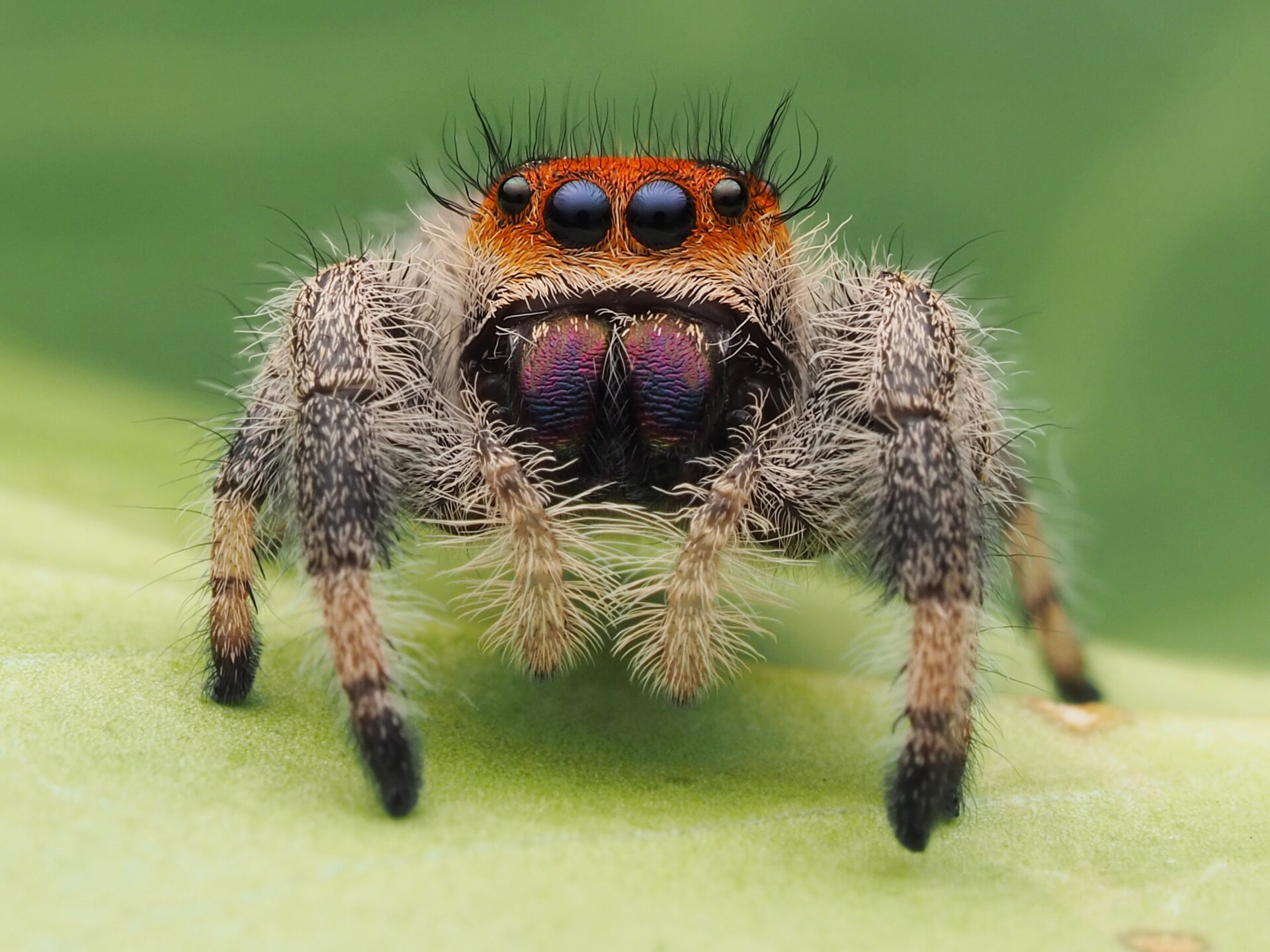
Salticidae encompasses over 600 genera and 6,000 species, representing roughly 13% of all spider species. Adults range from approximately 3 mm to 15 mm, characterized by a robust, compact body, often hairy or iridescent, and notably large anterior median eyes (AMEs) that provide exceptional acuity for a spider. Their life cycle typically spans 1-3 years, involving several instars; females mature in about 6-12 months and produce multiple egg sacs, each containing 25-100 eggs, over their lifetime. These spiders thrive in a wide range of temperatures and humidity levels, adapting well to diverse microclimates within human structures. Distinguishing features include the distinctive rectangular arrangement of their forward-facing eyes, often with a highly articulated cephalothorax, and their lack of a true web construction for prey capture.
Behaviour
Jumping spiders are primarily diurnal, relying heavily on their principal eyes (AMEs) for precise vision in active hunting and navigation, allowing them to detect, stalk, and pounce on prey from considerable distances. While largely solitary, complex courtship rituals involving visual displays and vibrations are common, utilizing their developed visual and chemosensory capabilities. Dispersal often occurs through ballooning in younger instars, while adults primarily move by walking and making targeted jumps, some species covering distances exceeding 50 times their body length. Their predatory impact is significant, specializing in a broad spectrum of small insects and other spiders, contributing to natural pest control without posing a significant public health threat to humans due to their mild, non-medically significant venom and reluctance to bite.
Habits
These opportunistic hunters do not construct catching webs but instead create small, silken retreats, or 'sacs,' under bark, stones, or within dense foliage, and often in cracks and crevices inside structures, for molting, egg-laying, and overnight shelter. Foraging patterns involve active exploration of surfaces like walls, window sills, and ceilings where they can spot and ambush prey. Their seasonal movements are typically limited, with most species remaining within a localized range; however, indoor populations can persist year-round, especially in temperate climates. Conducive conditions for indoor harborage include cluttered areas, undisturbed corners, and near light sources that attract their insect prey. Signs of infestation are typically limited to direct sightings of the spiders themselves, as they leave no web or significant frass, and their retreats are often small and inconspicuous.
Control methods
- 1Tolerate where possible — beneficial predator
- 2Capture and release outdoors using a cup
- 3Door sweeps and screens to limit indoor entry
- 4Vacuum dust and small flies that attract them
- 5Avoid broadcast spraying
- 6Seal window and screen gaps
Tailored to Jumping Spider
IPM Procedure Checklist
Inspection
- Inspect undisturbed corners, voids and stored items
- Identify webs, egg sacs and prey debris
- Note conducive insect prey populations
Identification
- Confirm Jumping Spider (Salticidae) — not a look-alike
- Note life stage and risk level: Low
- Capture clear photos and samples for the record
Action Thresholds
- Tolerate low-level activity outside sensitive zones
- Act if activity moves indoors or near food
- Review threshold seasonally with the client
Prevention
- Reduce clutter and seal cracks around the structure
- Switch exterior lights to yellow / sodium to reduce prey
- Install door sweeps and screen vents
Control Methods
- Tolerate where possible — beneficial predator
- Capture and release outdoors using a cup
- Door sweeps and screens to limit indoor entry
- Vacuum dust and small flies that attract them
Monitoring & Evaluation
- Service monitors on schedule and trend captures
- Re-inspect for Jumping Spider activity at follow-up
- Adjust tactics based on data; report findings to client