Mammal
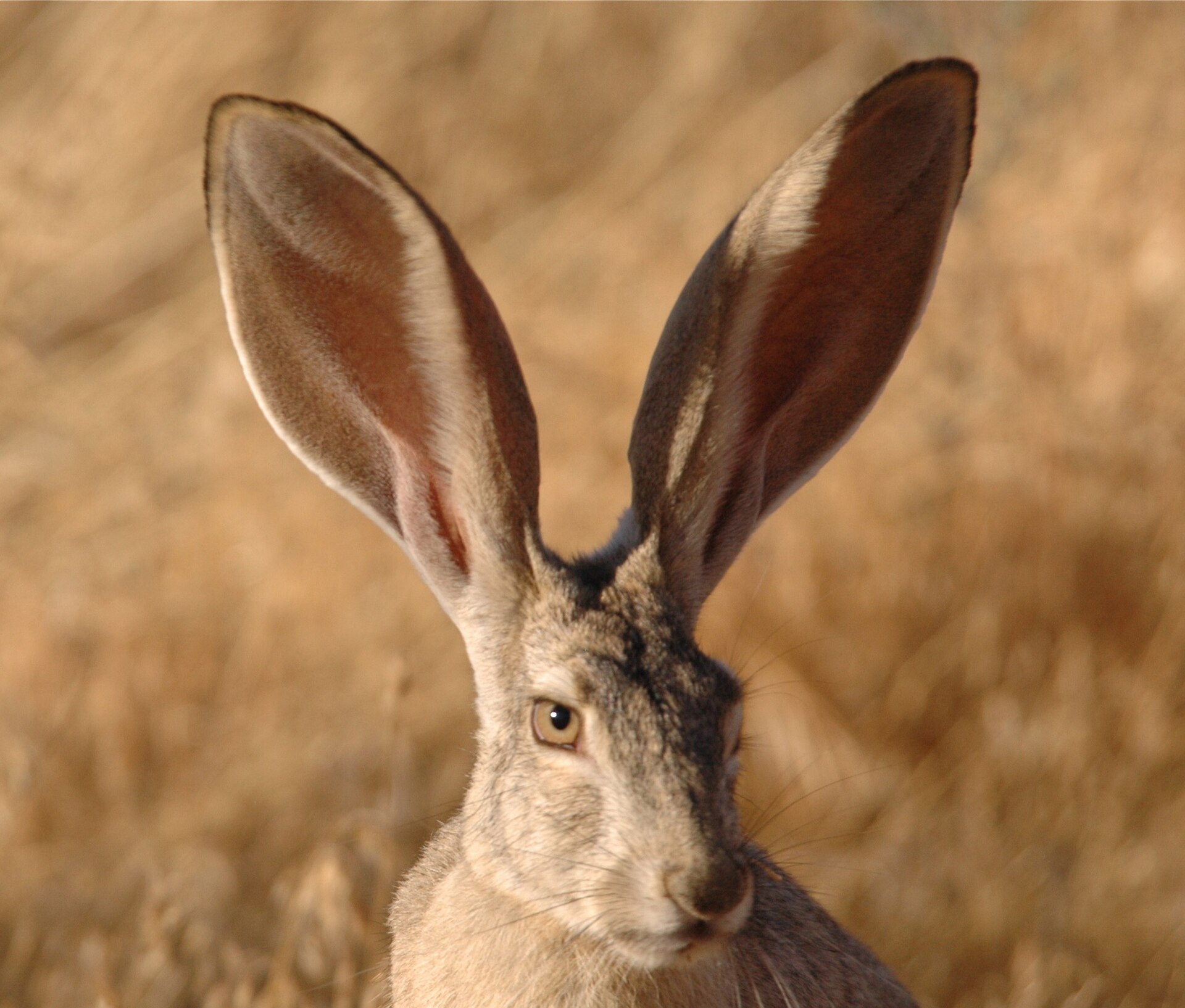
Black-tailed Jackrabbit
Lepus californicus
Biology
Lepus californicus, the Black-tailed Jackrabbit, is a species of hare, not a true rabbit, belonging to the family Leporidae. Adults typically weigh 2-4 kg and measure 50-65 cm in length, distinguished by their long ears and powerful hind legs. Their fur is grizzled gray-brown dorsally with characteristic black-tipped ears and a black stripe extending along the top of their tail. Jackrabbits are primarily crepuscular and nocturnal but can be active during the day, especially in mild weather. They do not burrow but create shallow depressions called 'forms.' Breeding occurs year-round in warmer climates, with 2-6 litters annually of 1-6 young (leverets) after a gestation of 41-47 days. Lifespan is 2-5 years.
Behaviour
Black-tailed jackrabbits are solitary herbivores, primarily feeding on grasses, forbs, and shrubs, but will consume agricultural crops. They are renowned for their speed, reaching up to 60 km/h, and their powerful leaps, used to evade predators. When threatened, they often rely on camouflage and immobility, flushing only when a predator is very close. Communication involves foot thumping and ear movements. Their extensive foraging can lead to significant crop damage in agricultural areas and overgrazing in rangelands. While they do not typically enter structures, their large populations can devastate landscaping and gardens in residential areas bordering open spaces.
Habits
Black-tailed jackrabbits inhabit open grasslands, prairies, desert scrublands, and agricultural fields across the western United States. They do not dig burrows but create 'forms,' shallow depressions in the ground under shrubs or tall grasses, which provide concealment and protection from sun and wind. Conducive conditions for jackrabbit populations include vast expanses of open herbaceous vegetation, moderate temperatures, and dry climates. They are often found in areas with sparse cover, relying on their keen senses and speed for survival. Their preference for young, succulent vegetation makes gardens, nurseries, and crop fields particularly vulnerable to damage.
Control methods
- 1Install tall, sturdy fencing to exclude them.
- 2Remove dense vegetation near vulnerable areas.
- 3Apply taste or scent repellents to plants.
- 4Utilize frightening devices or noisemakers.
- 5Use live traps for relocation (with permits).
- 6Consult with wildlife management experts.
Tailored to Black-tailed Jackrabbit
IPM Procedure Checklist
Inspection
- Survey interior and exterior for evidence and conducive conditions
- Document findings with photos and a site map
- Place monitors to confirm activity
Identification
- Confirm Black-tailed Jackrabbit (Lepus californicus) — not a look-alike
- Note life stage and risk level: Moderate
- Capture clear photos and samples for the record
Action Thresholds
- Trigger action when monitor counts trend up
- Re-evaluate weekly during active season
- Document trigger criteria in the IPM plan
Prevention
- Exclude entry points and harborage
- Improve sanitation and moisture control
- Modify habitat around the structure
Control Methods
- Install tall, sturdy fencing to exclude them.
- Remove dense vegetation near vulnerable areas.
- Apply taste or scent repellents to plants.
- Utilize frightening devices or noisemakers.
Monitoring & Evaluation
- Service monitors on schedule and trend captures
- Re-inspect for Black-tailed Jackrabbit activity at follow-up
- Adjust tactics based on data; report findings to client