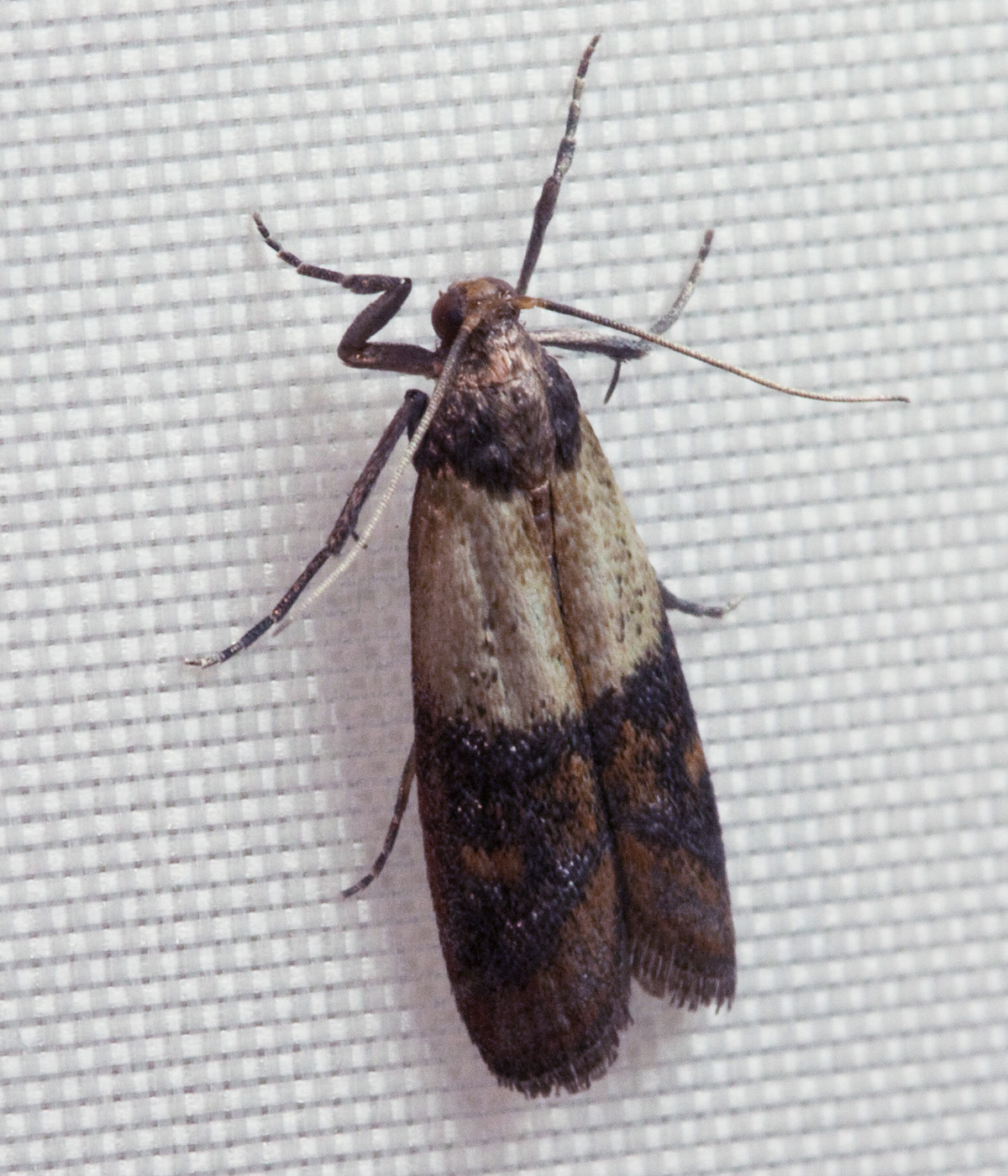
Stored Product Pest
Indianmeal Moth
Plodia interpunctella
Biology
The Indianmeal moth (Phylum Arthropoda, Class Insecta, Order Lepidoptera, Family Pyralidae) measures 8-10 mm in length with a wingspan of 16-20 mm, exhibiting distinctive bicoloured forewings: the proximal third is pale grey-yellow, contrasting sharply with the coppery-red to bronze distal two-thirds. Females lay 100-400 oval, white eggs, typically in clusters or singly, directly on or near suitable food sources, with an incubation period of 2-18 days. The larval stage consists of 5-7 instars, lasting 2-41 weeks depending on temperature (optimal 25-30°C) and food quality, reaching a length of 12-14 mm before pupation. Pupation occurs in a silken cocoon, lasting 15-20 days, followed by adult emergence and a lifespan of 5-25 days. The entire lifecycle can be completed in as little as 27 days under optimal conditions, enabling multiple overlapping generations per year.
Behaviour
Indianmeal moth larvae are voracious feeders and exhibit strong thigmotaxis, tunnelling through food products and producing extensive silken webbing that binds particles together – a key diagnostic sign. This webbing protects larvae from predators and parasitoids during development. Upon completing larval development, mature larvae undergo a distinct wandering phase, dispersing significant distances (up to several meters) from the food source to locate secluded pupation sites, often at wall/ceiling junctions or within cracks and crevices. Adults are primarily crepuscular and nocturnal, exhibiting a characteristic weak, erratic flight pattern, and do not feed, relying solely on energy reserves accumulated during the larval stage; their primary function is reproduction. They communicate via pheromones, with females releasing sex pheromones to attract males.
Habits
Optimal harborage for Indianmeal moth larvae includes a wide array of stored products, particularly those with coarse textures like whole grains, dried fruits, nuts, seeds, flour, pet food, and even spices; fine powders are generally less preferred due to difficulty in spinning silk. Larval foraging patterns result in characteristic 'matting' of infested products with silk, frass, and cast skins, sometimes causing discoloration and off-odors. Infestations commonly originate from contaminated incoming goods or can establish from residual populations in cracks and poorly cleaned areas. Adult moths are indicators of active larval development nearby, with their presence typically noted fluttering near the tops of packaging, shelves, or in the upper corners of rooms. Conducive conditions include poor sanitation, spillage, and ambient temperatures between 20-30°C with moderate humidity, which accelerate lifecycle development. Technicians should inspect product seams, corners of packaging, and areas where spilled products accumulate.
Control methods
- 1Discard all infested packages; inspect adjacent products
- 2Vacuum cracks, shelves and corners — remove webbing and pupae
- 3Store dry goods in airtight glass or hard-plastic containers
- 4Rotate stock and buy in smaller quantities
- 5Deploy pheromone monitor traps to track and reduce males
- 6Freeze (-18 °C, 4 days) or heat (60 °C, 1 hour) susceptible items
Tailored to Indianmeal Moth
IPM Procedure Checklist
Inspection
- Inspect grain, spices, pet food and dry goods for larvae and webbing
- Deploy pheromone monitors near storage and shelving
- Check spillage in seams, cracks and shelf liners
Identification
- Confirm Indianmeal Moth (Plodia interpunctella) — not a look-alike
- Note life stage and risk level: Moderate
- Capture clear photos and samples for the record
Action Thresholds
- Trigger action when monitor counts trend up
- Re-evaluate weekly during active season
- Document trigger criteria in the IPM plan
Prevention
- Rotate stock FIFO; reject damaged packaging at receiving
- Store products in airtight containers
- Maintain low humidity and clean storage surfaces
Control Methods
- Discard all infested packages; inspect adjacent products
- Vacuum cracks, shelves and corners — remove webbing and pupae
- Store dry goods in airtight glass or hard-plastic containers
- Rotate stock and buy in smaller quantities
Monitoring & Evaluation
- Service monitors on schedule and trend captures
- Re-inspect for Indianmeal Moth activity at follow-up
- Adjust tactics based on data; report findings to client