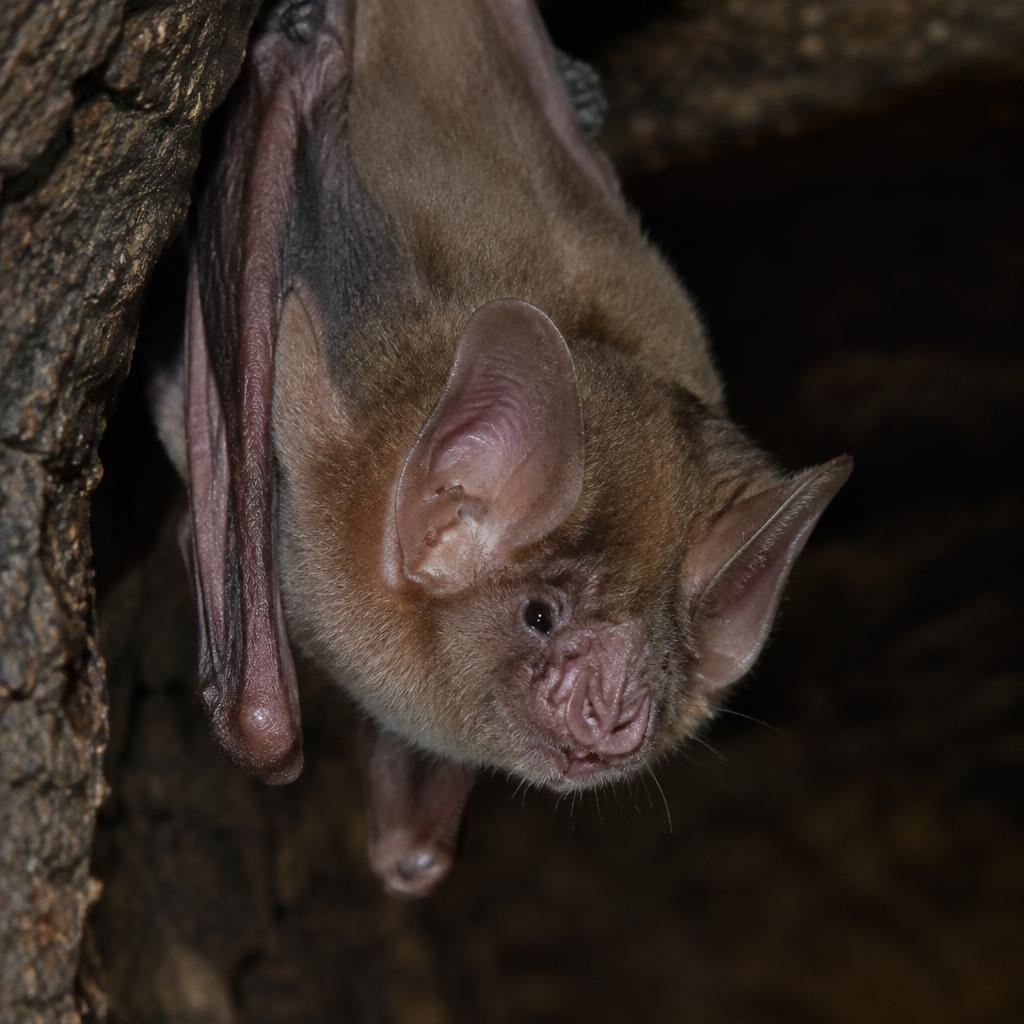
Bat
Indiana Bat
Myotis sodalis
Biology
Myotis sodalis is a small grayish-brown myotid, 7–9 g, with a 24–27 cm wingspan and pinkish-brown nose. It is federally endangered in the United States. Females form maternity colonies under exfoliating tree bark in summer and hibernate in caves or mines in winter.
Behaviour
Indiana bats are nocturnal insectivores that forage along wooded riparian corridors and forest edges. They are highly social in hibernacula and maternity roosts but otherwise secretive. Disturbance during hibernation can cause fatal energy depletion.
Habits
Structural issues arise when dead or dying trees with loose bark are removed during summer maternity season, or when bats temporarily roost in building crevices. Any suspected Indiana bat activity requires careful identification and often regulatory consultation.
Control methods
- 1Verify species identification with a qualified biologist
- 2Avoid tree removal May–July maternity season
- 3Consult state/federal wildlife agencies before exclusion or demolition
- 4Install bat boxes only where appropriate and permitted
- 5Protect known hibernacula from disturbance
- 6Use non-lethal exclusion designed specifically for Myotis species
Tailored to Indiana Bat
IPM Procedure Checklist
Inspection
- Inspect at dusk to locate active entry/exit points
- Check attics, soffits and chimneys for guano
- Identify maternity colonies before any action
Identification
- Confirm Indiana Bat (Myotis sodalis) — not a look-alike
- Note life stage and risk level: Moderate
- Capture clear photos and samples for the record
Action Thresholds
- Trigger action when monitor counts trend up
- Re-evaluate weekly during active season
- Document trigger criteria in the IPM plan
Prevention
- Seal gaps ≥6 mm with caulk, mesh and flashing
- Cap chimneys and screen attic vents
- Provide alternative bat houses on the property
Control Methods
- Verify species identification with a qualified biologist
- Avoid tree removal May–July maternity season
- Consult state/federal wildlife agencies before exclusion or demolition
- Install bat boxes only where appropriate and permitted
Monitoring & Evaluation
- Service monitors on schedule and trend captures
- Re-inspect for Indiana Bat activity at follow-up
- Adjust tactics based on data; report findings to client