Blood Feeder
Human Flea
Pulex irritans
Biology
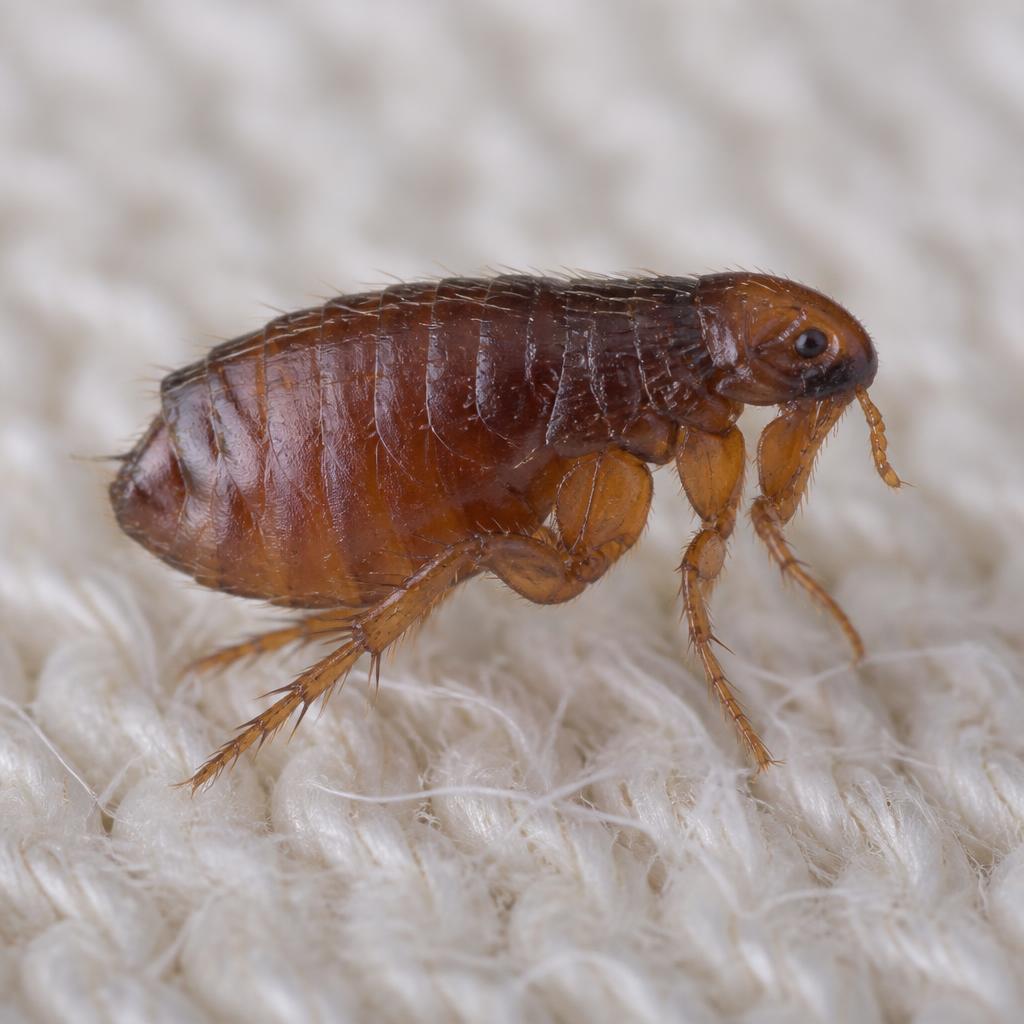
*Pulex irritans*, the human flea, is a combless flea 1.5–4 mm long, reddish-brown and laterally flattened, with a rounded head and a single row of bristles behind the eye. Despite the name it is not restricted to people — pigs, dogs, badgers, foxes, coyotes and other carnivores are common hosts, and modern infestations in developed countries usually trace to livestock, wildlife dens, or crawl-space denning animals rather than to human bedding. Females lay eggs loosely in host resting material; the egg–larva–pupa–adult cycle takes three to six weeks depending on temperature and humidity, and adults are long-lived and tolerate starvation well.
Behaviour
Adults feed on whatever warm-blooded host is available and will move to people readily when the primary host is gone. Bites appear as itchy erythematous papules, often in irregular clusters on legs and waistline where clothing constricts. The species is a recorded secondary vector of *Yersinia pestis* in some sylvatic plague foci and a documented intermediate host of *Dipylidium caninum*. Larvae are free-living in floor debris, straw, and soil, feeding on organic matter and adult flea faeces, and are strongly negatively phototactic.
Habits
Look for it around pig pens, barns, poultry houses, sheds, and structures with badger, fox, coyote or raccoon dens under floors, decks or crawl spaces. Conducive conditions are dirt or straw-bedded animal housing, wildlife denning against or beneath the structure, and infrequent bedding removal. Inspection is by white-sock walk-through of the animal area, sticky traps, and an exterior survey for active dens — in most residential complaints the correct fix is locating and evicting the wildlife host.
Control methods
- 1Locate and exclude the wildlife or livestock host driving the infestation
- 2Remove and replace straw, bedding and nest material from dens and pens
- 3Apply IGR plus adulticide to animal housing floors and crawl-space soil
- 4Seal crawl spaces, decks and outbuilding gaps after eviction
- 5Treat pets and working dogs with veterinary preventatives
- 6Vacuum and hot-wash affected interior textiles
- 7Re-inspect at 14 days for emerging adults
Tailored to Human Flea
IPM Procedure Checklist
Inspection
- Survey interior and exterior for evidence and conducive conditions
- Document findings with photos and a site map
- Place monitors to confirm activity
Identification
- Confirm Human Flea (Pulex irritans) — not a look-alike
- Note life stage and risk level: Moderate
- Capture clear photos and samples for the record
Action Thresholds
- Trigger action when monitor counts trend up
- Re-evaluate weekly during active season
- Document trigger criteria in the IPM plan
Prevention
- Exclude entry points and harborage
- Improve sanitation and moisture control
- Modify habitat around the structure
Control Methods
- Locate and exclude the wildlife or livestock host driving the infestation
- Remove and replace straw, bedding and nest material from dens and pens
- Apply IGR plus adulticide to animal housing floors and crawl-space soil
- Seal crawl spaces, decks and outbuilding gaps after eviction
Monitoring & Evaluation
- Service monitors on schedule and trend captures
- Re-inspect for Human Flea activity at follow-up
- Adjust tactics based on data; report findings to client