All pests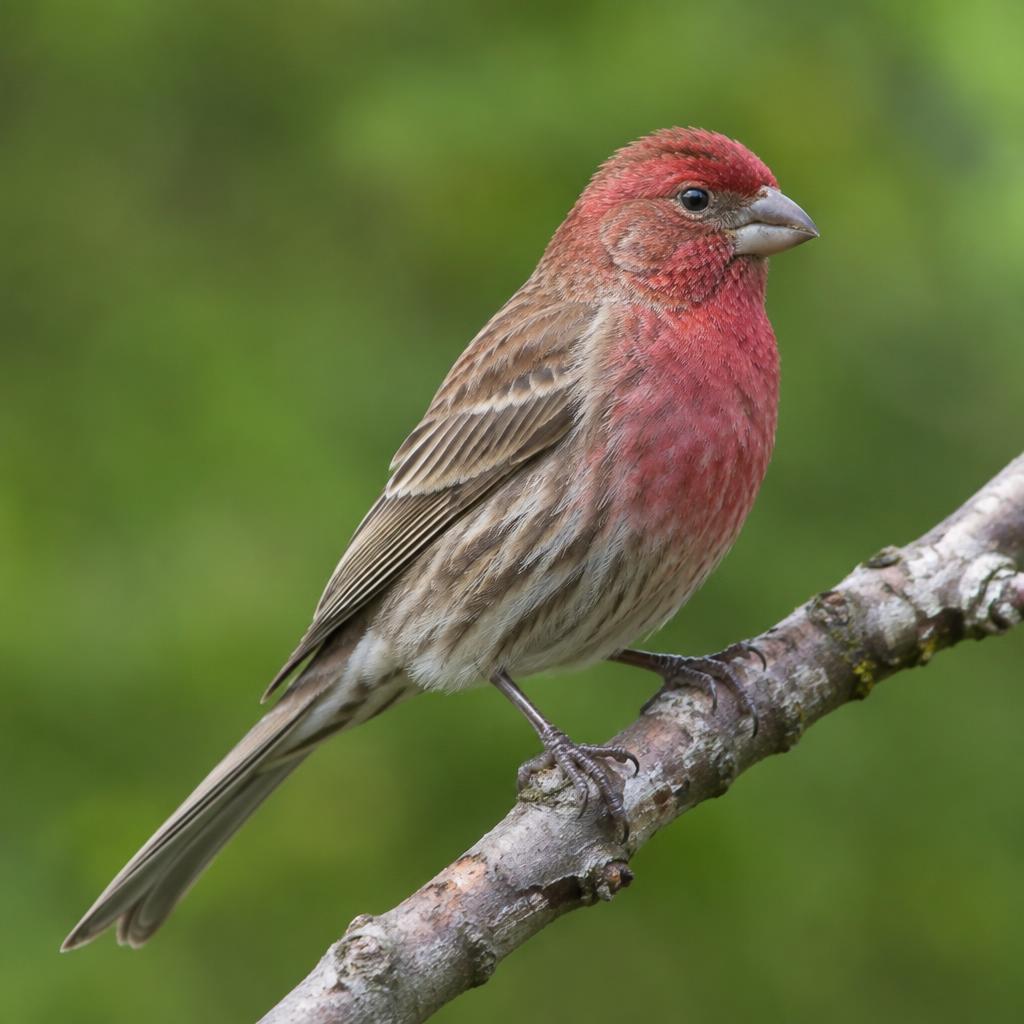 View full procedure
Bird
House Finch
Haemorhous mexicanus
Low Risk
Biology
Haemorhous mexicanus is a small passerine, 13–14 cm, with brown-streaked females and males showing red to orange head, breast, and rump. Originally western, it is now widespread across North America in urban and suburban habitats.
Behaviour
House finches are gregarious seed-eaters that gather at feeders, in trees, and on building ledges. They nest in a wide variety of cavities and crevices, including door wreaths, light fixtures, vents, and ornamental planters.
Habits
Nests in vents and eaves can block airflow, create noise, and introduce mites, flies, and droppings. Dense congregations at feeders and roosts produce accumulations of seed hulls and feces on sidewalks, vehicles, and structures.
Control methods
- 1Remove or relocate bird feeders away from structures
- 2Install vent covers and blocker guards on exhaust openings
- 3Seal gaps behind fascia, soffits, and decorative fixtures
- 4Use bird-safe netting or slope boards on ledges
- 5Clean droppings promptly with disinfectant and PPE
- 6Avoid disturbing active nests of native birds; follow regulations
Tailored to House Finch
IPM Procedure Checklist
Step 1
Inspection
- Identify roosting, loafing and nesting sites
- Document droppings, feathers and damage to structure
- Note food and water sources attracting birds
Step 2
Identification
- Confirm House Finch (Haemorhous mexicanus) — not a look-alike
- Note life stage and risk level: Low
- Capture clear photos and samples for the record
Step 3
Action Thresholds
- Tolerate low-level activity outside sensitive zones
- Act if activity moves indoors or near food
- Review threshold seasonally with the client
Step 4
Prevention
- Install spikes, netting or shock track on ledges
- Remove standing water and accessible food
- Close openings to attics, vents and signage voids
Step 5
Control Methods
- Remove or relocate bird feeders away from structures
- Install vent covers and blocker guards on exhaust openings
- Seal gaps behind fascia, soffits, and decorative fixtures
- Use bird-safe netting or slope boards on ledges
Step 6
Monitoring & Evaluation
- Service monitors on schedule and trend captures
- Re-inspect for House Finch activity at follow-up
- Adjust tactics based on data; report findings to client