Occasional Invader
House Centipede
Scutigera coleoptrata
Biology
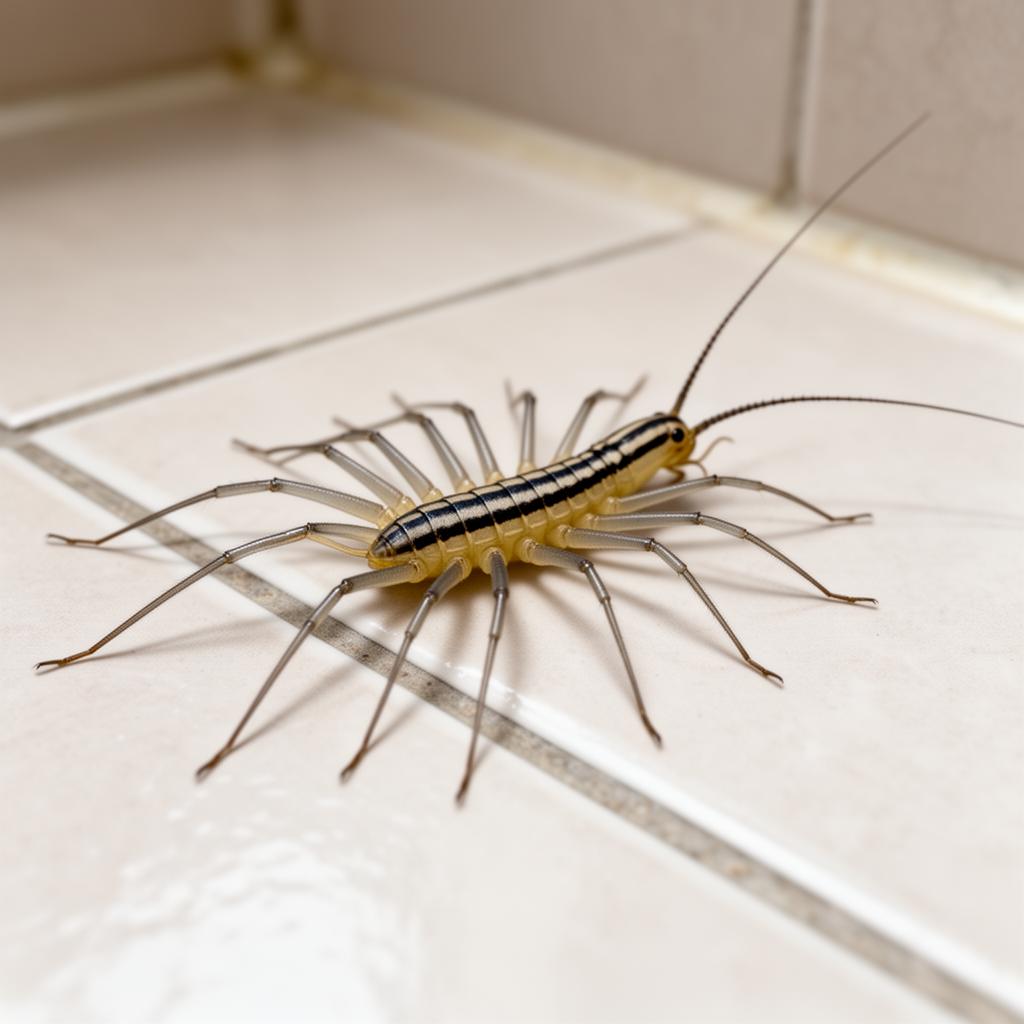
Scutigera coleoptrata, belonging to the class Chilopoda, is characterized by its elongated, dorsoventrally flattened body measuring 25–35 mm, supported by 15 pairs of extraordinarily long, slender legs, with the posterior pair being especially elongated, often mistaken for antennae. Its integument is yellowish-grey with three distinct dark, longitudinal dorsal stripes. Females demonstrate an impressive longevity, living up to 3–7 years, a significant duration for an arthropod, and deposit 35–100 eggs singly in moist soil or sheltered wall voids during the spring and summer. Juveniles, which emerge with 4–6 pairs of legs, undergo 5–6 moults, progressively adding pairs of legs and body segments until reaching the adult complement, a process known as anamorphosis. Optimal environmental conditions for development and survival include high humidity (75–98% RH) and moderate temperatures (10–30°C), making them resilient in various indoor microclimates.
Behaviour
This centipede is a highly effective, solitary, and strictly nocturnal predator, exhibiting rapid, darting movements that allow it to actively hunt and subdue a wide range of arthropod prey including cockroaches, silverfish, spiders, termites, and even other house centipedes. Its modified first pair of legs, termed forcipules, are equipped with venom glands, delivering a neurotoxic venom to immobilize prey. Although typically non-aggressive towards humans, a defensive bite, while rare, can occur if directly handled or threatened, causing a localized, temporary sting comparable to a bee sting, though systemic reactions are virtually unheard of. Their presence within a structure is a strong indicator of an existing pest infestation, as they are drawn to areas with abundant prey species, reflecting a functional ecological role in natural pest control within human dwellings.
Habits
House centipedes prefer concealed, damp, and undisturbed harborage sites during daylight hours, commonly found under debris, within wall voids, behind baseboards, beneath concrete slabs, or in cluttered areas of basements, crawl spaces, and utility rooms. Foraging patterns involve swift, unpredictable movements across various surfaces like walls, ceilings, and floors in search of prey, typically covering significant areas within a structure. Their movements between indoor spaces are influenced by temperature and humidity gradients, often migrating from basements upwards to bathrooms and kitchens, especially during cooler or drier periods outside. Signs of infestation are primarily the visual sighting of the centipedes themselves, particularly at night, or the presence of common household pests which serve as their food source, indicating conducive conditions such as high moisture levels and general clutter that provide both harborage and access to food.
Control methods
- 1Reduce humidity with dehumidifiers and fix leaks
- 2Eliminate prey insects (silverfish, roaches, spiders)
- 3Seal cracks in foundations, baseboards and plumbing
- 4Clear leaf litter and debris from foundation perimeter
- 5Vacuum specimens — no chemical treatment usually needed
- 6Apply perimeter residual only in heavy infestations
Tailored to House Centipede
IPM Procedure Checklist
Inspection
- Inspect exterior perimeter for entry pathways
- Note moisture, mulch and ground-cover near foundation
- Identify aggregation sites on warm walls
Identification
- Confirm House Centipede (Scutigera coleoptrata) — not a look-alike
- Note life stage and risk level: Low
- Capture clear photos and samples for the record
Action Thresholds
- Tolerate low-level activity outside sensitive zones
- Act if activity moves indoors or near food
- Review threshold seasonally with the client
Prevention
- Seal foundation cracks, weep holes and utility penetrations
- Pull mulch and vegetation back from the structure
- Improve drainage and reduce exterior moisture
Control Methods
- Reduce humidity with dehumidifiers and fix leaks
- Eliminate prey insects (silverfish, roaches, spiders)
- Seal cracks in foundations, baseboards and plumbing
- Clear leaf litter and debris from foundation perimeter
Monitoring & Evaluation
- Service monitors on schedule and trend captures
- Re-inspect for House Centipede activity at follow-up
- Adjust tactics based on data; report findings to client