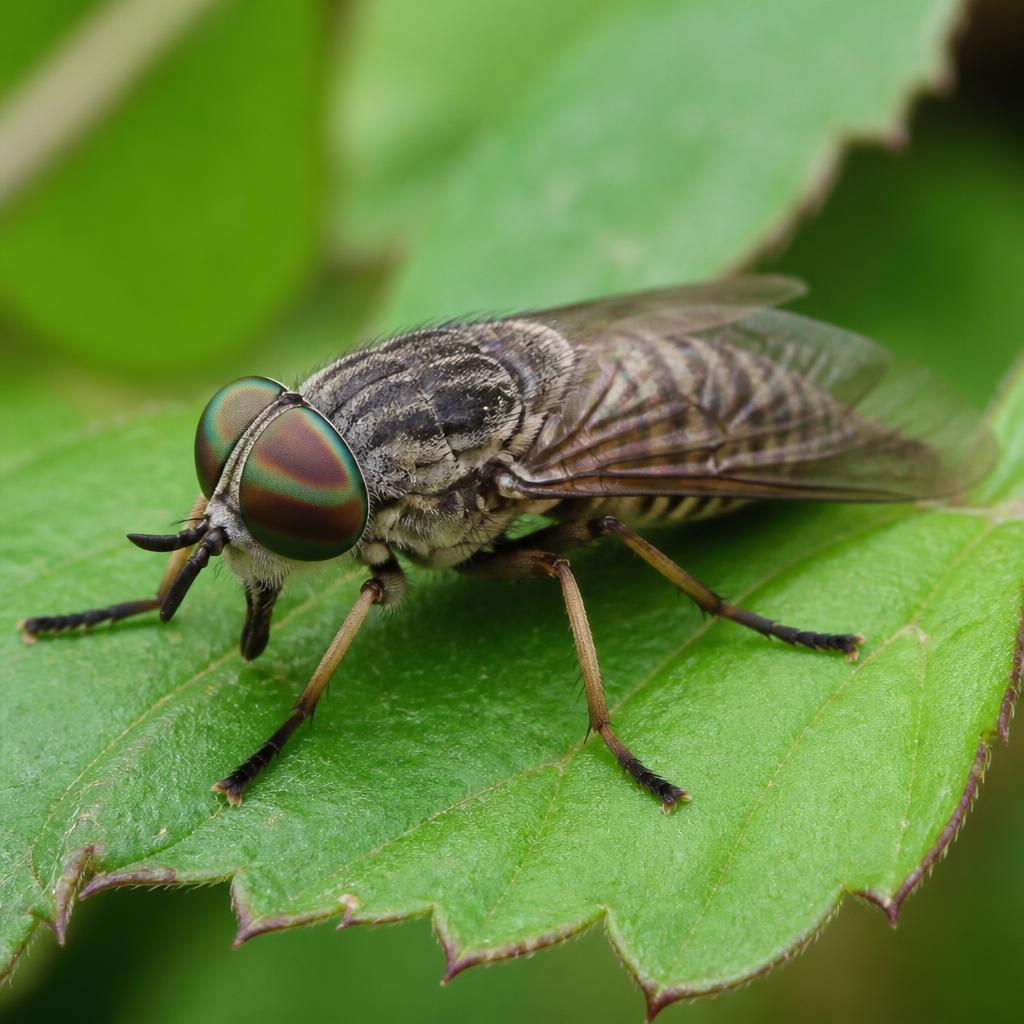
Blood Feeder
Horse Fly
Tabanidae
Biology
Horse flies (family Tabanidae) encompass over 4,500 species globally, ranging from 6 mm to 30 mm in length, characterized by robust bodies, short antennae, and brilliant, often iridescent, compound eyes that meet dorsally in males but are separated in females. The lifecycle typically spans one to three years, with four distinct stages: egg, larva, pupa, and adult. Females lay clutches of 100-800 cigar-shaped eggs on emergent vegetation or rocks overhanging water; larvae are carnivorous, developing through 6-13 instars over several months to a year in aquatic or semi-aquatic environments, preying on other insect larvae and earthworms. Pupation occurs in drier soil, lasting one to three weeks, before adults emerge, whose lifespan is generally 3-6 weeks, with females requiring a blood meal approximately every 3-4 days to produce subsequent egg batches.
Behaviour
Tabanids are exclusively diurnal, strong, agile fliers, with peak activity during warm, sunny, non-windy conditions, exhibiting crepuscular peaks in some species. Females actively seek mammalian hosts using visual cues (large, dark moving objects), CO2 gradients, and thermal signatures, employing a unique blade-like mouthpart structure (mandibles and maxillae) to slash tissue and lap pooled blood rather than piercing and siphoning; this sanguivorous feeding behavior is essential for vitellogenesis, while males feed exclusively on nectar and plant exudates for energy. Their flight range can be extensive, up to several miles from breeding sites, facilitating mechanical transmission of pathogens such as anaplasmosis, trypanosomiasis, and equine infectious anemia through interrupted feeding, making them significant livestock pests.
Habits
Horse flies prefer warm, humid environments, commonly found near ponds, marshes, slow-moving streams, and wooded areas where host animals (livestock, wildlife, humans) are abundant. Adults typically rest on vegetation in shaded areas during inactive periods, emerging during daylight hours to actively seek hosts for blood meals, often patrolling open, sunny areas. Infestation signs for a pest control technician include observation of adult flies in the vicinity of host animals, particularly around the face, neck, and legs, and the presence of small, bloody lesions with dried blood, indicating fresh bites. Conducive conditions involve stagnant or slow-moving water bodies for larval development and the presence of large mammalian hosts, particularly cattle, horses, and deer, within flight range.
Control methods
- 1Drain or treat standing water and wet edges
- 2Use horse-fly traps (e.g., H-trap) in pastures
- 3Repellents containing DEET or picaridin
- 4Stable livestock during peak daytime activity
- 5Permethrin sprays on horses during fly season
- 6Long sleeves and light-colored clothing for workers
Tailored to Horse Fly
IPM Procedure Checklist
Inspection
- Survey interior and exterior for evidence and conducive conditions
- Document findings with photos and a site map
- Place monitors to confirm activity
Identification
- Confirm Horse Fly (Tabanidae) — not a look-alike
- Note life stage and risk level: Moderate
- Capture clear photos and samples for the record
Action Thresholds
- Trigger action when monitor counts trend up
- Re-evaluate weekly during active season
- Document trigger criteria in the IPM plan
Prevention
- Exclude entry points and harborage
- Improve sanitation and moisture control
- Modify habitat around the structure
Control Methods
- Drain or treat standing water and wet edges
- Use horse-fly traps (e.g., H-trap) in pastures
- Repellents containing DEET or picaridin
- Stable livestock during peak daytime activity
Monitoring & Evaluation
- Service monitors on schedule and trend captures
- Re-inspect for Horse Fly activity at follow-up
- Adjust tactics based on data; report findings to client