Fly
Horn Fly
Haematobia irritans
Biology
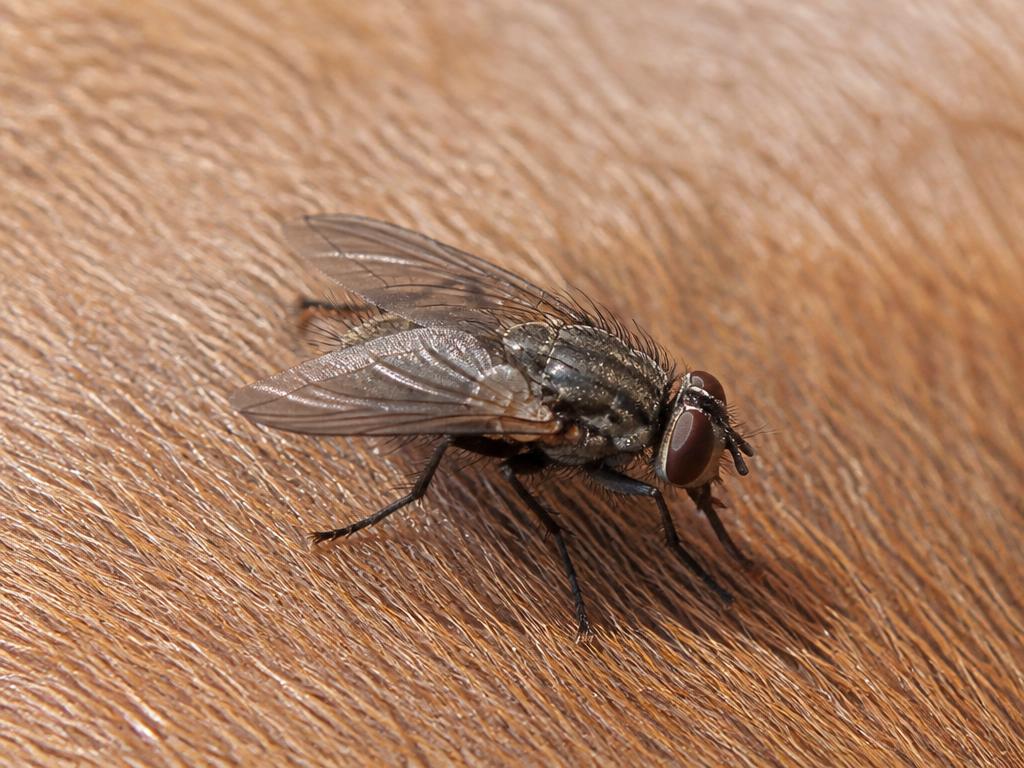
Haematobia irritans (family Muscidae) is a small biting fly, 3-4 mm long — roughly half the size of a house fly — dark grey with a rigid, forward-projecting bayonet-like proboscis and short, stout palps. Females leave the host only briefly to lay eggs in very fresh cattle dung pats, depositing 20-24 eggs per batch and several hundred over a lifetime. Eggs hatch in under 24 hours, larvae complete three instars within the dung in 4-8 days, and pupation occurs under or beside the pat. The complete cycle can take only 10-14 days in warm weather, producing explosive seasonal populations; the species overwinters as diapausing pupae in soil beneath pats.
Behaviour
Both sexes are obligate blood feeders and remain on the host almost continuously, taking 20-40 blood meals per day, typically clustered on the shoulders, back, and belly with heads pointed downward. Their persistent feeding causes irritation, blood loss, reduced grazing time, and measurable weight-gain and milk-production losses, and they mechanically transmit Stephanofilaria and contribute to bovine mastitis pathogen spread. Flies leave the host mainly to oviposit and briefly during extreme heat, resting on the shaded underside of the animal. Dispersal between herds occurs over several kilometers.
Habits
Horn flies are strictly associated with pastured cattle and, less commonly, horses and bison. Populations depend on undisturbed fresh dung pats in pasture; confinement operations with concrete or scraped floors rarely sustain them. Conducive conditions include warm temperatures, high pasture stocking density, minimal dung dispersal, and absence of dung beetles. Insecticide resistance to pyrethroids is widespread where a single chemical class has been used repeatedly in ear tags.
Control methods
- 1Rotate insecticide classes in ear tags to slow resistance.
- 2Use dust bags, back rubbers, or oilers at gates and water points.
- 3Apply approved pour-on or spray treatments on a threshold basis.
- 4Feed larvicidal mineral blocks or insect growth regulators to cattle.
- 5Harrow or spread dung pats to disrupt larval development.
- 6Protect dung beetle populations that destroy breeding pats.
Tailored to Horn Fly
IPM Procedure Checklist
Inspection
- Locate breeding sites: drains, decaying matter, moist organics
- Use tape-over-drain tests and UV/light traps to confirm
- Map dumpster, grease and floor-drain hot-spots
Identification
- Confirm Horn Fly (Haematobia irritans) — not a look-alike
- Note life stage and risk level: High
- Capture clear photos and samples for the record
Action Thresholds
- Zero-tolerance: act on first confirmed sighting
- Notify client and document the trigger event
- Prioritize health and regulatory risk in the plan
Prevention
- Clean drains with enzymatic foam to remove biofilm
- Manage trash, recycling and grease daily
- Screen windows, doors and air curtains at entries
Control Methods
- Rotate insecticide classes in ear tags to slow resistance.
- Use dust bags, back rubbers, or oilers at gates and water points.
- Apply approved pour-on or spray treatments on a threshold basis.
- Feed larvicidal mineral blocks or insect growth regulators to cattle.
Monitoring & Evaluation
- Service monitors on schedule and trend captures
- Re-inspect for Horn Fly activity at follow-up
- Adjust tactics based on data; report findings to client