Ant
Honey Ant
Myrmecocystus mexicanus
Biology
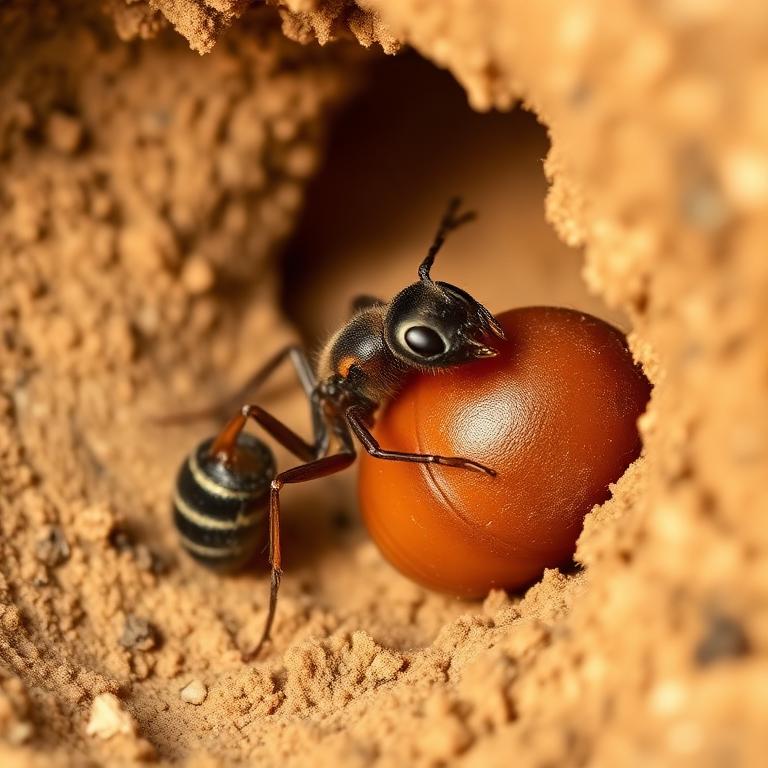
Honey ants, or honeypot ants, are yellowish to amber Myrmecocystus workers 4–8 mm long, best known for their repletes: specialised workers that hang immobile from the ceilings of deep nest chambers with abdomens swollen to the size of a small grape with stored liquid food. Colonies are typically single-queened, long-lived, and dig deep — nest shafts commonly reach 1–2 m and can exceed 4 m in desert soils, placing brood and repletes below the reach of surface heat and drought.
Behaviour
Foraging is largely nocturnal or crepuscular in hot climates, with workers collecting nectar, honeydew and insect prey and transferring the surplus to repletes by trophallaxis; in lean months the repletes regurgitate stores back to the colony, acting as a living pantry. They are non-aggressive to people, do not sting, and pose no health risk. Their pest status is minor and almost entirely nuisance: crater nests in desert landscaping and occasional foraging into homes for sweets.
Habits
Nests are in dry, sunny, open ground in arid and semi-arid regions — desert scrub, gravel yards, xeriscaped beds, and sandy lots — marked by a low crater of excavated soil. Because the colony lives so deep, surface treatments frequently fail and the nest recovers. Conducive conditions are open unshaded soil and nearby nectar or honeydew sources. Inspect at dusk when foraging begins, follow trails to the crater, and consider whether treatment is warranted at all before disturbing a beneficial native species.
Control methods
- 1Confirm the nest by following dusk foraging trails to the crater
- 2Treat with a bait the workers carry down to the deep chambers
- 3Expect surface sprays to fail — nests extend one to several metres deep
- 4Seal door thresholds and weep holes to stop indoor foraging
- 5Remove accessible sweet spills, pet food and honeydew sources
- 6Tolerate nests away from structures — this is a harmless native species
Tailored to Honey Ant
IPM Procedure Checklist
Inspection
- Follow trails to nests, food and moisture sources
- Inspect wall voids, slab edges and exterior soil
- Place non-repellent monitors at trail crossings
Identification
- Confirm Honey Ant (Myrmecocystus mexicanus) — not a look-alike
- Note life stage and risk level: Low
- Capture clear photos and samples for the record
Action Thresholds
- Tolerate low-level activity outside sensitive zones
- Act if activity moves indoors or near food
- Review threshold seasonally with the client
Prevention
- Seal entry cracks, utility penetrations and weep holes
- Eliminate honeydew-producing pests on landscape plants
- Store food in sealed containers and clean spills promptly
Control Methods
- Confirm the nest by following dusk foraging trails to the crater
- Treat with a bait the workers carry down to the deep chambers
- Expect surface sprays to fail — nests extend one to several metres deep
- Seal door thresholds and weep holes to stop indoor foraging
Monitoring & Evaluation
- Service monitors on schedule and trend captures
- Re-inspect for Honey Ant activity at follow-up
- Adjust tactics based on data; report findings to client