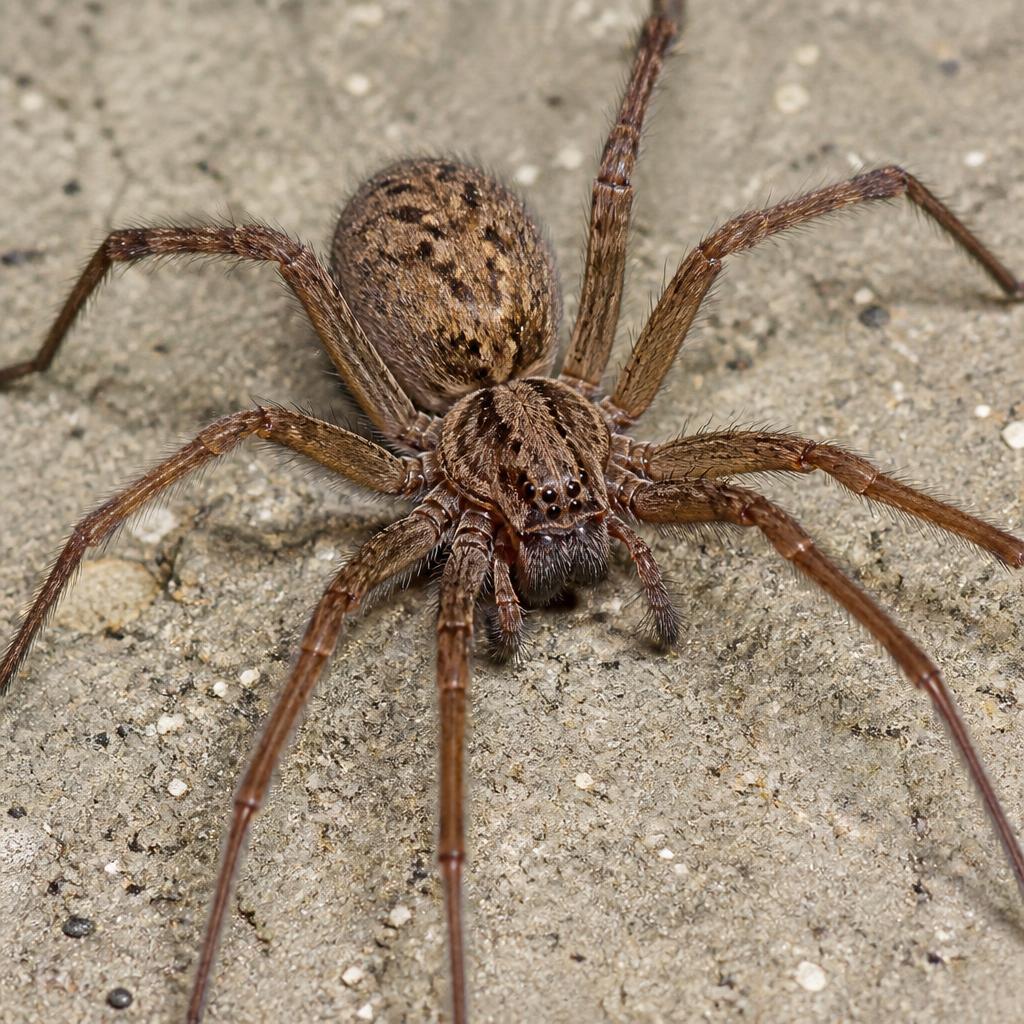
Spider
Hobo Spider
Eratigena agrestis
Biology
The hobo spider, Eratigena agrestis, is a member of the Agelenidae family, commonly known as funnel-web spiders, distinct from the medically significant Atrax and Hadronyche funnel-web genera. Adults typically measure 7-14 mm in body length for females and 7-11 mm for males, possessing a characteristic brown-to-earthy-grey coloration with a faint, often indistinct, herringbone or chevron pattern dorsally on the abdomen. Their lifecycle is typically annual or biennial, with spiderlings emerging in spring, maturing by late summer, and overwintering as subadults or adults beneath protective cover. Females can lay multiple egg sacs, each containing 50-100 eggs, often concealed within a silken retreat, contributing to significant localized population densities under favorable conditions. Optimal development occurs within a temperature range of 15-25°C and moderate humidity, though they exhibit considerable tolerance to fluctuating environmental conditions prevalent in temperate climates.
Behaviour
Hobo spiders are primarily nocturnal hunters, employing a sit-and-wait strategy within their funnel webs to ambush unsuspecting prey, which includes a variety of insects and other arthropods. While generally solitary, their reproductive drive in late summer and early autumn compels male spiders to abandon their webs and actively wander in search of females, increasing their detection by humans indoors. Pheromonal cues play a crucial role in mate location, with males following draglines laid by sex-mature females. Bites, though often defensive, are reported to cause localized pain and, in rare cases, necrotic lesions, although the medical significance of their venom is a subject of ongoing debate within the scientific community and significantly less severe than that of true funnel-web spiders. Their rapid movements and cryptic coloration contribute to their elusiveness, making direct observation of feeding or defensive behaviors challenging in field conditions.
Habits
These spiders construct distinctive sheet-like funnel webs, characterized by a dense, non-sticky silken sheet that gradually tapers into a funnel-shaped retreat where the spider typically rests. Preferred harborage locations include dark, secluded, and undisturbed environments such as beneath rocks, logs, leaf litter, and in woodpiles outdoors, or within basements, crawlspaces, window wells, and cluttered storage areas indoors. Foraging occurs predominantly within the vicinity of their web, with the spider relying on vibrations transmitted through the sheet to detect prey. Peak outdoor activity and indoor wandering by males typically occur from July through September, coinciding with their mating season. Conducive conditions for infestation include overgrown vegetation near foundations, unsealed entry points into structures, and excessive indoor clutter providing ample harborage and hunting opportunities.
Control methods
- 1Glue boards along basement walls and window wells
- 2Seal foundation cracks and window-well covers
- 3Reduce woodpiles and debris next to structure
- 4Vacuum webs and egg sacs regularly
- 5Door sweeps and weatherstripping
- 6Residual treatment in crawlspaces and garages
Tailored to Hobo Spider
IPM Procedure Checklist
Inspection
- Inspect undisturbed corners, voids and stored items
- Identify webs, egg sacs and prey debris
- Note conducive insect prey populations
Identification
- Confirm Hobo Spider (Eratigena agrestis) — not a look-alike
- Note life stage and risk level: Moderate
- Capture clear photos and samples for the record
Action Thresholds
- Trigger action when monitor counts trend up
- Re-evaluate weekly during active season
- Document trigger criteria in the IPM plan
Prevention
- Reduce clutter and seal cracks around the structure
- Switch exterior lights to yellow / sodium to reduce prey
- Install door sweeps and screen vents
Control Methods
- Glue boards along basement walls and window wells
- Seal foundation cracks and window-well covers
- Reduce woodpiles and debris next to structure
- Vacuum webs and egg sacs regularly
Monitoring & Evaluation
- Service monitors on schedule and trend captures
- Re-inspect for Hobo Spider activity at follow-up
- Adjust tactics based on data; report findings to client