Occasional Invader
Hackberry Nipple Gall Psyllid
Pachypsylla celtidismamma
Biology
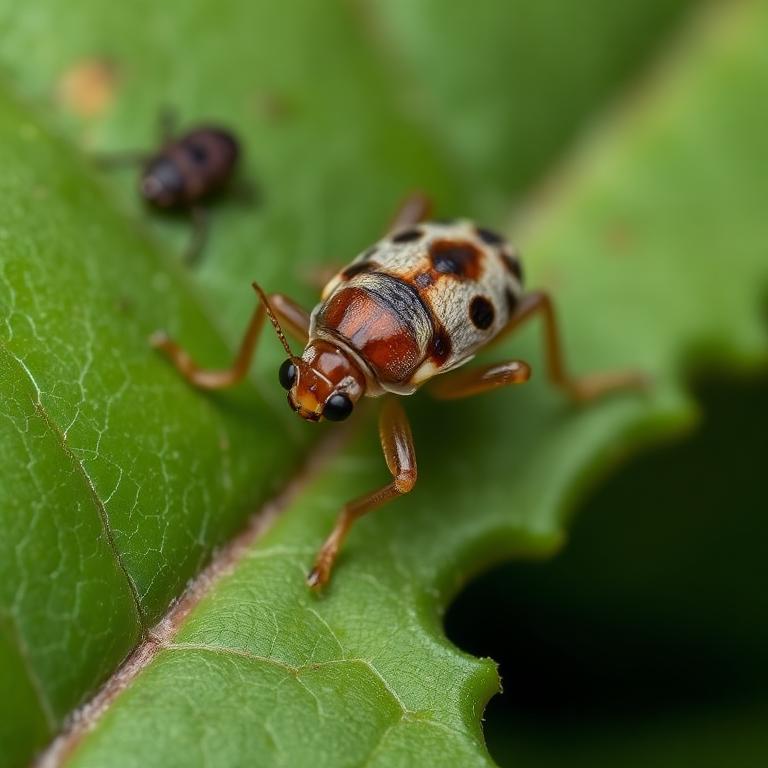
Hackberry psyllids are tiny jumping plant lice (Psyllidae) 3–5 mm long, mottled grey-brown, and shaped like miniature cicadas with clear wings held roof-like over the body. Adults emerge from overwintering in spring as hackberry buds break and lay eggs on expanding leaves. Nymphal feeding induces the tree to form the characteristic nipple-shaped galls on the leaf underside, inside which the nymph completes development, protected, through five instars. One generation per year is standard; new adults chew out of the galls in late summer and autumn and seek overwintering shelter under bark and in structures.
Behaviour
Adults are day-active and jump strongly when disturbed, hence the name. They feed only on hackberry (Celtis spp.) and cannot feed, breed, or survive long indoors — they neither bite nor sting and cause no damage to the building or its contents. The nuisance is one of sheer numbers and size: because they are small enough to pass through standard 16-mesh window screening, they enter in large numbers in autumn, accumulating on window glass, sills, light fixtures, and pale interior surfaces. Gall formation is cosmetic for the tree and rarely justifies canopy treatment.
Habits
Invasion is tightly correlated with hackberry trees within about 30 m of the structure and peaks over a two- to three-week window in early autumn when adults leave the galls. Entry is through window screens, weatherstripping gaps, soffit and attic vents, and around utility penetrations; overwintering also occurs under loose bark and in siding voids. Conducive conditions include coarse insect screening, unsealed window frames, and bright interior lighting visible at dusk. Inspection focuses on gall-covered hackberry foliage in summer, then window sills, curtains, and light fixtures during autumn emergence, where dozens to hundreds of small dead insects accumulate.
Control methods
- 1Upgrade to 20-mesh or finer insect screening on windows and vents
- 2Seal window frames, weatherstripping and utility penetrations
- 3Vacuum accumulations on sills, curtains and light fixtures
- 4Reduce evening interior lighting visible through windows during emergence
- 5Rake and remove fallen galled hackberry leaves near the structure
- 6Exterior residual on window surrounds during the short autumn flight
Tailored to Hackberry Nipple Gall Psyllid
IPM Procedure Checklist
Inspection
- Inspect exterior perimeter for entry pathways
- Note moisture, mulch and ground-cover near foundation
- Identify aggregation sites on warm walls
Identification
- Confirm Hackberry Nipple Gall Psyllid (Pachypsylla celtidismamma) — not a look-alike
- Note life stage and risk level: Low
- Capture clear photos and samples for the record
Action Thresholds
- Tolerate low-level activity outside sensitive zones
- Act if activity moves indoors or near food
- Review threshold seasonally with the client
Prevention
- Seal foundation cracks, weep holes and utility penetrations
- Pull mulch and vegetation back from the structure
- Improve drainage and reduce exterior moisture
Control Methods
- Upgrade to 20-mesh or finer insect screening on windows and vents
- Seal window frames, weatherstripping and utility penetrations
- Vacuum accumulations on sills, curtains and light fixtures
- Reduce evening interior lighting visible through windows during emergence
Monitoring & Evaluation
- Service monitors on schedule and trend captures
- Re-inspect for Hackberry Nipple Gall Psyllid activity at follow-up
- Adjust tactics based on data; report findings to client