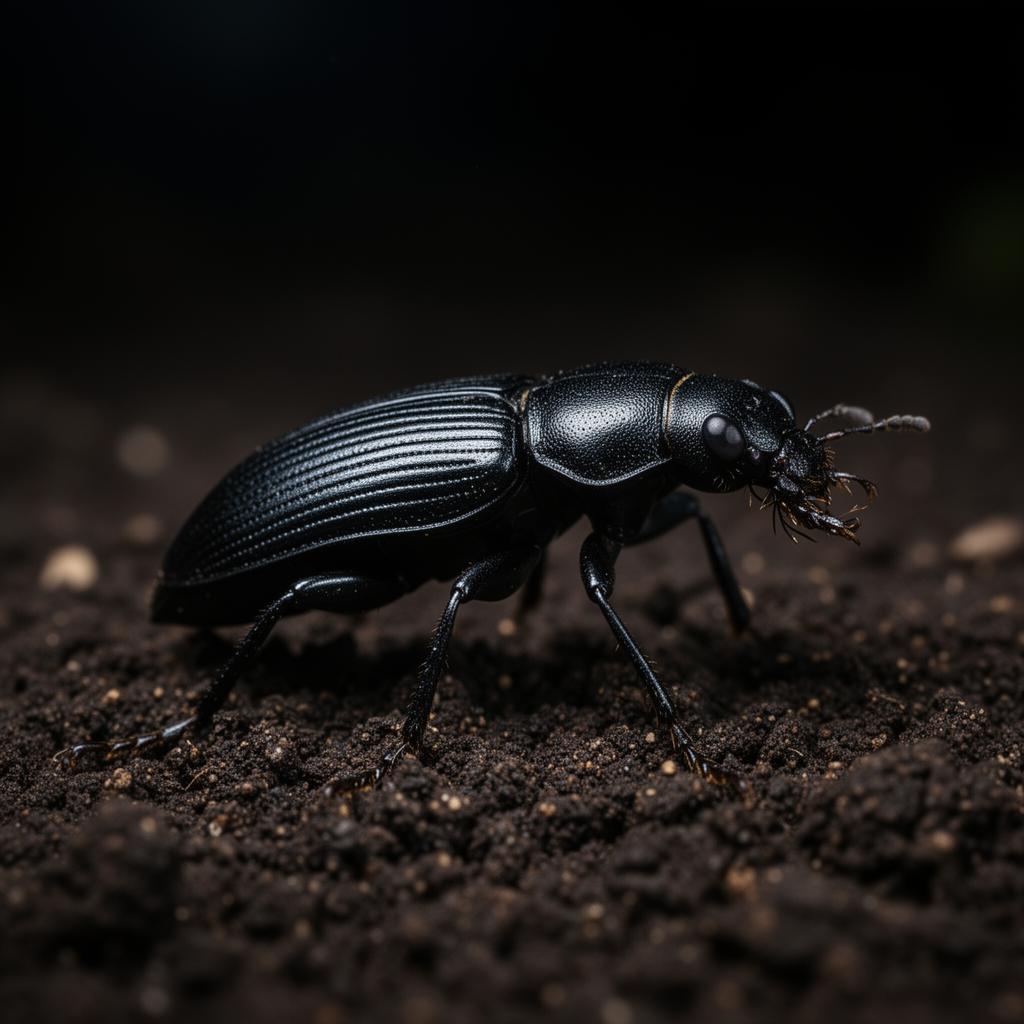
Insect
Ground Beetle
Carabidae
Biology
Ground beetles, family Carabidae, constitute one of the largest and most diverse families of beetles, with over 40,000 described species globally. Adults typically exhibit a flattened, somewhat elongated body form, although considerable variation exists. They are usually dark and metallic, ranging from a few millimeters to several centimeters in length, with prominent mandibles and long, slender legs adapted for running. Females lay eggs individually in the soil. Larvae are typically slender, dark, and often possess prominent urogomphi (tail-like appendages) at the posterior end. The life cycle varies greatly by species, often taking one year, with some species being multivoltine and others requiring several years for development. Pupation occurs in the soil.
Behaviour
Most adult ground beetles are nocturnal, hiding under debris, rocks, or logs during the day and emerging at night to hunt. They are primarily predatory, actively foraging for other insects and invertebrates on the ground surface. Many species are flightless, relying on their speed for locomotion. When disturbed, they may emit a foul-smelling defensive secretion. Females choose secluded locations for egg-laying. Larvae are also predatory, actively pursuing prey in the soil or on the surface.
Habits
Ground beetles are generally considered beneficial insects due to their predatory habits, consuming pests such as slugs, snails, caterpillars, and aphids, thus playing a vital role in natural pest control within agricultural and ecological systems. However, some species occasionally become nuisance pests when they enter homes in large numbers, particularly during periods of environmental stress. Harborage for ground beetles includes leaf litter, under stones, logs, bark, and in soil crevices. Conducive conditions for entry into structures include cracks in foundations, gaps under doors, and proximity to gardens or natural areas with abundant ground cover.
Control methods
- 1Seal cracks in foundation and walls.
- 2Ensure tight-fitting doors and windows.
- 3Reduce outdoor lighting at night.
- 4Clear away leaf litter near structures.
- 5Maintain a clean perimeter around home.
- 6Apply perimeter insecticide barriers.
Tailored to Ground Beetle
IPM Procedure Checklist
Inspection
- Inspect harborage near food, water and warmth
- Check cracks, voids and appliance interiors
- Place sticky monitors at suspected hot-spots
Identification
- Confirm Ground Beetle (Carabidae) — not a look-alike
- Note life stage and risk level: Low
- Capture clear photos and samples for the record
Action Thresholds
- Tolerate low-level activity outside sensitive zones
- Act if activity moves indoors or near food
- Review threshold seasonally with the client
Prevention
- Seal cracks, plumbing penetrations and wall voids
- Eliminate moisture sources and standing water
- Improve sanitation: sealed food storage, grease removal
Control Methods
- Seal cracks in foundation and walls.
- Ensure tight-fitting doors and windows.
- Reduce outdoor lighting at night.
- Clear away leaf litter near structures.
Monitoring & Evaluation
- Service monitors on schedule and trend captures
- Re-inspect for Ground Beetle activity at follow-up
- Adjust tactics based on data; report findings to client