All pests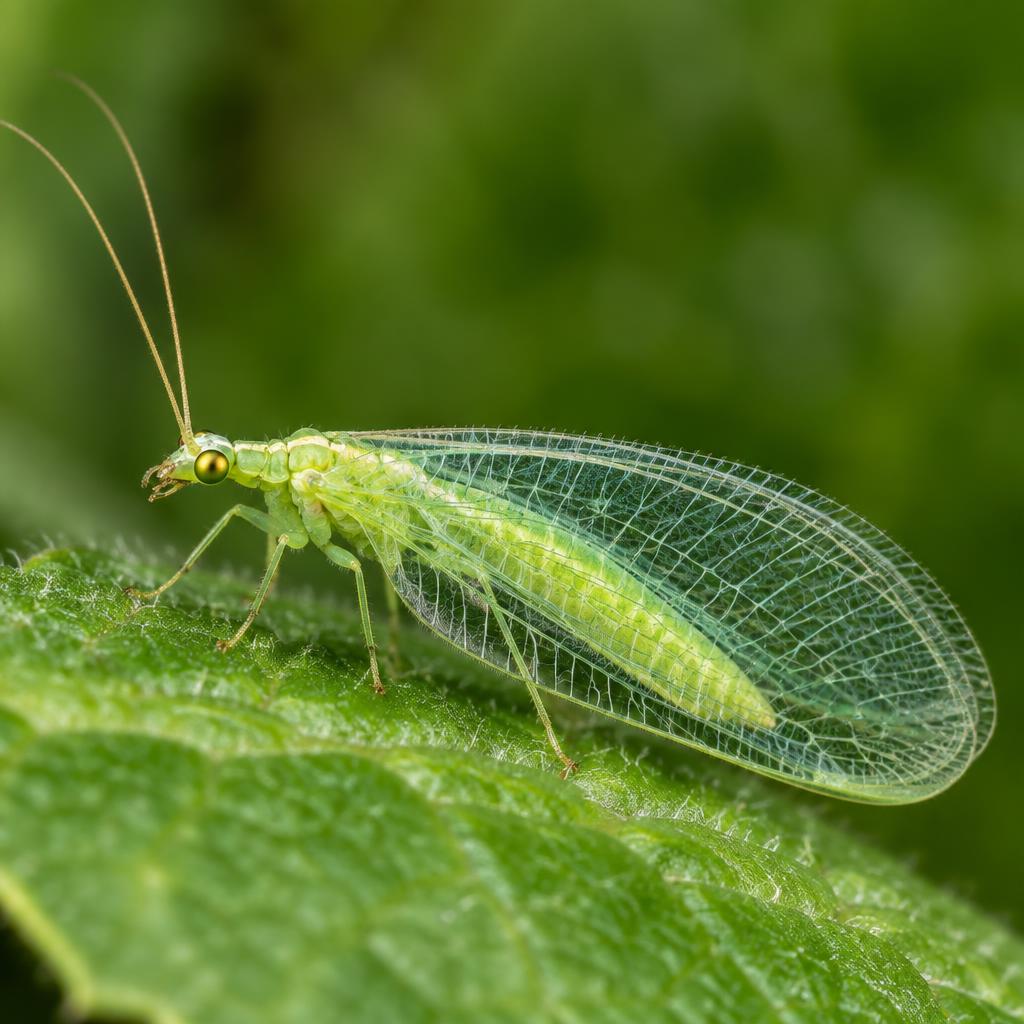 View full procedure
Insect
Green Lacewing
Chrysoperla rufilabris
Low Risk
Biology
Chrysoperla rufilabris is a slender pale green insect 12–20 mm long with delicate lace-veined wings and golden eyes. Eggs are laid on hair-like stalks and larvae are voracious aphid predators.
Behaviour
Adults are weak fliers strongly attracted to lights and frequently accumulate on porches, in garages, and around illuminated windows at night. They feed on nectar, pollen, and honeydew.
Habits
Lacewings are beneficial predators and only a nuisance when large numbers enter buildings. Larvae may deliver a minor pinching bite if handled. Swarms coincide with warm evenings and aphid outbreaks.
Control methods
- 1Switch exterior lights to warm amber or motion-activated LEDs
- 2Repair window and door screens and add door sweeps
- 3Vacuum indoor individuals and release them outdoors
- 4Avoid insecticide use; lacewings control garden aphids
- 5Reduce aphid-hosting plants directly against the building
- 6Keep lights off near entry doors during peak flight nights
Tailored to Green Lacewing
IPM Procedure Checklist
Step 1
Inspection
- Inspect harborage near food, water and warmth
- Check cracks, voids and appliance interiors
- Place sticky monitors at suspected hot-spots
Step 2
Identification
- Confirm Green Lacewing (Chrysoperla rufilabris) — not a look-alike
- Note life stage and risk level: Low
- Capture clear photos and samples for the record
Step 3
Action Thresholds
- Tolerate low-level activity outside sensitive zones
- Act if activity moves indoors or near food
- Review threshold seasonally with the client
Step 4
Prevention
- Seal cracks, plumbing penetrations and wall voids
- Eliminate moisture sources and standing water
- Improve sanitation: sealed food storage, grease removal
Step 5
Control Methods
- Switch exterior lights to warm amber or motion-activated LEDs
- Repair window and door screens and add door sweeps
- Vacuum indoor individuals and release them outdoors
- Avoid insecticide use; lacewings control garden aphids
Step 6
Monitoring & Evaluation
- Service monitors on schedule and trend captures
- Re-inspect for Green Lacewing activity at follow-up
- Adjust tactics based on data; report findings to client