Rodent
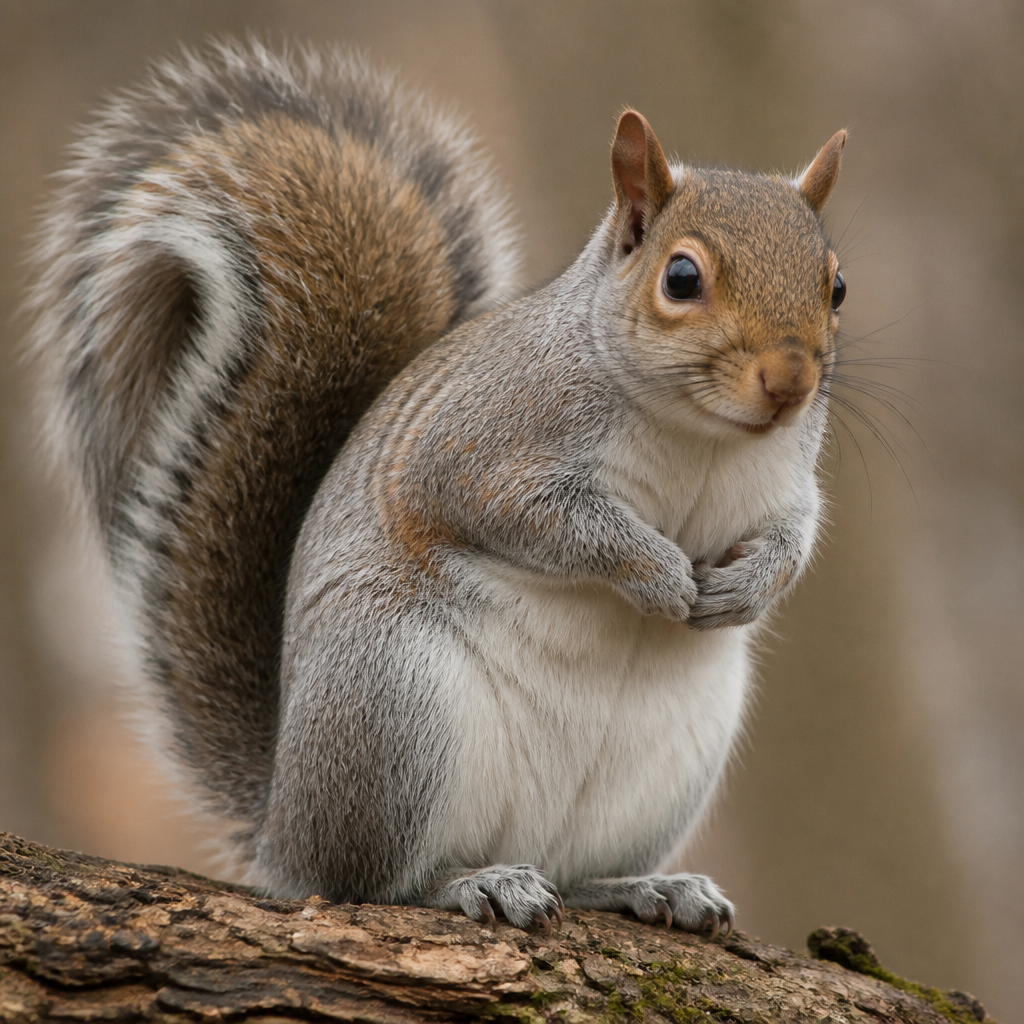
Eastern Gray Squirrel
Sciurus carolinensis
Biology
The Eastern Gray Squirrel, *Sciurus carolinensis*, is a medium-sized arboreal rodent, typically weighing between 400 to 600 grams and measuring 40–50 cm in total length, including its prominent bushy tail which accounts for nearly half its body length. They exhibit two distinct breeding seasons: one beginning in late December through February, and another from May to June, with gestation lasting approximately 44 days and resulting in litters of 2–4 altricial kits. These young are weaned around 8–10 weeks and achieve sexual maturity at 10–12 months, contributing to a substantial reproductive capacity. Their longevity in the wild averages 6–12 years, though individuals have been known to live up to 20 years in protective environments. They are well-adapted to temperate climates, tolerating a wide range of temperatures and humidity levels, and are identified by their grizzled gray dorsal fur, white undersides, and often rufous patches on flanks and limbs.
Behaviour
Eastern Gray Squirrels are intensely diurnal, with peak activity observed during early morning and late afternoon, primarily foraging in trees and on the ground. They are highly agile climbers, utilizing sharp claws and muscular hind limbs, facilitating rapid ascent and descent on various surfaces, including brick, wood, and utility lines. Their communication repertoire includes a range of vocalizations—chattering, chuk-chuks, quaaas—and tail flicking, used for alarm and social interaction. While generally solitary, they may tolerate others in communal winter dens. Their gnawing behavior is critical for dental health, as their incisors grow continuously, leading to significant structural damage to wood, wiring, and insulation. They do not hibernate but enter torpor during severe winter weather, conserving energy.
Habits
These squirrels establish primary harborages in natural tree cavities (dens) or construct dreys—nests of leaves, twigs, and other fibrous materials, often 10–15 meters high in deciduous trees. When natural sites are scarce, they readily exploit anthropogenic structures, including attics, soffits, wall voids, and chimneys, particularly during colder months for thermal protection. Foraging patterns involve wide-ranging searches for nuts, seeds, buds, and fungi, and they exhibit scatter-hoarding behavior, burying individual food items over a broad area, a critical strategy for winter sustenance. Signs of infestation include audible gnawing, scratching, and vocalizations from within structural voids, visible entry points (e.g., chewed vents, soffit gaps), and fecal pellets (small, dark, and oblong) near harborage areas.
Control methods
- 1Exclusion: seal entry points with hardware cloth (after young leave)
- 2Install one-way doors at active attic openings
- 3Trim tree limbs back 2–3 m from roofline
- 4Cap chimneys and screen gable/soffit vents
- 5Live-trap and relocate per local wildlife regulations
- 6Capsaicin or polybutene repellents on chewed surfaces
Tailored to Eastern Gray Squirrel
IPM Procedure Checklist
Inspection
- Locate runways, droppings, rub marks and gnaw damage
- Identify entry points (gaps ≥6 mm) and harborage
- Place tracking patches or non-toxic monitors
Identification
- Confirm Eastern Gray Squirrel (Sciurus carolinensis) — not a look-alike
- Note life stage and risk level: Moderate
- Capture clear photos and samples for the record
Action Thresholds
- Trigger action when monitor counts trend up
- Re-evaluate weekly during active season
- Document trigger criteria in the IPM plan
Prevention
- Exclude with steel wool, hardware cloth and door sweeps
- Trim vegetation 0.5 m from structure; clear debris
- Secure trash, pet food and stored grain
Control Methods
- Exclusion: seal entry points with hardware cloth (after young leave)
- Install one-way doors at active attic openings
- Trim tree limbs back 2–3 m from roofline
- Cap chimneys and screen gable/soffit vents
Monitoring & Evaluation
- Service monitors on schedule and trend captures
- Re-inspect for Eastern Gray Squirrel activity at follow-up
- Adjust tactics based on data; report findings to client