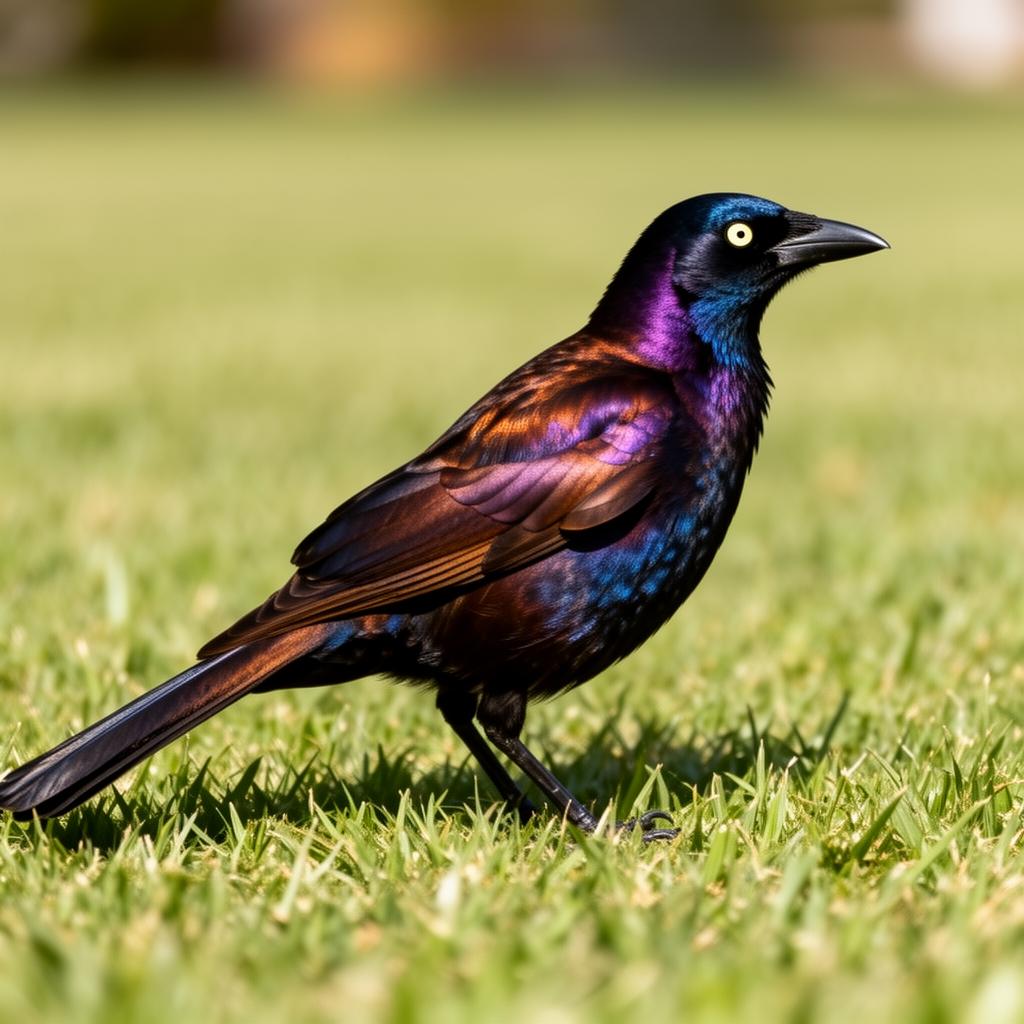
Bird
Common Grackle
Quiscalus quiscula
Biology
The common grackle, Quiscalus quiscula (Order Passeriformes, Family Icteridae), is a medium-sized songbird, typically 28-34 cm in length with a long, keel-shaped tail. Adults are characterized by iridescent black plumage that shimmers with purple, green, and blue hues in sunlight. They possess bright yellow eyes. Sexual dimorphism is subtle, with males typically slightly larger than females. Breeding occurs from April-July. Nests are cup-shaped, often placed in dense trees or shrubs. Clutch size is generally 4-7 pale blue to greenish eggs with dark spots, incubated for 12-14 days. Young fledge about 12-15 days after hatching.
Behaviour
Common grackles are highly gregarious birds, especially outside the breeding season, often forming large flocks mixed with other blackbird species. Their vocalizations include harsh, scratchy calls and a metallic, creaky song. They are opportunistic and assertive foragers, often displacing smaller birds at feeding sites. Flight is strong, direct, and slightly undulating. They walk with a distinctive strut. They are known for their intelligence and problem-solving abilities when foraging.
Habits
Q. quiscula is an omnivorous species with a varied diet, including insects, spiders, earthworms, small fish, frogs, eggs, nestlings, seeds, grains, and fruits. They are common agricultural pests, feeding on corn and other cultivated crops. Foraging occurs on the ground in open areas, lawns, agricultural fields, and near human habitation. Harbors include dense stands of trees, deciduous and coniferous, wetlands, and suburban groves for nesting and roosting. Conducive conditions include areas with extensive lawns, agricultural fields, parks, and suburban developments that provide abundant food and suitable nesting/roosting sites.
Control methods
- 1Remove all accessible seed sources.
- 2Employ effigies or scare devices.
- 3Trim dense trees and shrubs.
- 4Implement netting for crop protection.
- 5Use auditory bird distress calls.
- 6Discourage feeding by residents.
Tailored to Common Grackle
IPM Procedure Checklist
Inspection
- Identify roosting, loafing and nesting sites
- Document droppings, feathers and damage to structure
- Note food and water sources attracting birds
Identification
- Confirm Common Grackle (Quiscalus quiscula) — not a look-alike
- Note life stage and risk level: Moderate
- Capture clear photos and samples for the record
Action Thresholds
- Trigger action when monitor counts trend up
- Re-evaluate weekly during active season
- Document trigger criteria in the IPM plan
Prevention
- Install spikes, netting or shock track on ledges
- Remove standing water and accessible food
- Close openings to attics, vents and signage voids
Control Methods
- Remove all accessible seed sources.
- Employ effigies or scare devices.
- Trim dense trees and shrubs.
- Implement netting for crop protection.
Monitoring & Evaluation
- Service monitors on schedule and trend captures
- Re-inspect for Common Grackle activity at follow-up
- Adjust tactics based on data; report findings to client