Arachnid
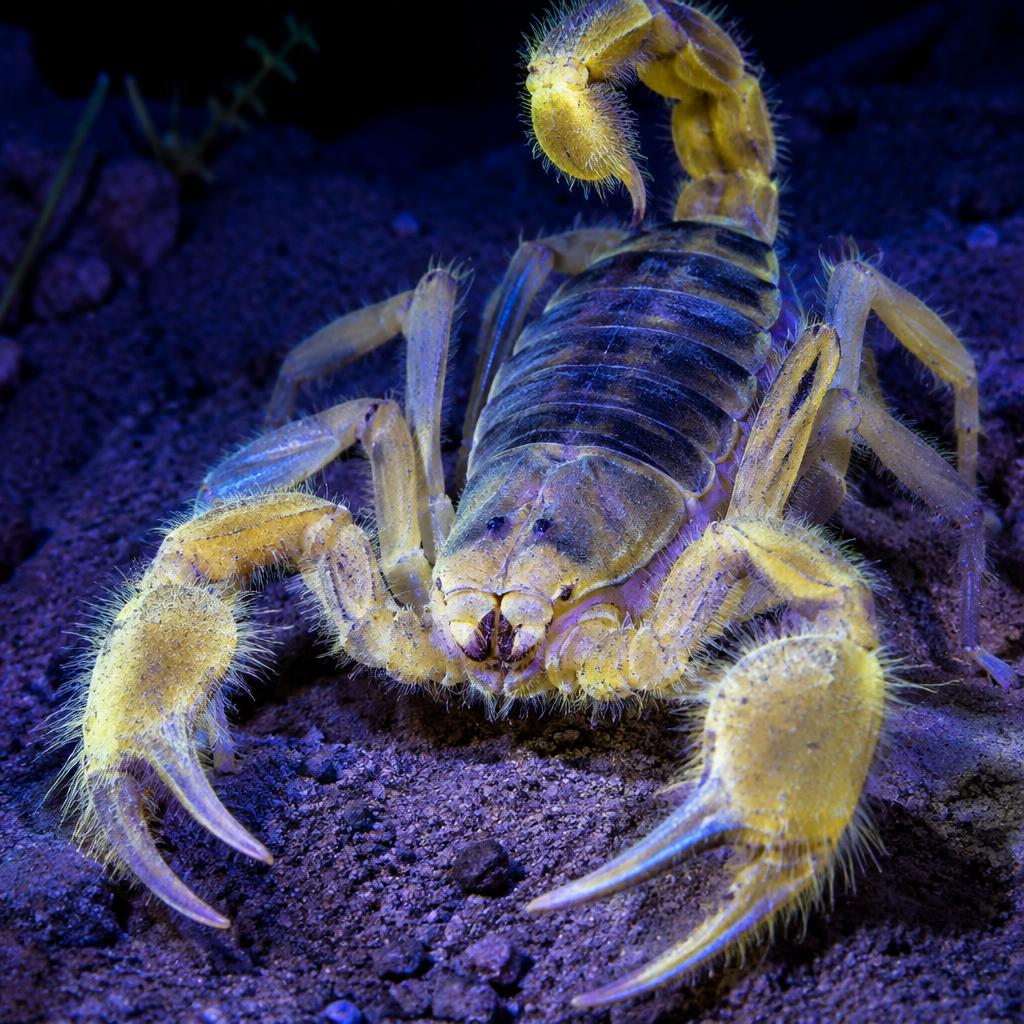
Giant Desert Hairy Scorpion
Hadrurus arizonensis
Biology
Hadrurus arizonensis is the largest scorpion in North America, reaching 14 cm. It has a pale yellow-tan body with dark dorsal markings, a hairy metasoma and pedipalps, and a relatively mild venom compared to smaller bark scorpions.
Behaviour
Nocturnal and solitary, this desert scorpion burrows under rocks and roots or occupies abandoned rodent burrows. It preys on insects, spiders, and small vertebrates. Stings are painful but generally not medically significant for healthy adults.
Habits
Encounters occur in desert landscaping, around pool lights, and when rocks, pavers, or firewood are moved at night. They may enter garages and ground-level rooms seeking moisture or prey, especially during hot, dry periods.
Control methods
- 1Wear gloves and shoes when moving rocks, wood, or debris
- 2Reduce moisture and fix leaks near the foundation
- 3Seal ground-level gaps, door sweeps, and weep holes with fine mesh
- 4Remove clutter, woodpiles, and heavy ground cover close to structures
- 5Use UV flashlight inspections at night to locate scorpions
- 6Seek medical attention for stings in children, elderly, or symptomatic individuals
Tailored to Giant Desert Hairy Scorpion
IPM Procedure Checklist
Inspection
- Survey interior and exterior for evidence and conducive conditions
- Document findings with photos and a site map
- Place monitors to confirm activity
Identification
- Confirm Giant Desert Hairy Scorpion (Hadrurus arizonensis) — not a look-alike
- Note life stage and risk level: High
- Capture clear photos and samples for the record
Action Thresholds
- Zero-tolerance: act on first confirmed sighting
- Notify client and document the trigger event
- Prioritize health and regulatory risk in the plan
Prevention
- Exclude entry points and harborage
- Improve sanitation and moisture control
- Modify habitat around the structure
Control Methods
- Wear gloves and shoes when moving rocks, wood, or debris
- Reduce moisture and fix leaks near the foundation
- Seal ground-level gaps, door sweeps, and weep holes with fine mesh
- Remove clutter, woodpiles, and heavy ground cover close to structures
Monitoring & Evaluation
- Service monitors on schedule and trend captures
- Re-inspect for Giant Desert Hairy Scorpion activity at follow-up
- Adjust tactics based on data; report findings to client