Stinging Insect
German Yellowjacket
Vespula germanica
Biology
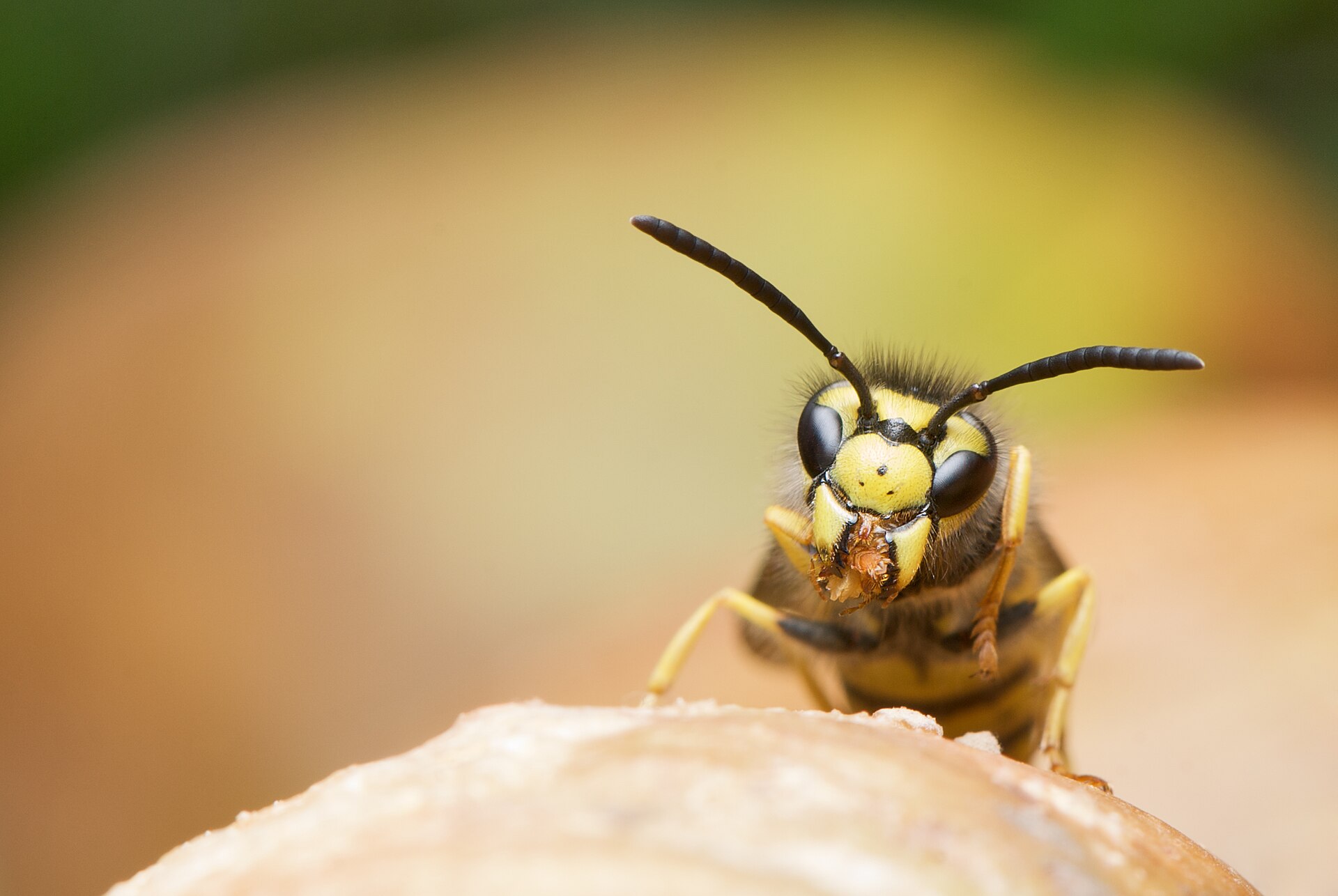
Vespula germanica (Fabricius), an invasive Palearctic species now widespread globally, is a social wasp in the family Vespidae. Queens are typically 18-20 mm long, and workers are 12-16 mm. Distinctive features include strong black and yellow markings, with a characteristic anchor-shaped black mark on the clypeus (face) and a series of black spots on the abdomen that are often confluent. Nests are constructed from chewed wood fibers, forming multiple tiers of combs enclosed in a paper envelope, usually in concealed locations. An overwintering queen establishes the colony in spring.
Behaviour
German yellowjackets are both predatory and scavengers. They hunt a variety of insects to feed their larvae but are also highly attracted to human foods, particularly sweets and proteins, making them a significant nuisance pest in outdoor dining areas. They are highly aggressive and will sting repeatedly if their nest is threatened or disturbed. Colonies can become very populous by late summer, increasing the likelihood of human-robot encounters. Foraging activity is extensive, with workers traveling considerable distances.
Habits
V. germanica thrives in a wide range of temperate environments, adapting well to urban, suburban, and rural habitats. Nests are typically built in dark, protected cavities, such as wall voids, attics, underground burrows, tree hollows, and dense shrubbery. Conducive conditions include structural openings allowing access to building voids, undisturbed subterranean locations, and abundant food sources (both natural prey and human refuse). Their ability to establish large, perennial nests in warmer climates contributes to their invasiveness and pest status.
Control methods
- 1Treat nests directly with appropriate insecticides.
- 2Seal all structural entry points to prevent nesting.
- 3Use baited traps for foraging workers away from nests.
- 4Eliminate food attractants outdoors.
- 5Maintain clean outdoor eating areas.
- 6Inspect building exteriors for new nest starts.
Tailored to German Yellowjacket
IPM Procedure Checklist
Inspection
- Survey interior and exterior for evidence and conducive conditions
- Document findings with photos and a site map
- Place monitors to confirm activity
Identification
- Confirm German Yellowjacket (Vespula germanica) — not a look-alike
- Note life stage and risk level: High
- Capture clear photos and samples for the record
Action Thresholds
- Zero-tolerance: act on first confirmed sighting
- Notify client and document the trigger event
- Prioritize health and regulatory risk in the plan
Prevention
- Exclude entry points and harborage
- Improve sanitation and moisture control
- Modify habitat around the structure
Control Methods
- Treat nests directly with appropriate insecticides.
- Seal all structural entry points to prevent nesting.
- Use baited traps for foraging workers away from nests.
- Eliminate food attractants outdoors.
Monitoring & Evaluation
- Service monitors on schedule and trend captures
- Re-inspect for German Yellowjacket activity at follow-up
- Adjust tactics based on data; report findings to client