Insect
Furniture Carpet Beetle
Anthrenus flavipes
Biology
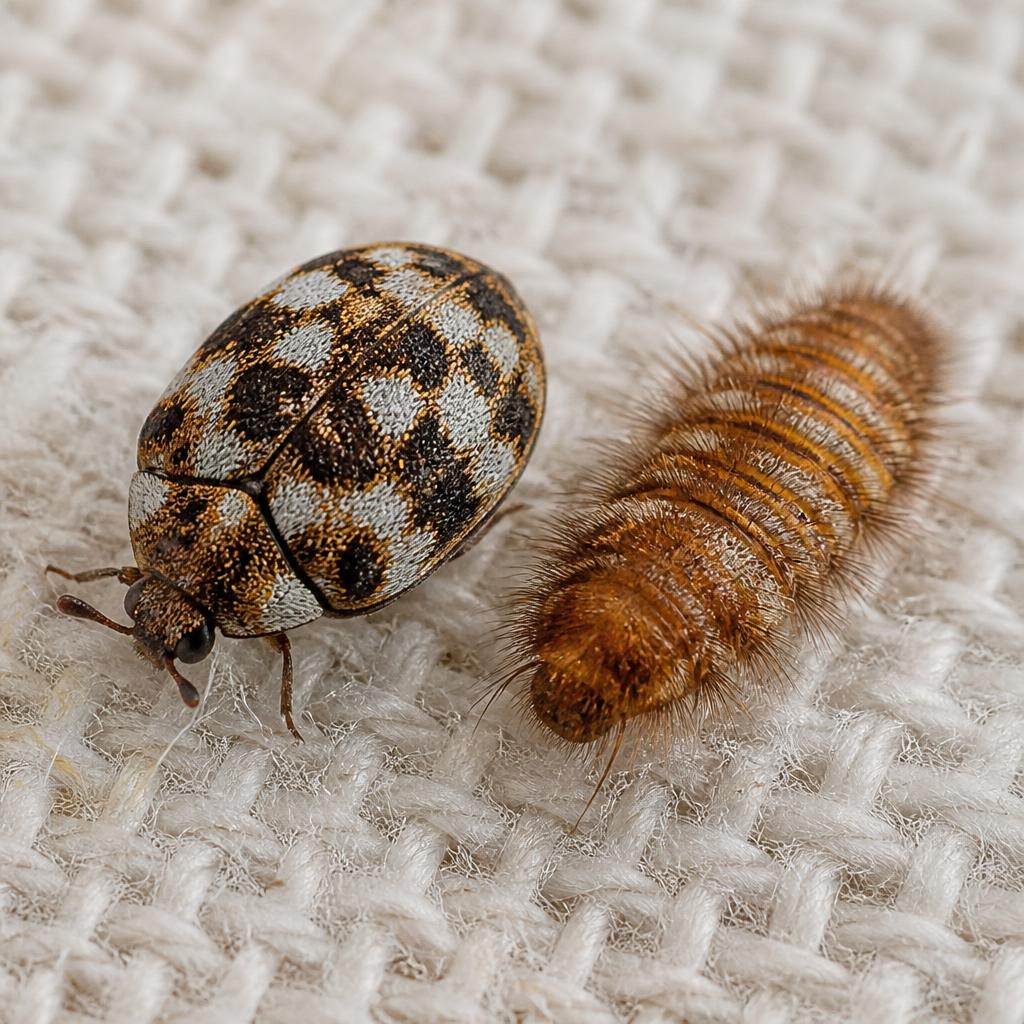
Anthrenus flavipes, commonly known as the furniture carpet beetle, is a species within the family Dermestidae, order Coleoptera. Adults are small, oval beetles, 2-3.5 mm in length, with a pattern of yellow, white, and black scales on their dorsal surface, varying in prominence. Larvae are typically tawny or reddish-brown, densely covered in stiff, bristle-like hairs, and attain a length of 4-5 mm. They are the destructive stage, feeding on natural fibers. Eggs are white and minute. The life cycle, from egg to adult, usually takes 4-12 months, but can extend to almost two years depending on temperature, humidity, and the availability of suitable food sources. They undergo 4-8 larval instars.
Behaviour
Furniture carpet beetle larvae are detritivores, primarily feeding on materials of animal origin, including wool, silk, leather, feathers, hair, and dried animal remains. Adults are active fliers, typically found outdoors where they feed on pollen and nectar. After mating, females seek suitable protein sources for oviposition. Larvae are cryptic, shunning light (negatively phototactic), and often found in undisturbed areas. They leave characteristic cast skins during development. Infestations spread passively through movement of infested articles or actively by adult flight indoors.
Habits
Anthrenus flavipes primarily infests homes, museums, and warehouses, targeting upholstered furniture, carpets, natural fiber textiles, animal trophies, and insect collections. Larvae tunnel into fabrics and feed near the surface or in concealed areas, causing irregular holes and damage. Harborage occurs in dark, undisturbed locations such as under furniture, in cracks and crevices, inside walls, air ducts, and attics, often associated with lint, pet hair, and dead insects. Conducive conditions include accumulations of natural fibers, animal products, and dust/lint, especially in warm, dark, and undisturbed environments. Infestations are often linked to abandoned bird nests or insect carcasses within structures.
Control methods
- 1Regularly vacuum and clean thoroughly.
- 2Launder or dry clean infested items.
- 3Apply residual insecticides to cracks/crevices.
- 4Seal potential entry points.
- 5Remove bird nests/insect carcasses near entry.
- 6Implement pheromone trapping for monitoring.
Tailored to Furniture Carpet Beetle
IPM Procedure Checklist
Inspection
- Inspect harborage near food, water and warmth
- Check cracks, voids and appliance interiors
- Place sticky monitors at suspected hot-spots
Identification
- Confirm Furniture Carpet Beetle (Anthrenus flavipes) — not a look-alike
- Note life stage and risk level: Moderate
- Capture clear photos and samples for the record
Action Thresholds
- Trigger action when monitor counts trend up
- Re-evaluate weekly during active season
- Document trigger criteria in the IPM plan
Prevention
- Seal cracks, plumbing penetrations and wall voids
- Eliminate moisture sources and standing water
- Improve sanitation: sealed food storage, grease removal
Control Methods
- Regularly vacuum and clean thoroughly.
- Launder or dry clean infested items.
- Apply residual insecticides to cracks/crevices.
- Seal potential entry points.
Monitoring & Evaluation
- Service monitors on schedule and trend captures
- Re-inspect for Furniture Carpet Beetle activity at follow-up
- Adjust tactics based on data; report findings to client